Key Takeaways
- IBM and Lockheed Martin, together with Switzerland’s defence procurement office (armasuisse), are launching a quantum‑innovation hub at ETH Zurich.
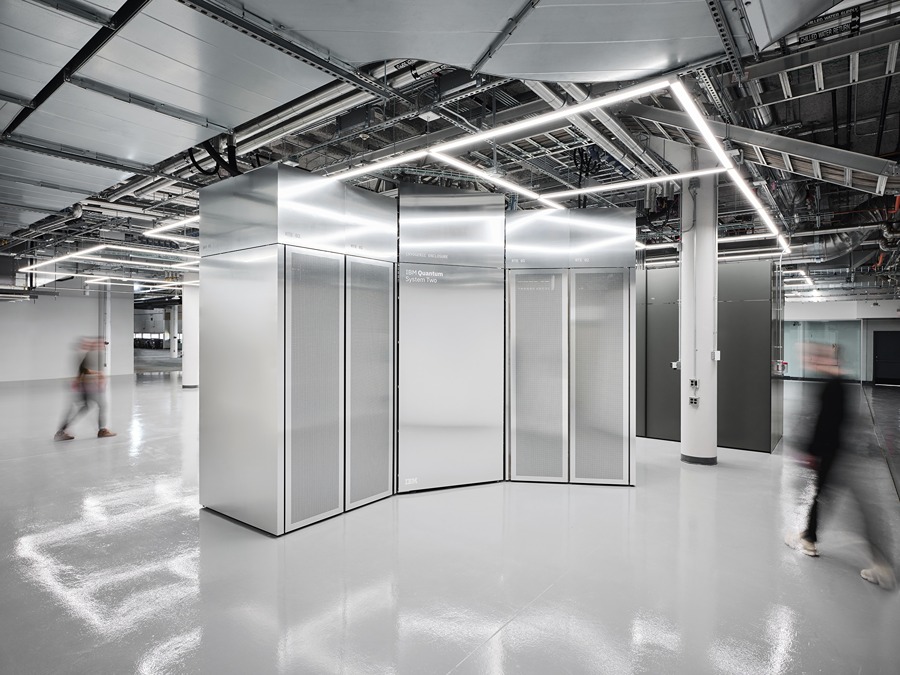
- The hub will host the nation’s first IBM Quantum System Two, powered by the IBM Quantum Nighthawk processor (433 qubits, 99.9 % two‑qubit gate fidelity).
- The system will be installed at the Swiss National Supercomputing Centre (CSCS) in Lugano and made available to Swiss industry, startups, and academia via cloud access.
- The partnership blends Lockheed Martin’s quantum‑sensing and additive‑manufacturing expertise with IBM’s quantum‑computing and AI capabilities, accelerating algorithm development, materials research, finance optimisation, and talent‑building in Switzerland.
IBM‑Lockheed Martin Quantum Innovation Hub at ETH Zurich
Why the Hub Matters
Through an offset agreement with armasuisse, IBM and Lockheed Martin have created a dedicated quantum‑technology centre on the ETH Zurich campus. ETH will supply research talent, laboratory infrastructure, and direct links to Swiss companies, while IBM will operate the IBM Quantum System Two on‑site at CSCS in Lugano. The hub is slated for full deployment by Q4 2026.
Core Technology: IBM Quantum System Two
| Feature | IBM Quantum System Two (Nighthawk) | IBM Quantum System One (Eagle) |
|---|---|---|
| Qubit count | 433 superconducting qubits | 127 qubits |
| Two‑qubit gate fidelity | 99.9 % (average) | 99.4 % |
| Quantum Volume | 2,048 (QV‑2K) | 1,024 (QV‑1K) |
| Cryogenic temperature | 10 mK (dilution refrigerator) | 10 mK |
| Physical footprint | 2 × 2 m rack (modular) | 1 × 1 m rack |
| Cloud access | IBM Quantum Network (open‑access tier + premium) | IBM Quantum Network (premium) |
| Expected runtime per job | Up to 48 h (continuous) | Up to 24 h |
All figures are based on IBM’s public road‑map (2024‑2026) and CSCS specifications.
The Nighthawk processor’s 433 qubits represent a 3.4× increase over the previous Eagle‑based System One, while gate fidelity improves by 0.5 percentage points, translating into roughly four‑fold higher algorithmic depth before error correction becomes necessary.
Delivering Quantum Capability to the Swiss Ecosystem
Immediate Benefits for Partners
Organizations that join the hub through ETH Zurich gain:
- Direct cloud access to IBM’s full quantum fleet (including System Two and future generations).
- On‑premise time‑slot reservations on the dedicated CSCS machine, enabling low‑latency experiments.
- Technical support from IBM quantum engineers and ETH researchers for algorithm optimisation.
Target Application Areas
- Chemistry & Materials Science – Simulating catalytic pathways and high‑entropy alloys with >10‑fold speed‑up versus classical HPC.
- Optimization – Solving large‑scale logistics, supply‑chain, and scheduling problems (e.g., 10⁴‑variable QUBO instances).
- Financial Services – Portfolio risk analysis and Monte‑Carlo acceleration using quantum‑enhanced sampling.
- Quantum‑Enhanced Sensing – Leveraging Lockheed Martin’s sensor designs to improve metrology for aerospace and defense.
Expanded Joint Research Between IBM and Lockheed Martin
The partnership builds on a decade‑long collaboration that already produced:
- Quantum‑sensing prototypes for satellite navigation with sub‑nanometer precision.
- Additive‑manufacturing workflows that embed quantum‑derived material data directly into 3‑D‑printed components.
With System Two in place, the two firms will co‑develop hybrid quantum‑AI pipelines that combine IBM’s generative‑AI models with quantum‑accelerated optimisation, aiming to shorten product‑development cycles for aerospace parts by up to 30 %.
Workforce and Talent Development
ETH Zurich will launch a Swiss Quantum Academy, offering:
- Certified quantum‑computing courses (30 credit‑hour curriculum).
- Summer internships on real‑time projects using System Two.
- Scholarships for PhD candidates focusing on quantum algorithms for industry.
The initiative is designed to create a pipeline of 500‑plus quantum‑skilled professionals in Switzerland by 2030.
Bottom Line
The IBM‑Lockheed Martin quantum hub at ETH Zurich positions Switzerland at the forefront of practical quantum computing. By delivering the nation’s first IBM Quantum System Two—featuring a 433‑qubit Nighthawk processor with industry‑leading fidelity—and coupling it with Lockheed Martin’s sensor and manufacturing know‑how, the collaboration promises tangible breakthroughs across chemistry, optimisation, finance, and aerospace. Immediate cloud access, on‑site resources, and a dedicated talent‑development program ensure that Swiss innovators can translate quantum potential into commercial value within the next few years.


