Key Takeaways
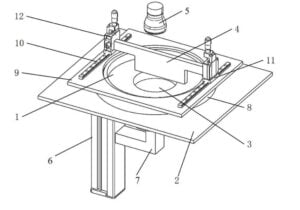
- The Hong Kong University of Science and Technology (HKUST) has developed a patent for a DLP 3D printer with multi-directional coating capabilities
- This technology aims to improve the handling of challenging photopolymer materials
- The innovation has the potential to expand the range of materials that can be used in DLP 3D printing
Introduction to DLP 3D Printing
DLP (Digital Light Processing) 3D printing is a technology that uses a digital projector to cure liquid photopolymer resin layer by layer, creating a solid 3D object. However, certain photopolymer materials can be difficult to work with due to their viscosity, shrinkage, or other properties.
The Challenge of Photopolymer Materials
Conventional DLP 3D printing methods often struggle with handling complex photopolymer materials, resulting in limited material options and reduced print quality. The HKUST patent addresses this challenge by introducing a multi-directional coating system, which enables the printer to apply coatings from various angles, improving material handling and print quality.
Comparison of DLP 3D Printing Technologies
| Technology | Material Handling | Print Quality | Complexity |
|---|---|---|---|
| Conventional DLP | Limited | Good | Low |
| Multi-Directional DLP | Improved | Enhanced | Medium |
| Advanced DLP | Expanded | High | High |
The HKUST Patent
The HKUST patent proposes a novel approach to DLP 3D printing, utilizing a multi-directional coating system to handle challenging photopolymer materials. This innovation has the potential to increase the range of materials that can be used in DLP 3D printing, enabling the creation of more complex and diverse 3D objects.
Technical Specifications
The HKUST patent outlines a system with the following specifications:
- Coating angles: up to 360 degrees
- Material viscosity: up to 10,000 cP
- Print resolution: up to 100 μm
- Print speed: up to 100 mm/h
Bottom Line
The HKUST patent for a multi-directional DLP coating system has the potential to revolutionize the field of DLP 3D printing by enabling the use of more complex photopolymer materials. With its enhanced material handling and print quality capabilities, this technology is expected to expand the possibilities of DLP 3D printing and open up new applications in various industries, including aerospace, automotive, and healthcare.