Key Takeaways
- Secure additive manufacturing can reduce downtime and financial losses in the oil and gas industry
- Localized manufacturing enables parts to be produced closer to the point of need, reducing dependence on inventory and logistics
- Concerns around intellectual property theft and unauthorized part reproduction have hindered the adoption of distributed manufacturing
- Petrobras, a leading energy company, has successfully implemented secure additive manufacturing for critical components such as handwheels
Introduction to Secure Additive Manufacturing
The oil and gas industry faces significant operational and financial losses due to unplanned downtime, with each day of delay translating to substantial costs. Traditional supply chains can be slow, particularly for assets located offshore or in remote locations. Additive manufacturing offers a solution by enabling localized production of critical components, reducing dependence on inventory and logistics.
Challenges in Distributed Manufacturing
Despite the potential of additive manufacturing, many organizations have been hesitant to scale distributed manufacturing due to concerns around intellectual property theft, unauthorized part reproduction, and the challenge of maintaining control over sensitive manufacturing data. These concerns are particularly relevant for companies like Petrobras, which operates in a high-stakes environment where component failure can have severe consequences.
Case Study: Petrobras and Secure Additive Manufacturing
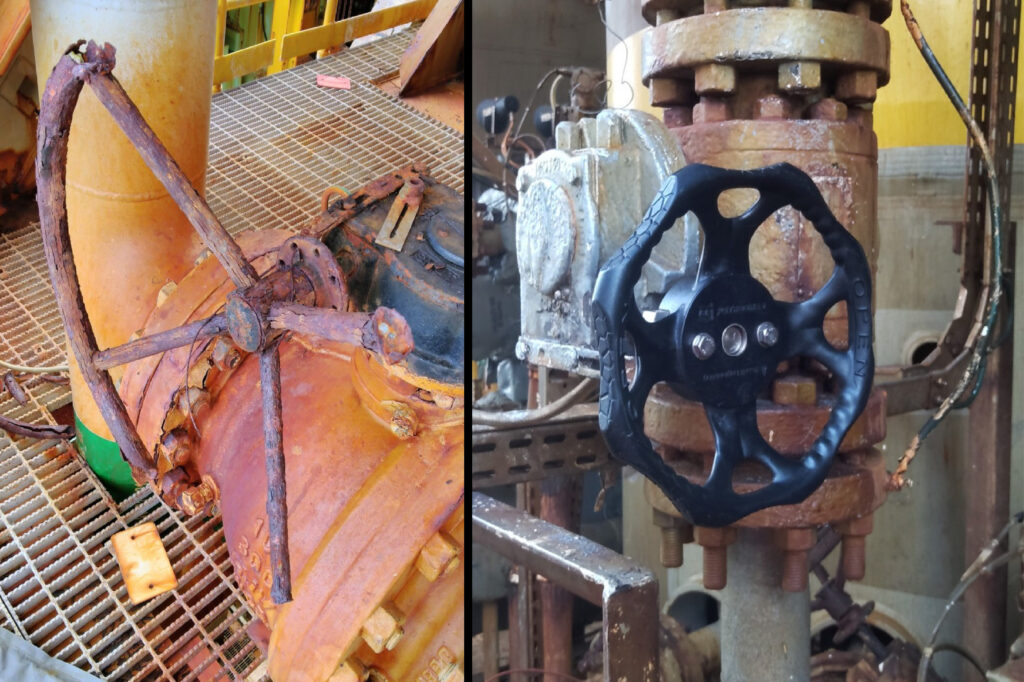
Petrobras has successfully implemented secure additive manufacturing for critical components such as handwheels, which are used for manual valve operation. These components are prone to corrosion and wear, requiring frequent replacement. By producing handwheels closer to the point of need, Petrobras can reduce maintenance schedules and operational costs. The company has partnered with Sparely, which orchestrates the spare parts supply chain, and Korall Engineering, which developed the handwheel design.
Comparison of Traditional and Additive Manufacturing
| Manufacturing Method | Production Time | Cost | Dependence on Inventory |
|---|---|---|---|
| Traditional Manufacturing | 2-6 weeks | High | High |
| Additive Manufacturing | 1-3 days | Low | Low |
Benefits of Secure Additive Manufacturing
The implementation of secure additive manufacturing has numerous benefits for Petrobras, including reduced downtime, improved responsiveness, and lower operational costs. By producing critical components closer to the point of need, the company can minimize its dependence on traditional supply chains and reduce the risk of intellectual property theft and unauthorized part reproduction.
Bottom Line
Secure additive manufacturing is a game-changer for the oil and gas industry, offering a solution to reduce downtime and financial losses. By implementing localized production of critical components, companies like Petrobras can improve their responsiveness, reduce operational costs, and minimize their dependence on traditional supply chains. With its potential to transform the industry, secure additive manufacturing is an essential technology for companies looking to stay ahead of the curve.