Key Takeaways
- Formnext Asia Shenzhen 2026 hosted 330 exhibitors across 20,000 m², the largest show to date.
- 42 % of participants were located in the Greater Bay Area, and >50 % were founded after 2016, underscoring a youthful, locally‑driven ecosystem.
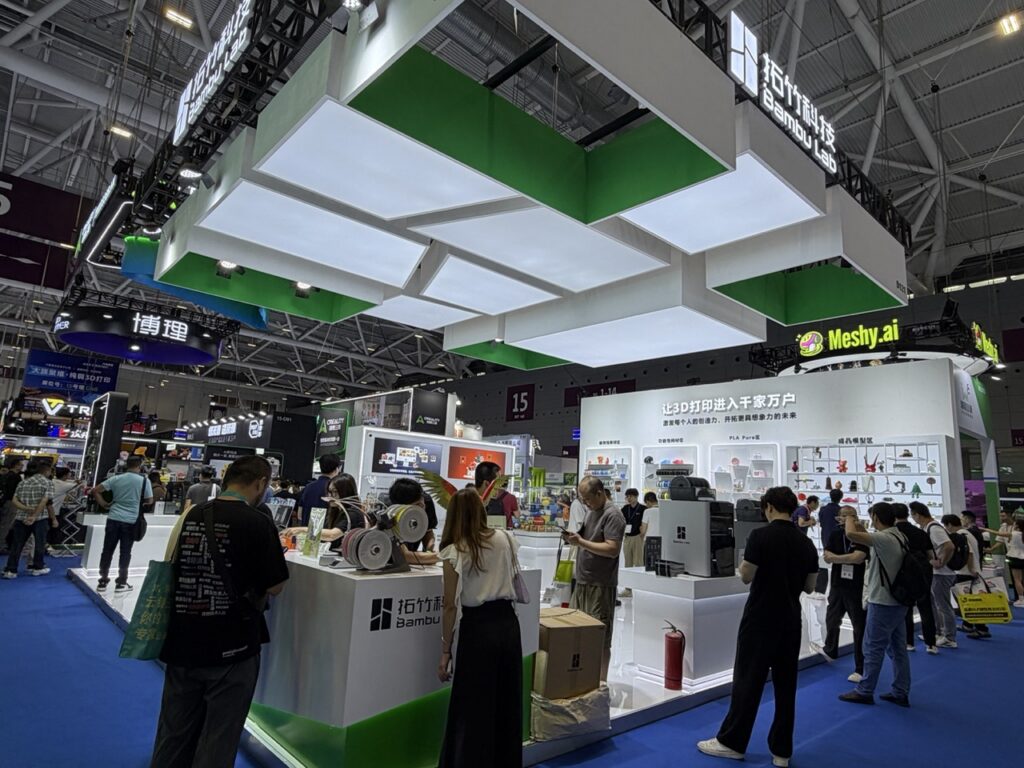
- Consumer‑grade 3‑D printers are now treated as production‑line equipment, with firms such as Bambu Lab and Meshy.ai pushing the boundary from hobbyist tools to end‑to‑end workflow platforms.
- Chinese suppliers now provide the full stack—scanners, lasers, powder‑handling, CT inspection, and filament‑extrusion—enabling rapid, “turn‑key” additive‑manufacturing (AM) solutions.
- The exhibition floor reflects regional demand for consumer goods, electronics, footwear, molds, and factory‑automation infrastructure rather than a neutral market‑share metric.
The Scale of Formnext Asia Shenzhen 2026
Exhibition Footprint
- 330 exhibitors occupied 20,000 m² of Hall 15, a 25 % increase in booth count versus the 2025 edition.
- 42 % of the companies were headquartered in the Greater Bay Area (GBA), a hub that includes Shenzhen, Guangzhou, and Hong Kong.
Company Demographics
| Metric | Figure |
|---|---|
| Companies founded ≥ 2016 | > 50 % |
| Hardware + Materials exhibitors | ≈ 70 % of total |
| Consumer‑focused exhibitors | ≈ 30 % |
| New‑generation laser & scanner providers | 12 % |
These numbers illustrate a young, supply‑dense cluster where hardware, raw material, and software firms co‑locate to serve fast‑growing domestic applications.
Consumer AM Has Graduated to Production‑Line Status
From Hobby to Factory Floor
- Bambu Lab now ships over 120,000 entry‑level units per year, a volume that rivals mid‑tier industrial printer sales.
- Its X1‑Carbon model offers a 0.6 mm layer height, 300 µm nozzle, and up to 150 mm × 150 mm × 150 mm build volume, while integrating AI‑driven print‑failure detection.
Content & Workflow Integration
- Meshy.ai showcased a cloud‑based platform that links design libraries, slice optimization, and post‑processing analytics, turning a standalone printer into a digital manufacturing hub.
| Feature | Bambu Lab X1‑Carbon | Typical Desktop Competitor |
|---|---|---|
| Build volume | 150 × 150 × 150 mm | 120 × 120 × 120 mm |
| Print speed (average) | 300 mm³/s | 150 mm³/s |
| Material palette | PLA, PETG, ABS, Nylon, Carbon‑filled | PLA, PETG |
| AI monitoring | Yes (real‑time) | No |
| Price (USD) | $2,199 | $1,200 |
The data demonstrates that consumer‑grade printers now deliver speed, material versatility, and intelligence comparable to low‑end industrial systems.
The Full AM Stack Made in China
End‑to‑End Supply Chain
- Green‑laser firms displayed copper‑cold plates designed for high‑density AI server cooling, highlighting cross‑industry synergies.
- Booths featured 3‑D‑printed footwear, robotic end‑effectors, and mass‑production farms of up to 1,000 machines operating in parallel.
- Supporting equipment—laser scanners (≤ 20 µm accuracy), powder‑handling modules (≤ 0.5 kg/h), CT inspection stations (voxel size 30 µm), and filament extrusion lines (up to 30 kg/day)—were all sourced from Chinese manufacturers.
Implications for Global Supply Chains
Because the entire ecosystem can be sourced domestically, Chinese OEMs can reduce lead times from 12 weeks to under 4 weeks for a complete AM production line. This speed advantage is reshaping where multinational firms locate their additive‑manufacturing hubs.
What Lies Ahead?
Regional Demand Drives Innovation
The concentration of booths around consumer goods, electronics, footwear, molds, and factory automation signals where Chinese buyers are allocating capital. Expect accelerated development in:
- High‑throughput filament farms (targeting > 5 ton/year).
- Hybrid laser‑sintering/ink‑jet systems for multi‑material parts.
- AI‑optimized workflow platforms that close the loop from CAD to post‑processing.
Global Competitors Must Adapt
Western manufacturers that rely on fragmented supply chains may need to partner with Chinese stack providers or re‑invest in local capabilities to stay competitive.
Bottom Line
Formnext Asia Shenzhen 2026 proved that China has assembled a complete, locally sourced additive‑manufacturing stack capable of turning consumer‑grade 3‑D printers into genuine production assets. With a youthful, GBA‑centric exhibitor base and a full complement of hardware, materials, and software suppliers, the region can launch end‑to‑end AM solutions in weeks rather than months. Companies worldwide should view this ecosystem as both a benchmark for speed and a strategic partner network for future additive‑manufacturing endeavors.


