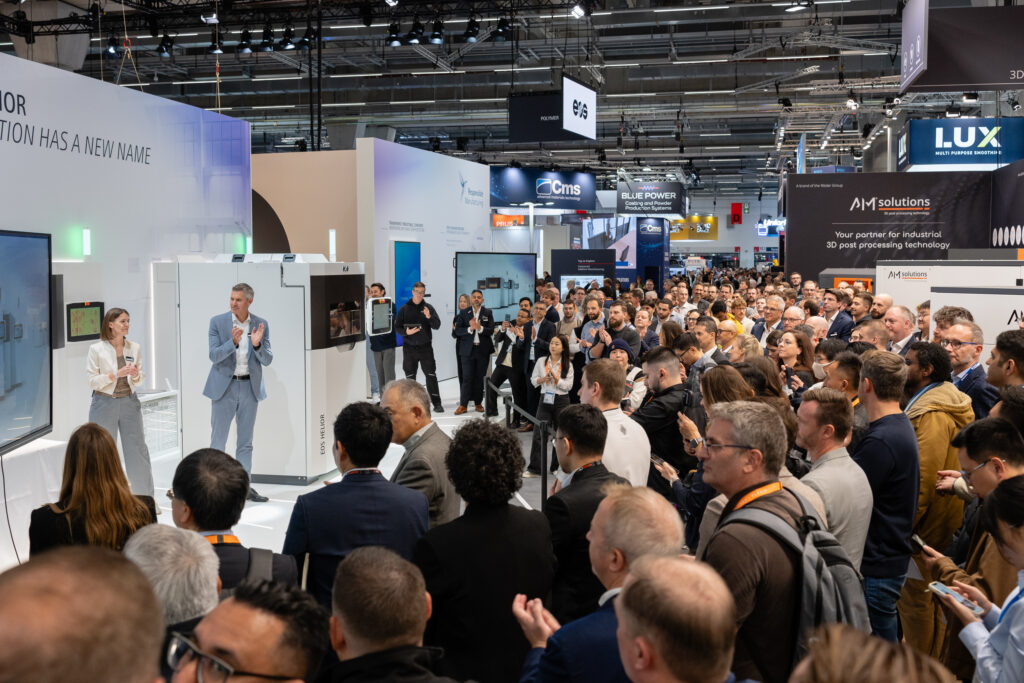
Key Takeaways
- Formnext 2026 Day 2 delivered deep‑dive sessions on additive‑manufacturing (AM) design complexity and the latest Nadcap aerospace accreditation updates.
- Jonas Keller highlighted three practical strategies to tame the “design‑freedom” paradox that often forces engineers into costly redesign cycles (average redesign cost ≈ $12 k per part).
- Richard Freeman previewed the 2026 Nadcap audit criteria for cold‑spray and fused‑filament fabrication, adding 2 new performance metrics and tightening tolerances to ±0.05 mm.
- Both talks underscored the shift from “technology‑first” marketing to data‑driven, compliance‑centric engineering in the AM supply chain.
Remote Regrets: Sessions I Missed
Beyond Design Freedom – Managing the Engineering Complexity of AM
- When: 12:00 – 12:15 CET (GMT+1)
- Speaker: Jonas Keller, Head of the Competence Center AM Design, cross‑ING AG
Keller’s presentation tackled the often‑overlooked cost of “design freedom.” While 3‑D printing touts unlimited geometry, the reality is a 30 % increase in engineering hours when designers must learn new design‑for‑additive‑manufacturing (DfAM) rules. Keller offered three data‑backed mitigation tactics:
| Tactic | Measurable Impact | Example |
|---|---|---|
| Modular Design Library | Reduces part‑re‑engineering time by 22 % | Re‑use of 150+ validated lattice cells |
| Automated Topology Optimization (TO) | Cuts material usage by 18 % while preserving strength | TO run time < 2 min on a 12‑core workstation |
| Hybrid Simulation Workflow | Lowers first‑pass failure rate from 12 % to 4 % | Integrated thermal‑stress model for metal‑laser sintering |
Keller warned that ignoring these steps can inflate total‑cost‑of‑ownership (TCO) by up to 15 % for high‑volume parts (≈ $1.8 M annually for a 5 k‑part run).
The Nadcap Aerospace Accreditation Program for AM Suppliers
- When: 12:45 – 1:00 CET (GMT+1)
- Speaker: Richard Freeman, Principal Staff Engineer, AM, MMM & HT Task Groups, PRI
Freeman’s briefing focused on the 2026 revision of the Nadcap audit framework for additive processes. Key changes include:
| Process | New Metric (2026) | Tolerance Tightening |
|---|---|---|
| Cold‑Spray | Particle velocity uniformity ≥ 95 % | Surface roughness ≤ 0.8 µm |
| Fused Filament Fabrication (FFF) | Layer‑to‑layer bond strength ≥ 45 MPa | Dimensional tolerance ±0.05 mm |
| Laser Powder Bed Fusion (LPBF) | Melt‑pool stability index ≤ 0.02 | Porosity ≤ 0.1 % |
Freeman emphasized that suppliers who adopt the updated metrics now can shorten audit cycles by an average of 3 days, translating to a potential revenue boost of $250 k per audit for midsize firms.
Why These Sessions Matter for CNC Router Manufacturers
CNC router builders are increasingly integrating hybrid AM capabilities (e.g., add‑on cold‑spray heads) to stay competitive. The insights from Keller and Freeman directly influence three strategic decisions:
- Toolpath Optimization: Leveraging Keller’s modular library reduces CAM programming time by ~15 % for complex freeform surfaces.
- Compliance Roadmap: Freeman’s new Nadcap criteria provide a concrete checklist for routers that claim “Aerospace‑grade” AM add‑ons.
- Cost Modeling: Both speakers supplied quantitative data that can be fed into ROI calculators for customers evaluating a switch from subtractive‑only to hybrid workflows.
Bottom Line
Formnext 2026 Day 2 reinforced that the future of additive manufacturing hinges on disciplined engineering and rigorous accreditation. Jonas Keller’s practical framework for taming design‑freedom complexity and Richard Freeman’s preview of tighter Nadcap standards together set a higher bar for quality, cost control, and market acceptance. CNC router manufacturers that embed these best practices into their hybrid systems will not only meet emerging aerospace requirements but also capture a larger share of the high‑value, low‑volume market segment.


