Key Takeaways
- The federal government is transitioning additive manufacturing from experimental to deployment phase
- 3D printed concrete and earth-based materials are being considered for military infrastructure
- Additive manufacturing can provide rapid construction of hardened military structures
- The technology has the potential to replace traditional tents with more durable and secure buildings
- The Army Corps of Engineers and other federal agencies are involved in the development and implementation of additive manufacturing for construction
Introduction to Additive Manufacturing in Federal Construction
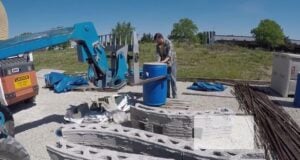
The federal government is making significant strides in the adoption of additive manufacturing for construction purposes. This technology, also known as 3D printing, has the potential to revolutionize the way military infrastructure is built. According to experts Charles R. Goulding and Preeti Sulibhavi, additive manufacturing is moving from the experimental phase to deployment, with a focus on using 3D printed concrete and earth-based materials.
Benefits of Additive Manufacturing for Military Construction
The use of additive manufacturing for military construction offers several benefits, including:
- Rapid construction: Additive manufacturing can produce buildings and structures quickly, which is essential for military operations.
- Increased durability: 3D printed concrete and earth-based materials can provide more durable and secure buildings than traditional tents.
- Reduced costs: Additive manufacturing can reduce construction costs by minimizing waste and optimizing material usage.
Comparison of Traditional and Additive Manufacturing Methods
| Method | Construction Time | Material Usage | Cost |
|---|---|---|---|
| Traditional | 6-12 months | High waste generation | High |
| Additive Manufacturing | 1-3 months | Minimal waste generation | Lower |
Implementation and Future Plans
The Army Corps of Engineers and other federal agencies are working together to develop and implement additive manufacturing for construction. The goal is to use this technology to build hardened military structures that can provide better protection for personnel. With the potential to replace traditional tents with more durable and secure buildings, additive manufacturing is poised to play a significant role in the future of military construction.
Bottom Line
The federal government's transition of additive manufacturing from experiment to deployment marks a significant milestone in the adoption of this technology for construction purposes. With its potential to provide rapid, durable, and cost-effective construction, additive manufacturing is likely to play a major role in the future of military infrastructure development. As the technology continues to evolve, it will be important to monitor its progress and assess its potential for widespread adoption.