Key Takeaways
- Students at ETH University have successfully 3D printed an experimental Rotating Detonation Rocket Engine (RDRE)
- RDREs have the potential to be highly optimized, smaller, lighter, and more efficient than traditional rocket engines
- The use of 3D printing in RDREs can reduce weight, optimize performance, and improve overall design
- The Pegasus team, consisting of 19 students, aimed to create a bi-liquid RDRE with 10% more power than alternatives
- The team successfully tested their engine at Dübendorf airfield, achieving a remarkable feat considering the complexity of the project
Introduction to RDREs
Rotating Detonation Rocket Engines (RDREs) are a type of rocket engine that burns propellant in a ring-shaped combustion chamber, producing a continuous supersonic wave detonation. This design has the potential to be more efficient and compact than traditional rocket engines, with fewer parts and a more optimized design. Organizations such as JAXA, NASA, and AFRL have been working on RDREs, and companies like RTX and Astrobotic have also made significant contributions to the field.
The Pegasus Team's Achievement
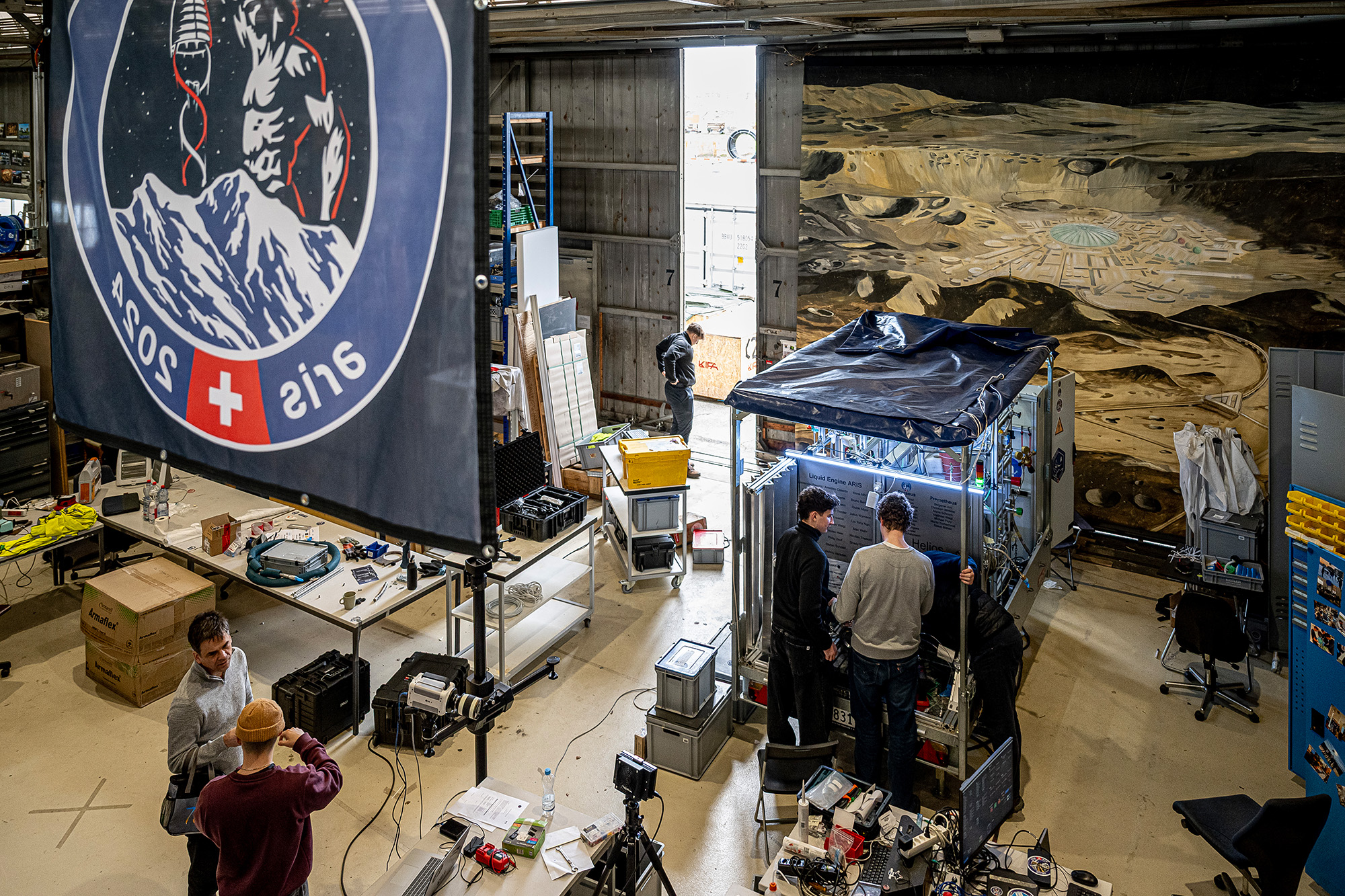
The Pegasus team, consisting of 19 students from ETH University, took part in the university's Aris space and rocket program with the goal of creating a bi-liquid RDRE. The team, consisting of students in their second and third years of college, successfully designed and tested their engine at Dübendorf airfield. The difficulty of the project lay in creating the right injector, oxidizer, and structure to ignite the reaction correctly, without being torn apart by the reaction's pressure and temperature, which produces an explosive wave 20,000 times per second.
Comparison of RDREs and Traditional Rocket Engines
| Characteristic | RDREs | Traditional Rocket Engines |
|---|---|---|
| Design | Ring-shaped combustion chamber | Traditional combustion chamber |
| Efficiency | Potential for higher efficiency | Lower efficiency |
| Size | Smaller and lighter | Larger and heavier |
| Complexity | Fewer parts | More complex design |
| Organizations working on RDREs | JAXA, NASA, AFRL, RTX, Astrobotic | Various organizations |
The Role of 3D Printing in RDREs
3D printing has played a crucial role in the development of RDREs, allowing for the creation of complex geometries and optimized designs. The use of 3D printing in RDREs can reduce weight, optimize performance, and improve overall design. With the integration of 3D printing, RDREs have the potential to become a new generation of space propulsion, outperforming traditional rocket engines.
Bottom Line
The successful 3D printing of an experimental RDRE by students at ETH University is a remarkable achievement, demonstrating the potential of RDREs to become a game-changer in the field of space propulsion. With the use of 3D printing and the optimized design of RDREs, the possibilities for space exploration and development are vast. As research and development continue, we can expect to see significant advancements in the field of RDREs, leading to more efficient, compact, and powerful rocket engines.