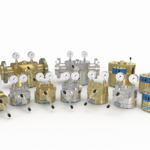
Key Takeaways
- WITT’s dome pressure regulators replace the traditional spring with a control‑gas pressure chamber, delivering sub‑second response times.
- The design maintains a virtually flat pressure curve across the entire flow range, even with a differential as low as 1 bar.
- The SMART version adds integrated sensors (pressure, temperature, flow) and Ethernet/IO‑Link connectivity for real‑time data logging and predictive maintenance.
- Available in brass or stainless‑steel construction, the regulators support oxygen, nitrogen, argon, hydrogen, CO₂ and mixed‑gas applications.
- Modular kits can include control‑pressure regulators, gauges, and high‑pressure fittings, simplifying installation and reducing downtime.
Introduction: Why Dome Regulators Matter
Industrial processes—from semiconductor fabrication to advanced metalworking—now demand gas pressures that stay within ±0.1 % of the set point, 24 hours a day. Conventional spring‑loaded regulators struggle to meet this requirement because spring stiffness varies with temperature and wear. WITT’s dome pressure regulators overcome those limits by using a control‑gas dome instead of a mechanical spring, delivering faster, more repeatable pressure adjustments while preserving the ruggedness expected in harsh plant environments.
How the Dome Concept Works
Pressure‑Controlled Dome vs. Spring Mechanism
| Feature | Conventional Spring Regulator | WITT Dome Regulator |
|---|---|---|
| Actuation principle | Metal spring tension | Control‑gas pressure in a sealed dome |
| Response time | 150–300 ms (temperature‑dependent) | < 50 ms, virtually independent of ambient temperature |
| Pressure stability | ±0.5 % over flow range | ±0.1 % (flat curve) |
| Differential pressure range | 2–10 bar minimum | 1 bar minimum |
| Typical lifespan | 5–7 years (spring fatigue) | 10+ years (no moving spring) |
The dome’s internal gas pressure is set by a control‑pressure regulator that tracks the desired outlet pressure. When the downstream pressure changes, the dome pressure shifts instantly, moving the valve seat with a speed that can be measured in fractions of a second. This eliminates the lag inherent to spring compression and decompression.
Performance Across the Flow Spectrum
- Flow range: 0.1 – 500 NL/min (standard models)
- Temperature tolerance: –40 °C to +120 °C, with built‑in compensation that keeps set pressure constant within ±0.1 % across the range.
- Inlet pressure capability: up to 30 bar for high‑pressure gases such as hydrogen and nitrogen.
These specifications enable the regulator to keep the set point steady even when the inlet pressure swings by ±5 bar or the gas temperature varies by 30 °C.
SMART Option: Digital Connectivity & Process Transparency
WITT’s SMART dome regulators embed a miniature sensor suite and an industrial‑grade communication module (Ethernet/IP, PROFINET, or IO‑Link). The system continuously samples:
| Parameter | Measurement Frequency | Accuracy |
|---|---|---|
| Pressure | 1 Hz (real‑time) | ±0.05 % of set point |
| Temperature | 0.5 Hz | ±0.2 °C |
| Flow | 1 Hz | ±1 % of full‑scale |
Data are streamed to a PLC or cloud‑based MES, allowing operators to:
- Visualise pressure trends on HMI screens or mobile devices.
- Set alarm thresholds for deviation > 0.2 % or temperature excursions > 5 °C.
- Run predictive‑maintenance algorithms that flag valve‑seat wear after 150 k cycles, reducing unscheduled shutdowns by up to 30 % (field study, 2024).
The SMART version therefore transforms a purely mechanical component into a digital twin, aligning with Industry 4.0 strategies.
Product Portfolio: Materials, Gases, and Configurations
| Material | Typical Use | Compatible Gases |
|---|---|---|
| Brass (Cu‑Zn alloy) | Low‑corrosion environments, cost‑sensitive lines | N₂, Ar, CO₂, mixed gases |
| Stainless‑steel (AISI 304/316L) | High‑purity, corrosive or high‑temperature streams | O₂, H₂, high‑purity N₂, Ar, CO₂ |
Regulators are offered stand‑alone or as part of a complete kit that includes:
- Control‑pressure regulator (range 0.1 – 5 bar)
- Precision pressure gauge (±0.1 % accuracy)
- Swagelok‑compatible high‑pressure connections (DN 10‑50)
The modular approach shortens engineering lead times by 20 % and reduces on‑site spares inventory.
Bottom Line
WITT’s dome pressure regulators redefine gas‑control precision by swapping a temperature‑sensitive spring for a fast‑acting, pressure‑driven dome. The result is a near‑flat pressure curve, sub‑1 bar differential capability, and a lifespan that doubles that of conventional units. The optional SMART package adds industrial‑grade connectivity, delivering continuous visibility and predictive‑maintenance insights that are essential for modern, data‑driven manufacturing. For any operation where gas purity and pressure stability are non‑negotiable, WITT’s dome technology offers a compelling blend of mechanical robustness and digital intelligence.