Key Takeaways
- Free Halloween STL files are available for both tiny garden décor and life‑size skeleton props.
- PLA works well for indoor miniatures; PETG is recommended for pieces that will face sunlight or moisture.
- Print settings that consistently deliver quality: 0.20 mm layer height, 15 % infill, minimal supports.
- A 6‑ft skeleton can be built from modular parts printed on a 250 mm build‑area printer in under 30 hours total.
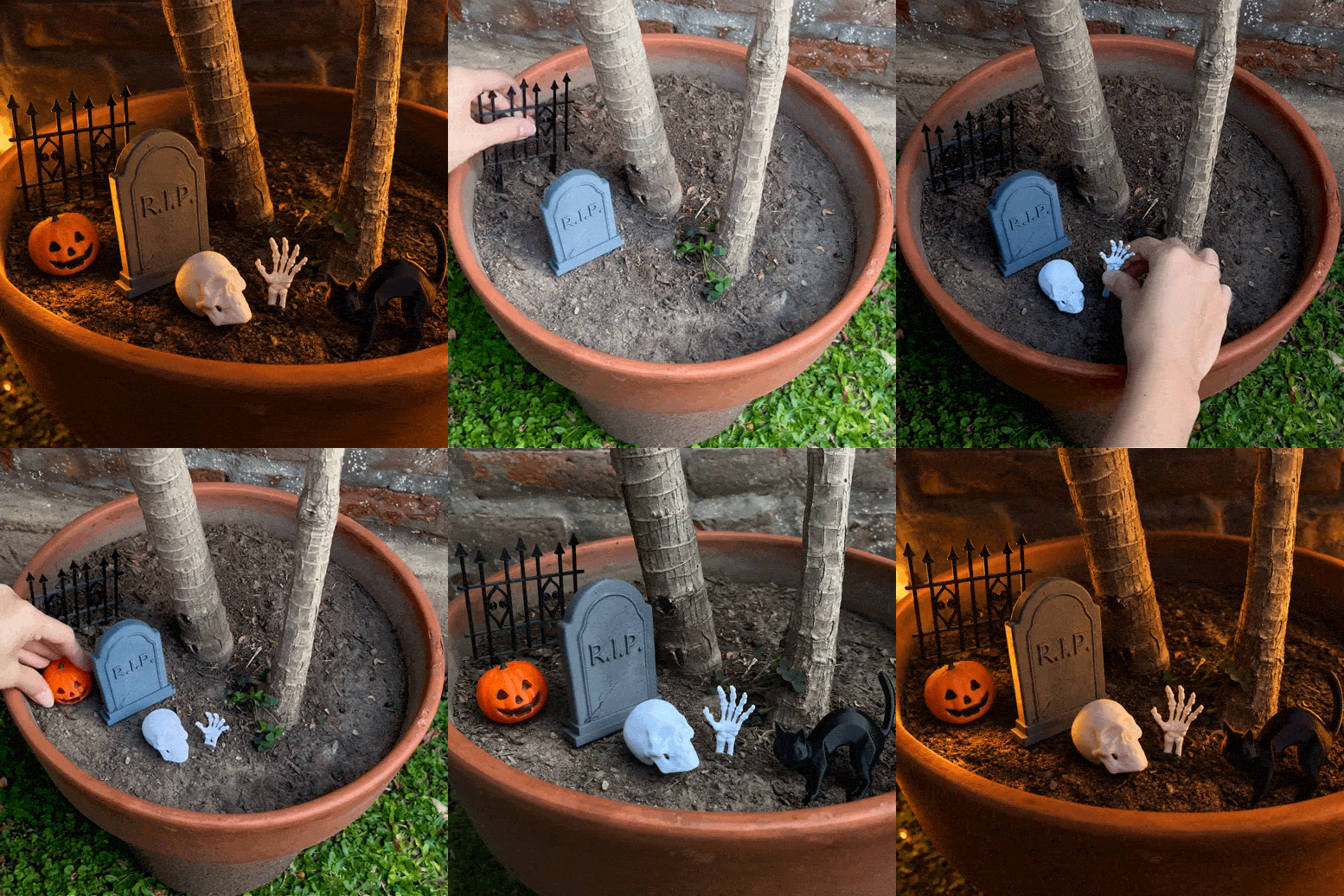
Mini Cemetery for a Flowerpot
Source: Cults3D – “Cemetery for a flowerpot” by marval3dstudio
| Component | Approx. Size | Recommended Filament | Print Settings |
|---|---|---|---|
| Tombstone | 60 × 30 × 15 mm | PLA (indoor) / PETG (outdoor) | 0.20 mm layer, 15 % infill, no supports |
| Skull | 45 mm diameter | PLA / PETG | 0.20 mm, 15 % infill, supports optional |
| Skeletal hand | 50 mm tall | PLA / PETG | 0.20 mm, 15 % infill, supports optional |
| Jack‑o‑lantern | 40 mm diameter | PLA / PETG | 0.20 mm, 15 % infill, no supports |
| Black cat | 30 mm tall | PLA / PETG | 0.20 mm, 15 % infill, supports recommended |
| Cemetery fence segment | 70 × 20 × 5 mm | PLA / PETG | 0.20 mm, 15 % infill, no supports |
The set is designed for quick, “plug‑and‑play” printing. All parts fit within a standard 220 × 220 mm build plate, allowing the entire kit to be printed in a single batch on most consumer‑grade printers.
Why it works:
- Scale: Small enough to sit on a pot rim yet detailed enough to read the engraved “RIP” on the tombstone.
- Material choice: PETG’s UV resistance (≈ 85 % retention after 500 h sun exposure) prevents yellowing when the garden receives direct light, while PLA’s lower extrusion temperature (≈ 200 °C) reduces warping for indoor use.
“Transform your plants and pots into a spooky miniature cemetery for #CULTSOWEEN,” the designer notes, emphasizing the set’s plug‑and‑play nature for both hobbyists and professional landscapers.
Modular Parts for a 6‑Foot Skeleton
Source: Thingiverse – “Parts for 6 foot Skeleton” (ID 7422322)
| Part | Dimensions (L × W × H) | Print Time (hrs) | Filament Used (g) | Recommended Nozzle |
|---|---|---|---|---|
| Torso (split) | 300 × 150 × 120 mm | 8.5 | 120 | 0.4 mm |
| Upper arms (2) | 150 × 50 × 30 mm | 2.1 each | 30 each | 0.4 mm |
| Lower arms (2) | 130 × 45 × 25 mm | 1.8 each | 25 each | 0.4 mm |
| Pelvis | 180 × 100 × 50 mm | 3.2 | 45 | 0.4 mm |
| Legs (2) | 250 × 80 × 30 mm | 5.0 each | 70 each | 0.4 mm |
| Hands & feet (4) | 60 × 30 × 20 mm | 0.6 each | 10 each | 0.4 mm |
Print strategy:
- Use a 0.20 mm layer height and 20 % infill with a grid pattern for structural strength.
- PETG (extrusion temp ≈ 240 °C) is preferred for the skeleton’s load‑bearing sections (torso, pelvis, legs) because of its higher tensile strength (~ 50 MPa) versus PLA (~ 30 MPa).
- Supports are only required for the torso’s inner ribs; orient the part flat on the build plate to minimize post‑processing.
Assembly notes:
- The design employs snap‑fit joints and M3‑type screws (included in the STL package) to avoid adhesives.
- Full assembly time averages 45 minutes with a standard 6‑mm hex driver.
Choosing the Right Filament for Halloween Prints
| Property | PLA | PETG | ABS |
|---|---|---|---|
| Print Temp (°C) | 190‑210 | 230‑250 | 230‑250 |
| UV Resistance | Low (degrades after ~200 h) | High (≈ 85 % retained after 500 h) | Moderate |
| Water Resistance | Poor (absorbs ~0.5 % moisture) | Excellent (≤ 0.1 % absorption) | Moderate |
| Tensile Strength | 30 MPa | 50 MPa | 40 MPa |
| Recommended for Indoor Miniatures | ✅ | ✅ | ❌ |
| Recommended for Outdoor/Weather‑Exposed Props | ❌ | ✅ | ✅ (with enclosure) |
*For Halloween décor that will sit on a porch or garden, PETG delivers the best blend of durability