Key Takeaways
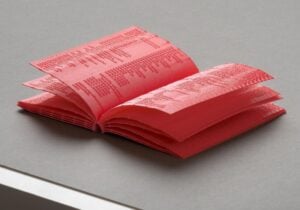
- The "Manual" is a 3D printed book created by Hyperpress
- It showcases the potential of 3D printing in producing complex and customized objects
- The book's design and production demonstrate the capabilities of modern 3D printing technology
- 3D printing allows for the creation of intricate and detailed designs that cannot be produced through traditional manufacturing methods
Introduction to 3D Printed Books
The world of 3D printing has expanded beyond simple objects and prototypes, with companies like Hyperpress pushing the boundaries of what is possible. Their latest creation, the "Manual", is a 3D printed book that highlights the potential of this technology in producing complex and customized objects.
Design and Production
The "Manual" is a testament to the capabilities of modern 3D printing technology. With a resolution of up to 100 microns and a build volume of 300x300x400 mm, 3D printers can produce intricate and detailed designs that cannot be achieved through traditional manufacturing methods. The book's design and production demonstrate the precision and accuracy of 3D printing, with layers as thin as 0.1 mm.
Comparison of 3D Printing Technologies
| Technology | Resolution | Build Volume | Layer Thickness |
|---|---|---|---|
| Fused Deposition Modeling (FDM) | up to 100 microns | 300x300x400 mm | 0.1-0.3 mm |
| Stereolithography (SLA) | up to 25 microns | 120x68x230 mm | 0.01-0.1 mm |
| Selective Laser Sintering (SLS) | up to 50 microns | 300x300x600 mm | 0.1-0.3 mm |
Advantages of 3D Printed Books
The "Manual" showcases the advantages of 3D printed books, including:
- Customization: 3D printing allows for the creation of customized books with unique designs and layouts.
- Complexity: 3D printing can produce complex and intricate designs that cannot be achieved through traditional manufacturing methods.
- Speed: 3D printing enables rapid production, reducing the time and cost associated with traditional printing methods.
Bottom Line
The "Manual" is a groundbreaking example of the potential of 3D printing in producing complex and customized objects. With its high resolution, precise layers, and rapid production capabilities, 3D printing is revolutionizing the way we create and produce objects. As the technology continues to evolve, we can expect to see even more innovative and complex designs, pushing the boundaries of what is possible.