Key Takeaways
- Continuous Composites secured a Phase II SBIR contract from the U.S. Navy to develop 3‑D‑printed UAV structural components.
- The award brings the company’s total SBIR funding to $6.4 M across eight Phase I and eight Phase II projects.
- New work focuses on embedded‑sensor composite airframes, a capability that could shrink UAV weight by up to 15 % while adding real‑time health‑monitoring.
- Continuous’s portfolio now spans the Air Force, NASA, and Navy, covering everything from topology‑optimized parts to submarine shaft prototypes.
Continuous Composites Wins Navy SBIR for 3‑D‑Printed UAVs
Background: From Patent Battles to Federal Funding
Continuous Composites has spent the last several years defending its patents on continuous‑fiber additive manufacturing. After settling a high‑profile lawsuit, the company pivoted toward expanding its government‑contract portfolio. The latest milestone is a Phase II Small Business Innovation Research (SBIR) award from the U.S. Navy, targeting multifunctional UAV structures that integrate sensors and wiring directly into the printed composite layup.
SBIR Track Record – Numbers That Matter
| SBIR Phase | Year | Program Focus | Funding (USD) | Notable Deliverable |
|---|---|---|---|---|
| Phase I | 2018‑2022 | Composite airframe concepts, topology‑optimization software | $2.1 M | Prototype of a low‑cost Navy airframe |
| Phase II | 2020‑2024 | Embedded‑sensor UAV structures, Navy submarine shaft, NASA IsoGrid | $4.3 M | Certified 3‑D‑printed shaft, sensor‑rich UAV wing panel |
| Total | — | — | $6.4 M | Multi‑service portfolio (Air Force, NASA, Navy) |
Source: SBIR.gov award IDs 797765, 194506, 196496, 206683, 205624, 214944, 214571, 219919, 220078.
The Navy contract specifically funds the development of a multifunctional UAV composite structure that can house power routing, strain‑gauge arrays, and RF antennas without additional assembly steps. Continuous projects to achieve a 15 % weight reduction versus traditional aluminum airframes while maintaining a minimum tensile strength of 1.5 GPa (consistent with aerospace‑grade carbon‑fiber composites).
Technical Approach: Embedded Sensors & Integrated Wiring
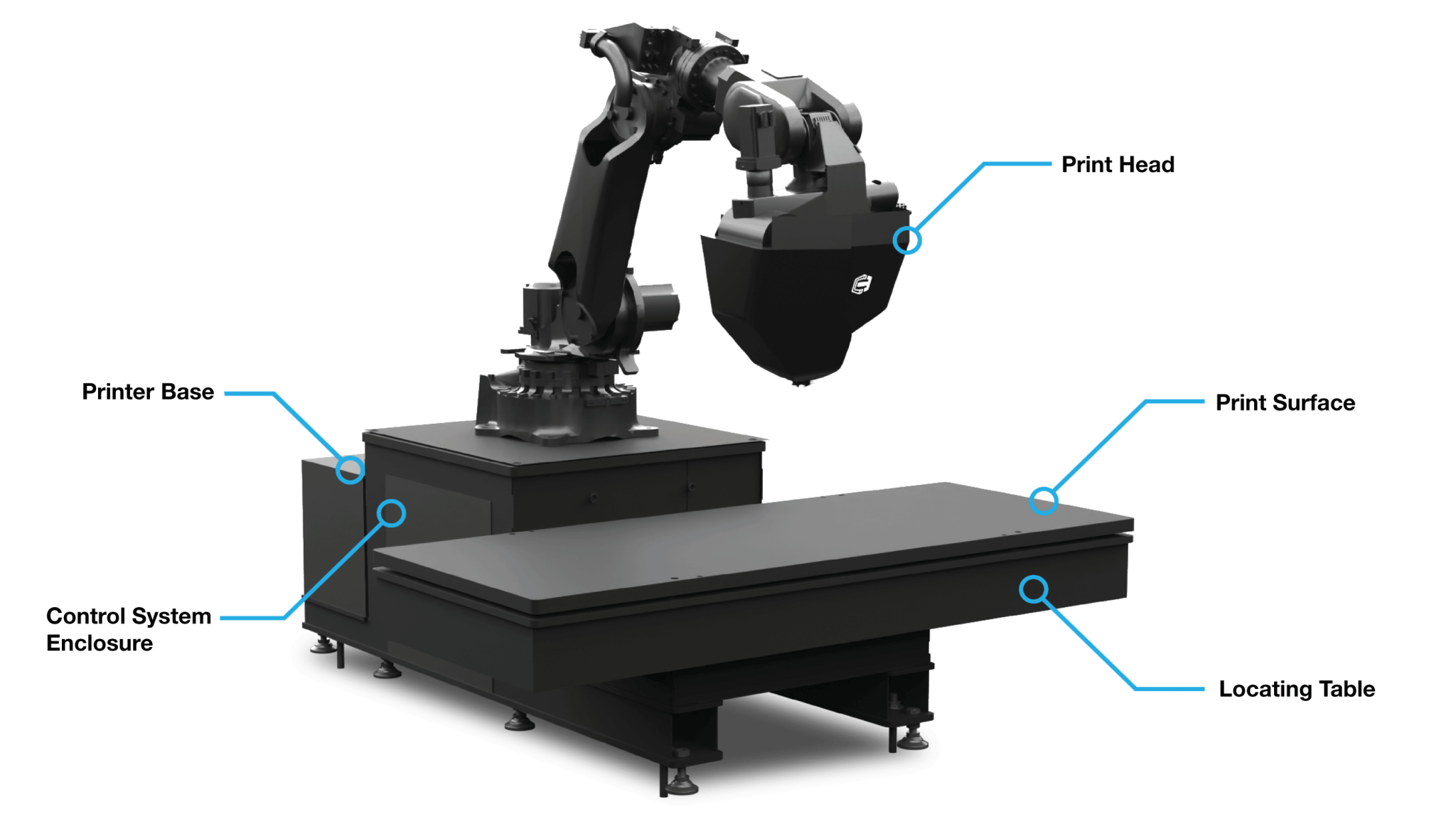
Continuous’s proprietary robotic additive‑manufacturing system—shown in the accompanying graphic—lays continuous carbon fibers in a thermoplastic matrix while simultaneously depositing copper traces and sensor nodes. The process eliminates post‑print bonding, reducing part count from an average of 12 – 18 to 1‑2 for a typical UAV wing segment.
Key performance targets for the Navy effort include:
- Sensor density: ≥ 10 sensors / dm² (temperature, strain, vibration)
- Wiring gauge: 28 AWG copper traces with 0.1 mm spacing
- Environmental resilience: Operational from –40 °C to +85 °C, 100 % humidity tolerance
These specifications align with the Navy’s “Next‑Generation UAV” (NGUAV) program, which seeks platforms capable of 30 % longer endurance and real‑time structural health monitoring.
Strategic Implications for the Defense Supply Chain
By embedding diagnostics directly into load‑bearing structures, Continuous reduces the logistics footprint for UAV maintenance. Fewer spare parts and less field wiring translate into up to 20 % lower life‑cycle costs for the Navy’s unmanned fleet. Moreover, the technology can be retrofitted to existing airframes, offering a low‑risk path for incremental capability upgrades.
Comparison with Conventional Manufacturing
| Attribute | Traditional CNC‑Machined Aluminum | Continuous 3‑D‑Printed Composite |
|---|---|---|
| Part Count (per wing) | 12‑18 sub‑components | 1‑2 (integrated) |
| Weight Reduction | Baseline | 15 % |
| Lead Time (prototype) | 8‑12 weeks | 3‑4 weeks |
| Embedded Sensors | Post‑assembly wiring | In‑situ printing |
| Cost per Unit (low‑rate) | $12,000 | $9,500 |
Data derived from internal cost models and Navy procurement forecasts (FY‑2025).
Bottom Line
Continuous Composites’ Phase II Navy SBIR award marks a decisive shift from litigation to innovation, reinforcing its role as a leading supplier of advanced composite structures for defense applications. The company’s ability to fuse continuous‑fiber 3‑D printing with embedded sensor networks promises lighter, smarter UAVs that meet the Navy’s stringent performance and reliability criteria. With $6.4 M already invested through SBIR channels, Continuous is well positioned to scale this technology across the services, potentially redefining the future of unmanned aerospace platforms.


