Key Takeaways
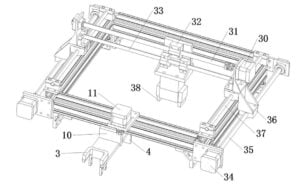
- A Chinese patent application has been published for a machine that combines FFF 3D printing and pen-based writing or drawing capabilities.
- The machine can switch between these two functions without requiring manual toolhead replacement.
- This innovative design aims to increase versatility and convenience in creative and productive applications.
Introduction to Combined 3D Printing and Plotting
A recent patent application from China has revealed a groundbreaking design for a machine that seamlessly integrates FFF (Fused Filament Fabrication) 3D printing and pen-based writing or drawing. This innovative device is capable of switching between these two distinct functions without the need for manual toolhead replacement, thereby streamlining workflows and enhancing user experience.
Technical Specifications and Capabilities
The proposed machine boasts a unique design that enables effortless transitions between 3D printing and plotting. With the ability to utilize a wide range of materials, including filaments and inks, this device caters to diverse creative and productive needs. Key features of this machine include:
- Automatic toolhead switching, eliminating the need for manual intervention
- Compatibility with various filament types and ink colors
- High-resolution printing and plotting capabilities, with precise control over line widths and layer heights
Comparison of Combined 3D Printing and Plotting Technologies
| Technology | Description | Benefits |
|---|---|---|
| FFF 3D Printing | Layer-by-layer deposition of melted filament | High precision, durable prints |
| Pen-Based Plotting | Line-by-line drawing using ink or other materials | Expressive, high-resolution graphics |
| Combined 3D Printing and Plotting | Integrated machine for both 3D printing and plotting | Increased versatility, convenience, and efficiency |
Advantages and Potential Applications
The combined 3D printing and plotting machine offers numerous advantages, including enhanced creativity, improved productivity, and reduced workflow complexity. Potential applications for this innovative device span various industries, such as:
- Art and design: enabling artists to create complex, layered pieces with ease
- Education: providing an interactive, hands-on learning experience for students
- Manufacturing: streamlining production processes and reducing material waste
Bottom Line
The Chinese patent application for a combined 3D printing and plotting machine marks a significant milestone in the development of innovative, multifunctional devices. With its automatic toolhead switching and versatility in material usage, this machine has the potential to revolutionize creative and productive workflows, offering users unprecedented flexibility and convenience. As this technology continues to evolve, we can expect to see increased adoption across various industries, driving growth and innovation in the world of 3D printing and beyond.