Key Takeaways
- BLT, a Chinese additive manufacturing (AM) original equipment manufacturer, has partnered with Haptron Scientific, a Shenzhen startup, to produce force sensors for the humanoid robotics market.
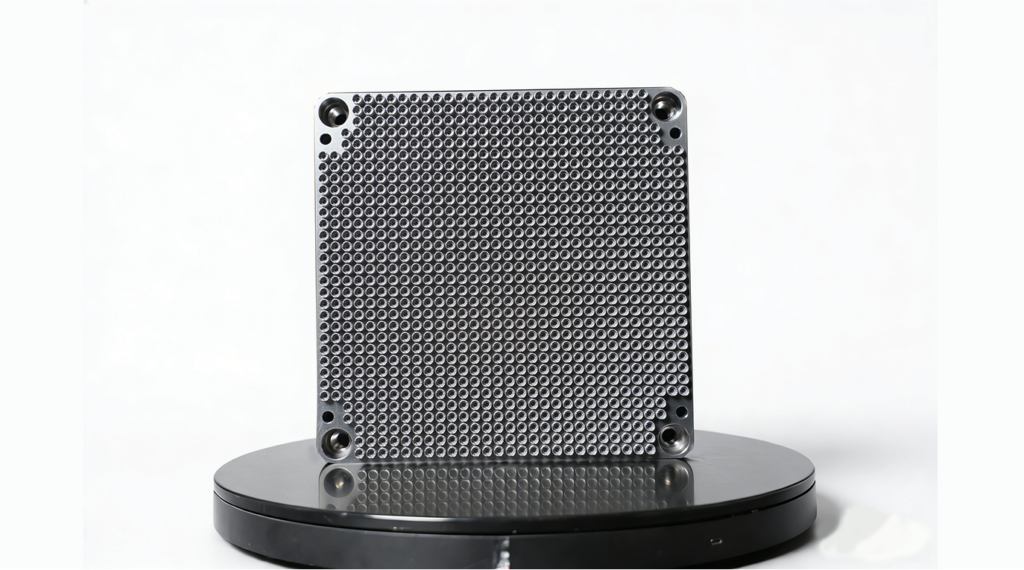
- The partnership has enabled the mass production of small, complex force sensors using metal AM, with BLT producing nearly 1,000 units per build plate.
- Additive manufacturing has improved the performance metrics of the final product, including a 20-30% weight reduction in the PhotonR40 wrist sensor.
- The use of AM has overcome the difficulties of producing small, complex parts using conventional methods.
- The partnership has the potential to drive growth in the humanoid robotics market, which is seeing major interest in China.
Introduction to Additive Manufacturing in Robotics
The manufacturing industry is undergoing a significant transformation, driven by the adoption of new technologies and techniques. Additive manufacturing (AM) is playing a crucial role in this shift, enabling the production of complex parts and products with greater precision and efficiency. In the field of robotics, AM is being used to produce small, complex parts such as force sensors, which are essential for the development of humanoid robots.
The Challenge of Producing Force Sensors
Haptron Scientific, a Shenzhen startup, has developed a range of force sensors, including the Photon Finger Max and PhotonR40 wrist sensors. However, the company faced significant challenges in producing these sensors using conventional methods, due to their small size and complex design. The diameter of the force sensor is just 8.5 millimeters (mm), making it difficult to produce consistently using traditional manufacturing techniques.
The Solution: Additive Manufacturing
BLT, a Chinese AM OEM, has partnered with Haptron Scientific to produce force sensors using metal AM. The partnership has enabled the mass production of these small, complex parts, with BLT producing nearly 1,000 units per build plate. The use of AM has also improved the performance metrics of the final product, including a 20-30% weight reduction in the PhotonR40 wrist sensor.
Comparison of Manufacturing Methods
| Manufacturing Method | Throughput | Complexity | Weight Reduction |
|---|---|---|---|
| Conventional Methods | Low | Limited | 0% |
| Additive Manufacturing | High | High | 20-30% |
Benefits of Additive Manufacturing
The use of AM in the production of force sensors has several benefits, including:
- Increased throughput: BLT is producing nearly 1,000 units per build plate, compared to just "tens of units" previously.
- Improved complexity: AM enables the production of complex parts with greater precision and accuracy.
- Weight reduction: The use of AM has enabled a 20-30% weight reduction in the PhotonR40 wrist sensor, leading to improved agility in robotic systems.
Bottom Line
The partnership between BLT and Haptron Scientific demonstrates the potential of additive manufacturing to drive growth in the humanoid robotics market. The use of AM has enabled the mass production of small, complex force sensors, with improved performance metrics and increased throughput. As the demand for humanoid robots continues to grow, the adoption of AM is likely to play a crucial role in enabling the production of complex parts and products with greater precision and efficiency. With its ability to produce complex parts with high accuracy and precision, AM is poised to revolutionize the manufacturing industry, and the partnership between BLT and Haptron Scientific is just the beginning.


