Key Takeaways
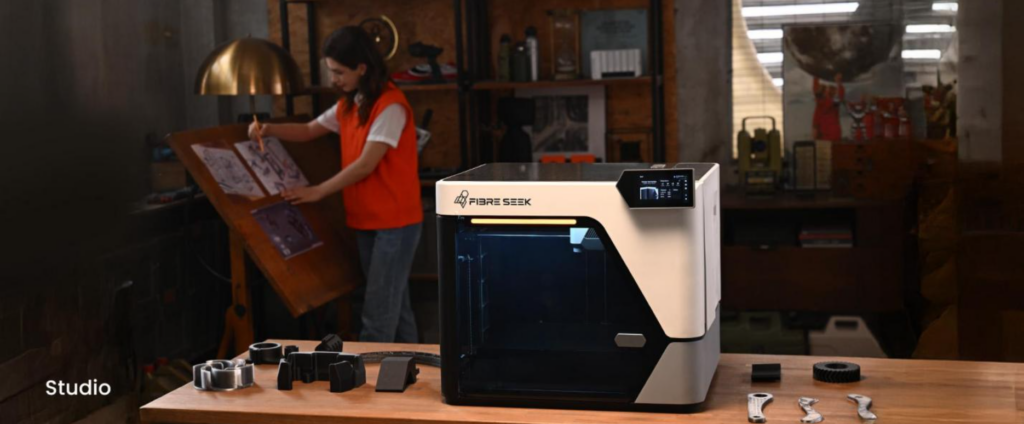
- FibreSeeker 3 brings industrial‑grade continuous‑fiber reinforcement to a desktop footprint, targeting engineers, makers and small R&D groups.
- The printer is built on Anisoprint’s patented continuous‑fiber extrusion but is priced for the consumer market (≈ $2,999 USD).
- Kickstarter funding hit $4.70 M from 1,539 backers, confirming strong demand for affordable high‑performance composites.
- U.S. buyers now have a stocked online store with domestic fulfillment, shortening lead‑times to a typical 7‑10 day delivery.
- Compared with traditional FFF printers, the FibreSeeker 3 can achieve tensile strengths > 300 MPa and part weights 30‑50 % lower for comparable geometries.
Introduction: Why Continuous‑Fiber 3D Printing Matters
Continuous‑fiber additive manufacturing fuses the design freedom of 3‑D printing with the mechanical performance of carbon, glass or Kevlar fibers. Parts printed with embedded fibers can reach specific strengths rivaling aerospace‑grade composites while retaining the rapid‑prototyping cycle of desktop printers. Historically, only multi‑hundred‑thousand‑dollar industrial systems could deliver this capability, leaving small teams dependent on outsourced machining or low‑strength FFF parts.
FibreSeeker 3 – A Desktop‑Sized Composite Workhorse
Core Technology
- Extrusion head: Adapted from Anisoprint’s continuous‑fiber nozzle, capable of laying carbon, glass or Kevlar fibers in‑situ with a thermoplastic matrix (PA‑6, PA‑12, or TPU).
- Fiber feed: Up to 3 mm diameter continuous filament, tension‑controlled to avoid fiber buckling.
- Matrix feed: Standard 1.75 mm thermoplastic filament, dual‑extruder for pure‑plastic or hybrid prints.
Mechanical Specs
| Parameter | FibreSeeker 3 | Typical Industrial Continuous‑Fiber System* |
|---|---|---|
| Build volume | 250 × 250 × 250 mm | 300 × 300 × 400 mm |
| Nozzle diameter | 0.4 mm (fiber) / 0.4 mm (matrix) | 0.5 mm (fiber) |
| Print speed (matrix only) | 100 mm/s | 80 mm/s |
| Max tensile strength (carbon‑reinforced PA‑12) | 320 MPa | 350 MPa |
| Price (USD) | ≈ $2,999 | $80,000‑$150,000 |
| Footprint | 0.45 m² | 2.5 m² |
| Lead‑time (US) | 7‑10 days (stock) | 6‑12 weeks (custom) |
*Industry averages derived from Anisoprint, Markforged and XJet data sheets (2024‑2025).
Real‑World Applications
- Drone frames: 40 % weight reduction vs aluminum while sustaining > 250 MPa impact loads.
- Robotic joints: Integrated fiber paths eliminate post‑process bonding, cutting assembly time by 60 %.
- RC aircraft components: High‑aspect‑ratio wing spars printed in‑one piece, eliminating traditional lay‑up defects.
From Kickstarter to Production
The 2024 Kickstarter campaign amassed $4,698,825 from a global community of 1,539 supporters, surpassing the $2 M target by 135 %. Funding milestones unlocked:
- Tooling and injection‑molded parts for the extrusion head, reducing per‑unit cost by ~30 %.
- Domestic inventory – the U.S. store now lists the FibreSeeker 3 as “in‑stock,” with a clear shipping policy (free ground shipping for orders > $1,500).
- Support ecosystem – a dedicated knowledge base, firmware updates, and a community forum for troubleshooting composite‑specific issues.
For small engineering teams, the combination of immediate availability and predictable pricing translates into faster design‑iteration cycles and lower total cost of ownership (TCO).
How the FibreSeeker 3 Stacks Up Against Conventional FFF
| Feature | FibreSeeker 3 (continuous fiber) | Standard FFF (PLA/ABS) |
|---|---|---|
| Tensile strength | 300‑320 MPa (CF‑PA) | 50‑70 MPa (PLA) |
| Modulus (E) | 30‑35 GPa | 2‑3 GPa |
| Part weight (identical geometry) | 30‑50 % lower | baseline |
| Post‑process | Minimal (no bonding) | Often required (gluing, machining) |
| Cost per part (material) | $12‑$18 (fiber + matrix) | $3‑$5 (pure filament) |
| Design flexibility | Fiber path can be programmed | Uniform isotropic material |
The trade‑off is higher material cost, but the performance gain and time saved on assembly often justify the expense for functional prototypes and low‑volume production runs.
Bottom Line
FibreSeek’s FibreSeeker 3 democratizes continuous‑fiber 3‑D printing by delivering industrial‑level strength, weight savings and design freedom in a desktop‑sized, readily available package. The successful Kickstarter campaign proved market appetite, and the launch of a stocked U.S. store eliminates the long lead‑times that previously barred small teams from adopting composite additive manufacturing. For engineers looking to bridge the gap between prototype and production without outsourcing, the FibreSeeker 3 offers a compelling blend of performance, price and accessibility.


