Key Takeaways
- AI-driven 3D printing enables the creation of complex, natural-looking topologies with high precision
- Traditional manufacturing methods struggle with deep undercuts and internal lattices in generative structures
- Advanced 3D printing technologies, such as SLS and SLA, offer geometric freedom and enable mass production
- Precise finishing tasks, like CNC machining, are necessary to meet extreme tolerance demands
Introduction to AI-Driven 3D Printing
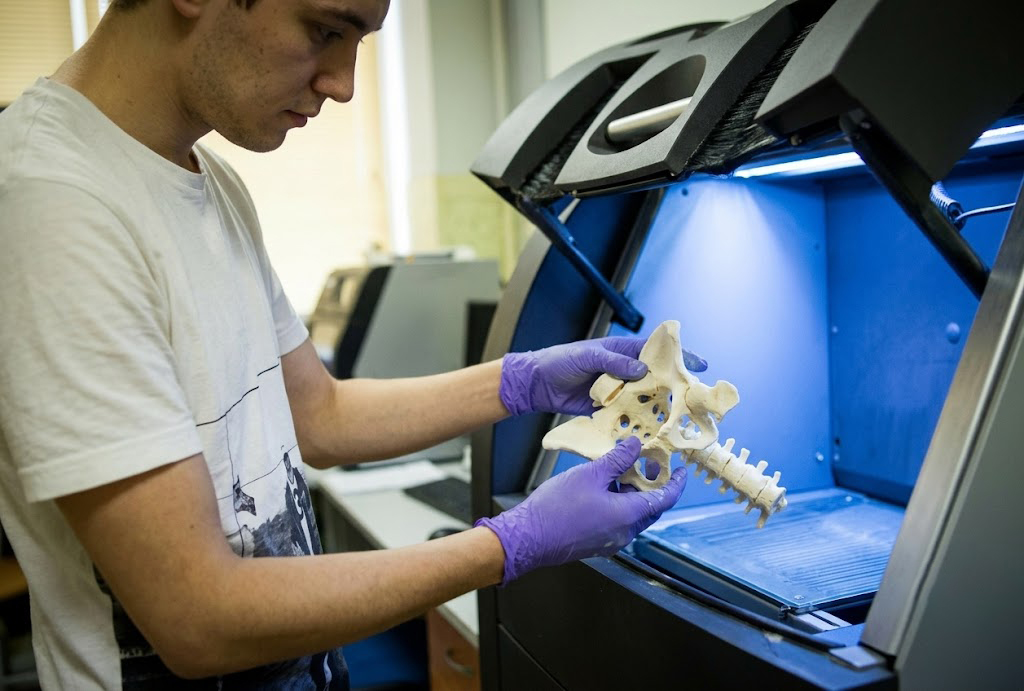
Artificial Intelligence (AI) has revolutionized the field of hardware engineering by introducing generative design algorithms. These algorithms allow engineers to input performance parameters and weight constraints, generating complex and natural-looking topologies that are both strong and lightweight. However, when these designs are transformed into tangible parts, challenges arise. AI excels at creating the perfect design, but without state-of-the-art fabrication systems, these geometries cannot be produced.
Limitations of Traditional Manufacturing Methods
Traditional manufacturing methods, such as standard milling, struggle with deep undercuts, internal lattices, and complex cavities in generative structures. This is where 3D printing comes into play, providing the geometrical freedom to replicate organic contours layer by layer. However, industrial-grade applications demand high-precision performance, which requires tight integration of additive technologies with smart post-processing workflows.
Unlocking Geometric Freedom with Advanced 3D Printing
Advanced 3D printing technologies, such as Selective Laser Sintering (SLS) and Stereolithography (SLA), offer the ability to create products with internal channels, honeycombed lattices, and consolidated assemblies that were previously impossible to manufacture. For example, SLS has a resolution of 0.1-0.2 mm and a build speed of up to 100 mm/h, while SLA has a resolution of 0.01-0.1 mm and a build speed of up to 100 mm/h.
Comparison of 3D Printing Technologies
| Technology | Resolution | Build Speed |
|---|---|---|
| SLS | 0.1-0.2 mm | up to 100 mm/h |
| SLA | 0.01-0.1 mm | up to 100 mm/h |
| FDM | 0.1-0.5 mm | up to 300 mm/h |
The Importance of Precise Finishing Tasks
While 3D printing provides the raw near-net shape, it is only the first stage of production. Modern high-tech industries impose extreme tolerance demands, which can only be met by complementing additive manufacturing with precise finishing tasks. For example, pairing 3D printed engineering plastics with high-velocity CNC machining services can achieve tolerances of ±0.01 mm and surface finishes of Ra 0.8 μm.
Bottom Line
In conclusion, AI-driven 3D printing has the potential to deliver high-precision products, but it requires the integration of advanced 3D printing technologies with precise finishing tasks. By leveraging the capabilities of SLS, SLA, and CNC machining, manufacturers can produce complex and natural-looking topologies with high precision, meeting the extreme tolerance demands of modern high-tech industries. With the right combination of technologies and workflows, AI-driven 3D printing can truly deliver on precision and unlock new possibilities for industrial-grade applications.


