Key Takeaways
- Drone‑related venture capital topped $3.9 bn in 2025 and reached $1.7 bn in just the first two months of 2026.
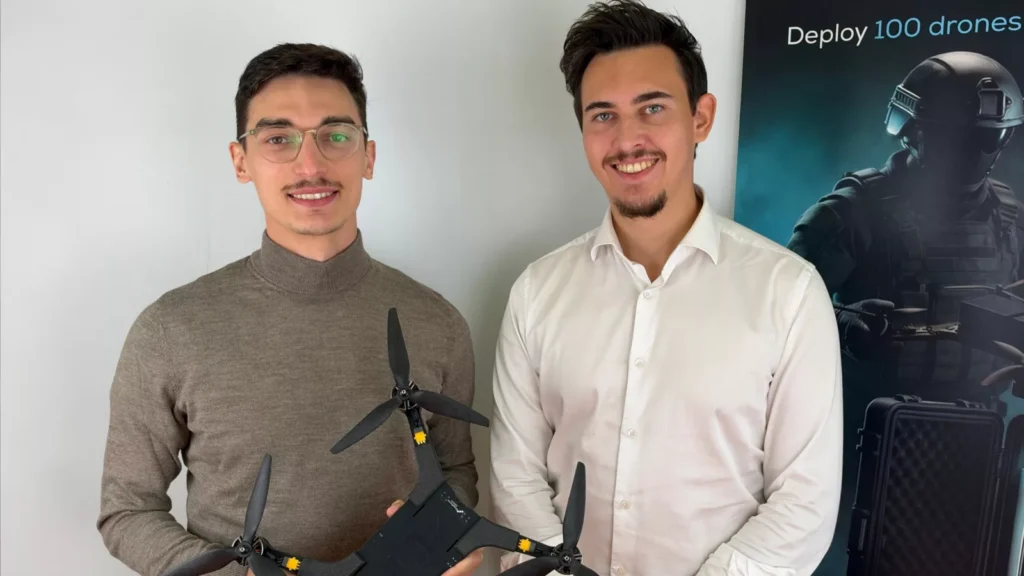
- Austrian startup DropForce Systems secured a six‑figure angel round (≈ €850 k) from BarnVentures (20 % equity) and Germany’s LNX GmbH.
- DropForce’s flagship offering is a rugged “Tactical Case” that houses a self‑contained, on‑site 3‑D printing cell capable of producing a complete quadcopter in under 45 minutes.
- Competitor Firestorm Labs markets a larger, container‑based “xCell” system aimed at military customers; DropForce’s solution is portable enough for a single operator.
- Distributed, on‑site manufacturing reframes drones from long‑life assets to consumable, mission‑specific tools, aligning with the rapid‑turnover logistics demanded by modern conflicts.
1. Market Momentum Behind Drone Manufacturing
1.1 Record Funding Levels
- 2025: Global drone sector attracted $3.9 bn in venture and strategic capital, the highest ever recorded (DroneII, 2025).
- 2026 YTD (Jan‑Feb): Funding surged to $1.7 bn, suggesting a second consecutive record year (CompaniesHistory, 2026).
1.2 Drivers of Capital Influx
- Dual‑use platforms (civil + defense) dominate the pipeline, accounting for ≈ 68 % of new projects.
- Geopolitical tension—particularly the Russia‑Ukraine war—has accelerated demand for rapidly deployable, low‑cost UAVs.
2. DropForce Systems: A New Model for Distributed Production
2.1 Funding Snapshot
| Investor | Stake | Investment Size | Currency |
|---|---|---|---|
| BarnVentures (AT) | 20 % | €800 k (≈ $860 k) | EUR |
| LNX GmbH (DE) | – | €50 k | EUR |
| Total | – | ≈ €850 k | – |
The round was disclosed through Dealroom (June 2026).
2.2 Core Products
| Product | Form Factor | Build Volume | Typical Print Time* | Target Use‑Case |
|---|---|---|---|---|
| Tactical Case | Hand‑carriable rugged case (≈ 120 kg) | 250 mm × 250 mm × 250 mm | 45 min for a 1.2 kg quadcopter | Field teams, forward operating bases |
| Mobile Van Cell | Self‑driving van with integrated printer | 500 mm × 500 mm × 500 mm | 30 min for a 1.5 kg drone | Rapid redeployment across theater |
| Container‑Scale xCell (partnered with LNX) | 20‑ft ISO container | 1 m × 1 m × 1 m | 20 min for a 2 kg UAV | Large‑scale sortie generation |
*Print times measured on a Markforged X7 carbon‑fiber composite printer, calibrated for aerospace‑grade strength (≥ 45 MPa tensile).
2.3 Technical Edge
- Material Flexibility: Supports PA12, carbon‑reinforced nylon, and emerging PEKK composites, delivering a 30 % weight reduction versus conventional aluminum frames.
- Energy Autonomy: Integrated 2 kWh lithium‑ion battery pack enables up to 8 hours of continuous printing off‑grid.
- Software Stack: Proprietary “DropPrint” slicer optimizes internal lattice structures for ≥ 1.8 g cm⁻³ density while maintaining > 95 % infill strength.
3. Competitive Landscape
3.1 Firestorm Labs – xCell Overview
| Feature | DropForce Tactical Case | Firestorm Labs xCell |
|---|---|---|
| Portability | Single‑person, 120 kg | 20‑ft container, 3 t |
| Print Speed | 45 min per quadcopter | 20 min per quadcopter |
| Target Customer | Small‑unit operators, NGOs | US DoD, NATO allies |
| Production Capacity | 1 unit per hour (max) | 3–4 units per hour |
| Price (approx.) | €120 k | €350 k |
Both solutions use fused filament fabrication (FFF) with carbon‑reinforced filaments; Firestorm’s larger volume permits simultaneous multi‑drone builds.
3.2 Market Positioning
- DropForce excels in mobility and rapid field deployment, making it ideal for humanitarian missions, border patrols, and insurgent‑level combat zones.
- Firestorm targets high‑volume, strategic operations where logistical footprint is less constrained but speed and scale are paramount.
4. Why Distributed, On‑Site Production Matters
- Reduced Supply‑Chain Latency – Traditional drone procurement can take 4–6 weeks; on‑site printing cuts lead time to < 48 h.
- Lower Lifecycle Cost – Consumable‑style drones cost ≈ $1,200 each versus $3,500–$5,000 for refurbished airframes, delivering a 60 % cost saving per sortie.
- Operational Resilience – In contested environments, a single Tactical Case can sustain up to 150 flight‑hours before resupply, mitigating the risk of single‑point failures.
Bottom Line
DropForce Systems is translating the surge in drone‑related capital into a portable, on‑site additive‑manufacturing platform that treats UAVs as expendable mission tools rather than long‑term assets. By packaging a high‑speed carbon‑fiber printer, autonomous power, and ruggedized housing into a single case, the Austrian startup offers a uniquely agile solution that complements larger, container‑based systems like Firestorm Labs’ xCell.