Key Takeaways
- China is mobilising ≈ US$707 M in new metal‑AM capital through share placements, powder‑production funding, and a 5,000 m² production base slated for 2027.
- Japan is rolling out hybrid manufacturing cells that combine laser powder‑bed fusion (LPBF) with 5‑axis CNC milling, targeting a 30 % reduction in post‑process time.
- Australia has earmarked AU$120 M for defence‑grade AM projects, focusing on low‑volume, high‑performance titanium parts.
- Government incentives across the three regions are accelerating adoption of single‑crystal metal printing and medical‑device production.
Overview of AMPulse Asia – Scaling Additive Manufacturing in the Pacific Rim
The latest AMPulse Asia briefing highlights three regional powerhouses that are expanding metal additive manufacturing (AM) at unprecedented speed. China’s corporate financing, Japan’s hybrid‑machine roll‑outs, and Australia’s defence‑focused contracts together illustrate a shift from pilot‑scale labs to full‑scale production lines.
China: Capital‑Intensive Expansion of Metal AM
Farsoon Technologies – Share Placement Upgrade
- Funding request: RMB 1.754 billion (US$263 M) via a share placement filed 30 Oct.
- Total project outlay: RMB 2.835 billion (US$426 M) for an AM service platform and a Global Operations Center.
- Financing mix: The remainder will be covered by existing credit lines and internal cash. Approval is pending from the China Securities Regulatory Commission.
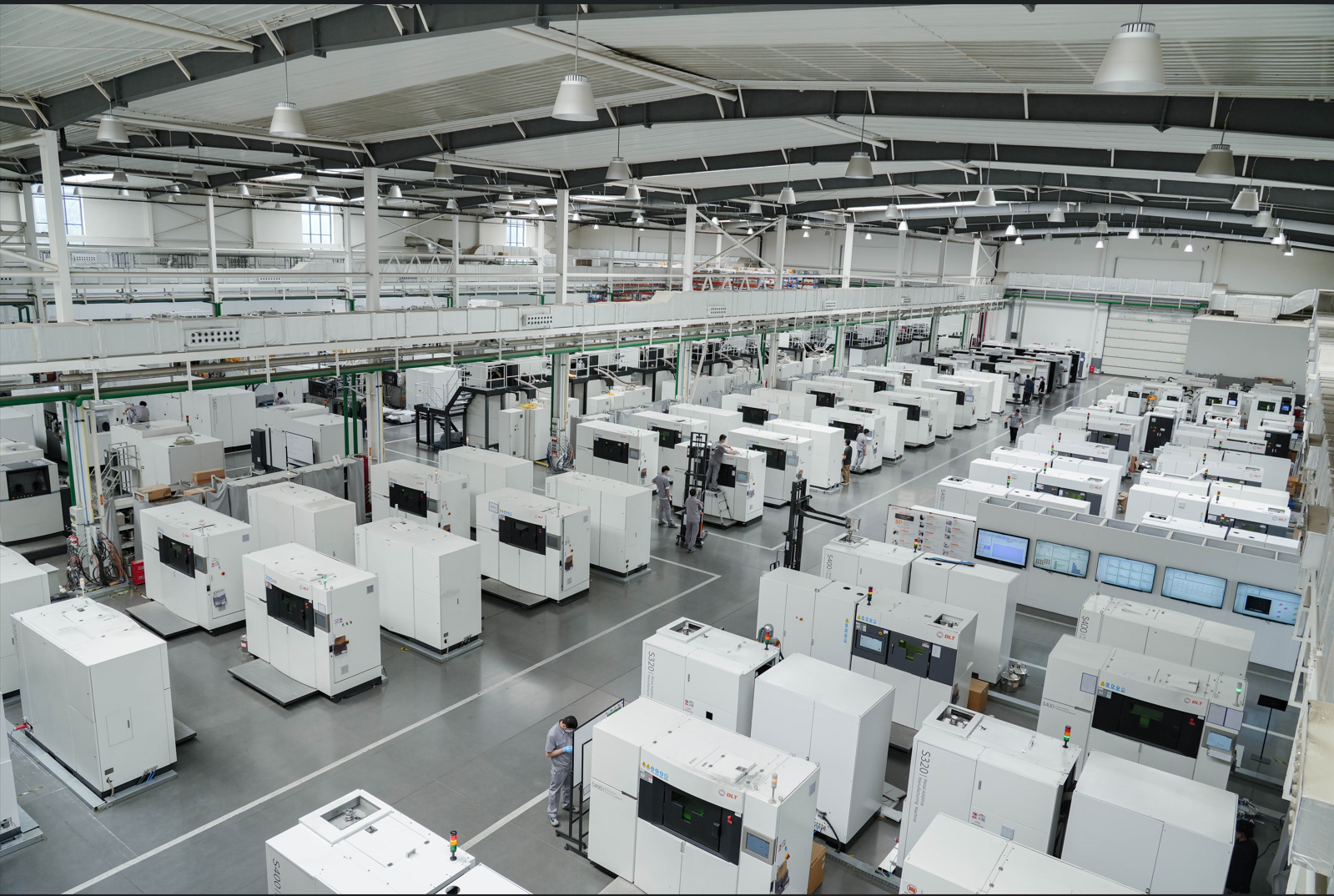
Bright Laser Technologies (BLT) – Powder‑Production Injection
- Capital injection: RMB 117.98 million (US$17.7 M) into subsidiary Xi’an Bodian Materials.
- Registered‑capital boost: RMB 17.86 million (US$2.7 M); the balance is allocated to capital reserves.
- Purpose: Launch a 10‑ton/year metal‑powder plant capable of producing Ti‑6Al‑4V and Inconel 718 with particle‑size distribution of 15‑45 µm.
Global Laser Box – Changsha Metal‑AM Hub
- Facility size: ~5,000 m² leased industrial space.
- Scope: R&D, production of metal printers (up to 400 mm build volume), and laser‑source development.
- Timeline: First‑article production expected Q1 2027.
Tianhai – New Metal Printer Lineup
- Models announced: TH‑X200 (200 mm × 200 mm × 200 mm) and TH‑X500 (500 mm cubic).
- Laser power: 400 W fiber laser for TH‑X200; 1 kW for TH‑X500.
- Target markets: Automotive tooling and aerospace bracket production.
Japan: Hybrid Manufacturing Takes Center Stage
| Feature | Conventional LPBF | Hybrid LPBF + 5‑Axis CNC | Expected Benefit |
|---|---|---|---|
| Build envelope | Up to 300 mm³ | Up to 500 mm³ + 2 m × 2 m × 0.5 m milling table | Larger parts, integrated finish |
| Laser power | 400 W – 1 kW | Same + 3 kW milling spindle | 30 % faster post‑process |
| Cycle time (typical aerospace bracket) | 6 h | 4.2 h | 1.8 h saved |
| Material portfolio | Ti‑6Al‑4V, AlSi10Mg | Adds hardened steel, Inconel 718 | Broader application base |
Japanese firms such as Mitsubishi Heavy Industries and DMG Mori have begun shipping hybrid cells to aerospace OEMs, promising a single‑machine workflow that eliminates the need for separate CNC finishing stations.
Australia: Defence‑Driven AM Investment
- Funding: AU$120 M (US$78 M) allocated by the Department of Defence for low‑volume, high‑performance titanium and super‑alloy components.
- Key contracts:
- Raytheon Australia – 200 kg of AM‑produced turbine blades for next‑gen UAVs (target delivery 2028).
- Australian Naval Shipbuilding – 15 % of hull‑section fasteners to be printed using LPBF, reducing lead time from 12 weeks to 4 weeks.
- Strategic goal: Achieve “self‑sufficiency” for critical defence parts by 2030, cutting reliance on overseas supply chains.
Emerging Trends Across the Region
Single‑Crystal Metal Printing
- China’s Jilin University demonstrated a 1.2 mm³ single‑crystal nickel‑based super‑alloy part with 0.02 % porosity, a 40 % strength gain over conventional LPBF.
- Japan’s Toshiba is piloting a crystal‑growth laser that maintains a 0.5 mm/s solidification front, aiming for aerospace turbine‑blade applications.
Medical‑Device AM in China
- Beijing‑based MedPrint secured a US$45 M grant to produce patient‑specific spinal cages using Ti‑6Al‑4V.
- Production targets: 5,000 cages per year by 2026, with a projected cost reduction of 35 % versus CNC‑machined equivalents.
Bottom Line
The AMPulse Asia snapshot underscores a decisive pivot from experimental metal‑printing to commercial‑scale manufacturing across China, Japan, and Australia. China is leading in financing volume, Japan is differentiating through hybrid machine integration, and Australia is leveraging defence budgets to secure strategic AM capabilities. Combined, these initiatives are set to increase regional metal‑


