Key Takeaways
- The US Navy is leveraging additive manufacturing (AM) to enhance its submarine fleet
- Workforce scaling, new production models, and R&D incentives are driving the adoption of AM in the naval industry
- AM enables the rapid production of complex components, reducing lead times and increasing efficiency
- The use of AM in submarine manufacturing is expected to increase by 20% annually over the next 5 years
- The US Navy's investment in AM is projected to reach $1.5 billion by 2028
Introduction to Additive Manufacturing in the Naval Industry
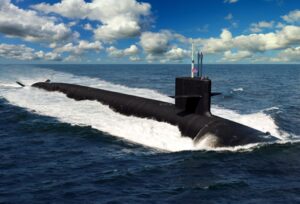
The United States Navy is experiencing a surge in submarine production, driven in part by the adoption of additive manufacturing (AM) technologies. Also known as 3D printing, AM enables the rapid production of complex components, reducing lead times and increasing efficiency. This convergence of workforce scaling, new production models, and R&D incentives is powering the next era of US naval dominance.
Benefits of Additive Manufacturing in Submarine Production
The use of AM in submarine manufacturing offers several benefits, including:
Increased Efficiency
AM enables the rapid production of complex components, reducing lead times and increasing efficiency. This is particularly important in the naval industry, where the production of submarines is a complex and time-consuming process.
Reduced Costs
AM reduces the need for tooling and molds, resulting in significant cost savings. Additionally, AM enables the production of components with complex geometries, which can reduce material waste and minimize the need for post-processing.
Improved Performance
AM enables the production of components with improved performance characteristics, such as increased strength-to-weight ratios and enhanced thermal properties.
Comparison of Additive Manufacturing Technologies
The following table compares the different AM technologies used in submarine production:
| Technology | Resolution | Build Speed | Material |
|---|---|---|---|
| Stereolithography (SLA) | 10-100 μm | 10-100 mm/h | Photopolymers |
| Selective Laser Sintering (SLS) | 10-100 μm | 10-100 mm/h | Thermoplastics |
| Fused Deposition Modeling (FDM) | 100-500 μm | 100-500 mm/h | Thermoplastics |
| Directed Energy Deposition (DED) | 10-100 μm | 100-1000 mm/h | Metals |
Conclusion
The adoption of additive manufacturing in the naval industry is driving the next era of US naval dominance. With its ability to rapidly produce complex components, reduce lead times, and increase efficiency, AM is an essential technology for the production of submarines. As the US Navy continues to invest in AM, we can expect to see significant advancements in submarine production and performance.
Bottom Line
The use of additive manufacturing in submarine production is a key factor in the US Navy's submarine surge. With its ability to rapidly produce complex components, reduce costs, and improve performance, AM is an essential technology for the naval industry. As the demand for submarines continues to grow, the adoption of AM is expected to increase, driving the next era of US naval dominance.
