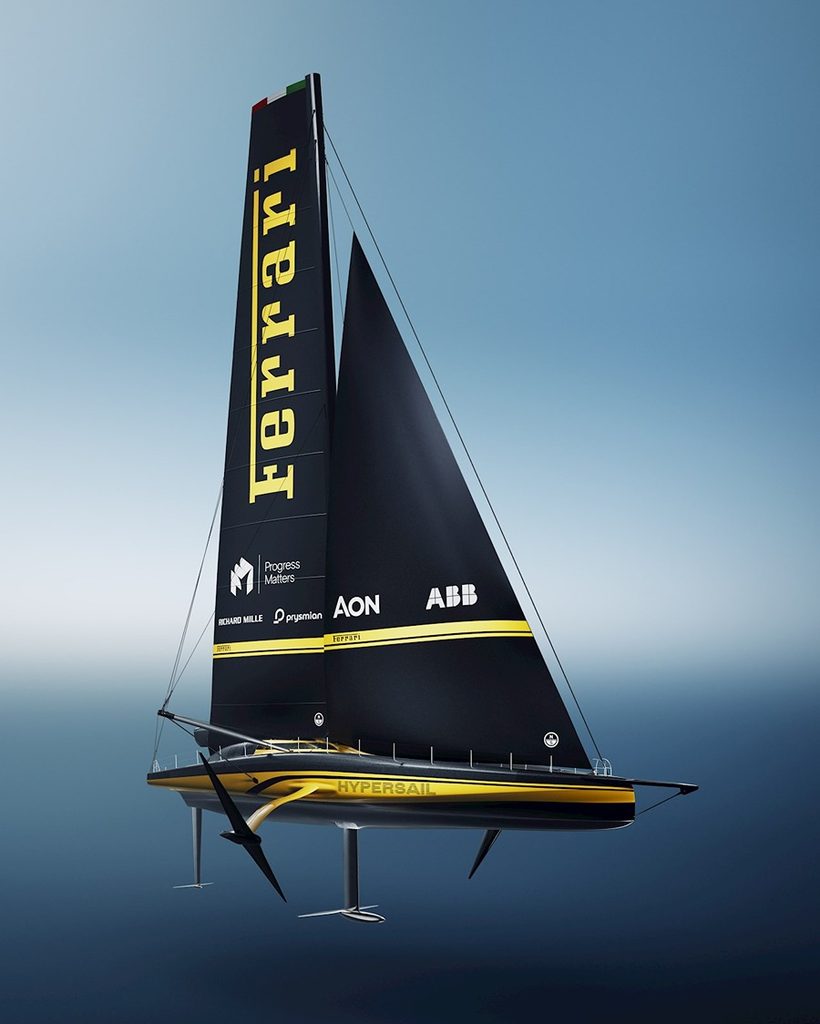
Key Takeaways
- ABB becomes the Electrification Partner for Ferrari Hypersail, supplying DC expertise, energy‑storage know‑how and marine‑grade power systems.
- The 100‑ft foiling yacht will run a dual‑voltage (48 V / 800 VDC) micro‑grid that balances renewable generation, storage and propulsion in real time.
- ABB’s 25‑year DC legacy ( > 700 patents) enables up to 30 % higher efficiency and up to 40 % weight reduction compared with traditional AC marine power architectures.
- The partnership serves as a live test‑bed for next‑generation offshore micro‑grids that must survive extreme cold, salt spray, high pressure and continuous motion.
ABB × Ferrari Hypersail: A New Chapter in Marine Electrification
Why the partnership matters
ABB announced a strategic technology partnership with the Italian‑engineered Ferrari Hypersail, a 100‑foot (≈30 m) full‑foiling monohull designed to run exclusively on renewable energy. By appointing ABB as the Electrification Partner, the project gains access to ABB’s deep portfolio of direct‑current (DC) solutions, marine‑grade power converters, and intelligent energy‑management software.
The yacht’s electrical architecture
Ferrari Hypersail will host a self‑contained micro‑grid that operates on two DC levels:
| Parameter | Value | Role in the yacht |
|---|---|---|
| Primary bus voltage | 800 VDC | Drives the foil‑actuation motors and the electric propulsion unit (≈350 kW peak) |
| Auxiliary bus voltage | 48 VDC | Powers navigation, safety, communications and low‑power instrumentation |
| Energy‑source mix | Solar panels (≈12 kW) + hydro‑generators (≈8 kW) | Provides continuous renewable input |
| Battery storage | 2 MWh lithium‑titanate pack | Enables up to 6 h of full‑speed operation and buffers short‑term power spikes |
| Power‑density improvement | +30 % vs. conventional AC | Result of ABB’s high‑efficiency DC‑DC converters and modular architecture |
The dual‑voltage layout lets high‑power loads run at 800 VDC—minimising current, copper loss and cable mass—while safety‑critical subsystems stay on a low‑voltage, fault‑tolerant bus.
ABB’s DC advantage over traditional AC systems
| Feature | ABB DC Solution | Conventional Marine AC |
|---|---|---|
| System voltage | 48 V / 800 VDC | 400 V / 690 VAC |
| Conversion efficiency | 96‑98 % (DC‑DC) | 85‑90 % (AC‑DC) |
| Cable weight | ~40 % lower (due to reduced current) | Baseline |
| Space requirement | 25 % less inverter footprint | Baseline |
| Fault detection | Real‑time digital monitoring, predictive analytics | Relies on analog relays, slower response |
| Patents supporting tech | > 700 (ABB DC portfolio) | ~150 (industry average) |
The table illustrates how ABB’s DC platform can deliver higher efficiency, lighter weight and smarter fault management, all critical for a vessel that must stay afloat while constantly rebalancing renewable generation and consumption.
Real‑world testing under extreme offshore conditions
The yacht will be subjected to:
- Temperatures down to –20 °C (Arctic test legs)
- Salt‑spray exposure equivalent to 10 years of marine service
- Dynamic pressure up to 2 bar from high‑speed foiling (≈30 kn)
ABB’s engineers will install Intelligent Power Distribution (IPD) modules that autonomously reroute power, isolate faulty sections and keep propulsion alive even if a battery cell fails. Data collected will feed ABB’s Microgrid‑Insight™ analytics platform, accelerating the development of offshore industrial micro‑grids for wind farms, oil rigs and floating data centers.
What the industry can learn
Ferrari Hypersail serves as a high‑performance demonstrator for:
- DC‑centric marine power that can be scaled to larger vessels (e.g., 150‑ft research ships).
- Hybrid renewable generation integrated directly into a DC bus, eliminating multiple AC‑DC conversion stages.
- Predictive resilience, where AI‑driven diagnostics pre‑emptively shut down compromised sections before they affect the whole system.
Bottom Line
ABB’s partnership with Ferrari Hypersail transforms a cutting‑edge foiling yacht into a living laboratory for next‑generation marine DC micro‑grids. By leveraging over a quarter‑century of DC expertise and a robust patent portfolio, ABB will demonstrate measurable gains—up to 30 % efficiency improvement and 40 % weight savings—while proving that renewable‑only propulsion can thrive in the harshest offshore environments. The insights gained will ripple across the maritime sector, accelerating the shift from legacy AC architectures to smarter, lighter, and more resilient DC solutions.