Key Takeaways
- Researchers from Nanyang Technological University and Waseda University have developed a 3D printed diving suit for cyborg cockroaches, enabling them to survive underwater for up to three hours.
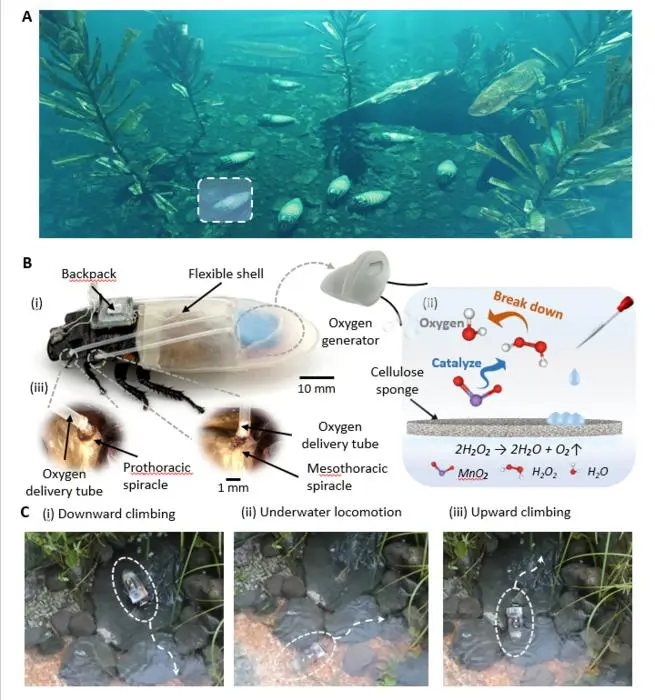
- The biohybrid system combines 3D printing, robotics, and biology to create a miniature diving suit that allows cockroaches to breathe underwater.
- The suit includes a tiny oxygen-generation tank made from 3D printed photopolymer resin, measuring 10 x 10 millimeters.
- The technology has potential applications in inspecting flooded infrastructure or searching areas that are difficult for conventional robots to reach.
Introduction to Cyborg Cockroaches
Cockroaches have been thriving on Earth for over 300 million years, adapting to various environments and surviving in harsh conditions. Recently, a team of researchers has taken their resilience to the next level by developing a 3D printed diving suit that enables cyborg cockroaches to swim underwater.
The 3D Printed Diving Suit
The miniature diving suit is designed to trap a pocket of air around the insect's breathing openings, allowing it to breathe underwater for extended periods. The suit includes a tiny oxygen-generation tank, made from 3D printed photopolymer resin, which measures 10 x 10 millimeters. This tank generates oxygen through an electrochemical reaction, continuously replenishing the air pocket.
Comparison of Materials
| Material | Properties | Applications |
|---|---|---|
| Photopolymer Resin | Lightweight, durable, and waterproof | 3D printing of miniature diving suits |
| PMMA | Transparent, impact-resistant, and biocompatible | Medical devices, optical components |
| Metal Powders | High strength, conductivity, and thermal resistance | Aerospace, automotive, and industrial applications |
Potential Applications
The biohybrid system has significant potential in various fields, including:
- Inspecting flooded infrastructure, such as pipes and tunnels
- Searching areas that are difficult for conventional robots to reach, such as disaster zones or collapsed buildings
- Environmental monitoring, such as tracking water quality or detecting pollutants
Conclusion
The development of a 3D printed diving suit for cyborg cockroaches is a groundbreaking achievement that combines 3D printing, robotics, and biology. With its potential applications in various fields, this technology has the potential to revolutionize the way we approach search and rescue operations, environmental monitoring, and infrastructure inspection.
Bottom Line
The creation of a 3D printed diving suit for cyborg cockroaches is a significant breakthrough in the field of biohybrid systems, enabling these resilient insects to survive and operate underwater for extended periods. With its potential applications in various fields, this technology is poised to make a significant impact in the future of search and rescue operations, environmental monitoring, and infrastructure inspection. As research continues to advance, we can expect to see more innovative applications of this technology in the years to come.


