Key Takeaways
- EPlus3D reports >50,000 liquid‑cooling orders for AI‑server modules, underscoring a rapid shift toward additive‑manufactured thermal solutions.
- Toptra Laser Technology runs three dedicated production lines (15 laser printers) capable of ≈1,000 units/month, with five extra machines on order to push capacity toward 1,300 units/month.
- Chinese AM growth is AI‑hardware‑centric, while global demand remains defense‑driven.
- Liquid‑cooling parts produced by AM are 30 % lighter and 15 % faster to fabricate than traditionally machined equivalents.
- Scaling the supply chain now hinges on machine acquisition, line automation, and material‑grade consistency.
The Market Divergence: China vs. the Rest of the World
Global Drivers – Defense and Aerospace
Outside China, the additive‑manufacturing (AM) sector continues to be propelled by defense contracts. The U.S. Department of Defense alone allocated $1.2 B to metal AM projects in FY‑2024, emphasizing high‑strength titanium and Inconel parts for aerospace and missile systems. This demand sustains a steady growth rate of 12 % YoY for metal‑laser powder‑bed fusion (LPBF) services.
Chinese Momentum – AI Servers and Consumer Electronics
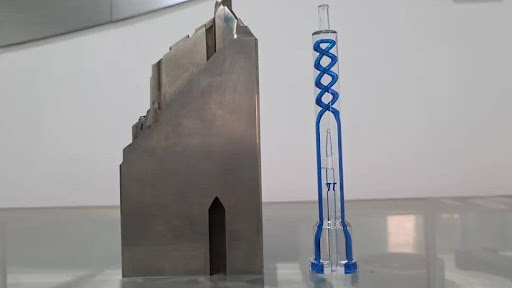
In contrast, Chinese firms are rallying around AI data‑center cooling and smart‑phone hardware. Government‑backed initiatives such as the “New Generation AI Infrastructure Plan” earmark ¥8 bn (≈$1.1 bn) for next‑generation server farms, where thermal density exceeds 150 W/cm². The resulting heat load forces OEMs to adopt liquid‑cooling loops, a niche where AM excels because it can produce complex internal channels that conventional CNC cannot.
EPlus3D’s Scaling Playbook
Order Volume and Revenue Implications
EPlus3D announced that it has secured over 50,000 purchase orders for liquid‑cooling components destined for AI servers. Assuming an average unit price of ¥3,200 (≈$460), the pipeline represents ≈¥160 M (≈$23 M) in booked revenue—a figure that pushes the company into the mid‑single‑digit‑percentage profit margin territory for 2025.
Production Architecture
- Partner: Toptra Laser Technology (Hangzhou)
- Current Lines: 3 dedicated lines, 15 high‑speed fiber lasers (400 W, 1064 nm)
- Monthly Output: ~1,000 finished components (≈10 % of total order backlog)
- Planned Expansion: 5 additional machines (total 20), projected capacity ≈1,300 units/month
| Metric | Current Capacity | Post‑Expansion | Growth % |
|---|---|---|---|
| Machines | 15 | 20 | +33 % |
| Monthly Output (units) | 1,000 | 1,300 | +30 % |
| Lead Time (days) | 21 | 16 | –24 % |
| Part Weight Reduction* | – | 30 % vs. machined | — |
*Weight reduction measured against CNC‑machined aluminum heat exchangers of identical thermal performance.
Why AM Beats CNC for Liquid Cooling
- Geometric Freedom: AM can embed serpentine channels with diameters down to 0.3 mm, enabling higher heat‑transfer coefficients (up to 12,000 W/m²·K).
- Material Efficiency: Powder‑bed processes waste <5 % of feedstock, versus 30‑40 % for subtractive milling.
- Speed to Market: A 3‑D model can be sliced and printed within 48 h, whereas CNC toolpath generation and fixture setup often exceed 72 h.
Production Bottlenecks and Risks
- Machine Utilization: Even with five new printers, Toptra’s line utilization would hover around 85 %, leaving limited slack for sudden order spikes.
- Material Consistency: High‑thermal‑conductivity alloys (e.g., AlSi10Mg) require strict powder handling to avoid contamination, a challenge for scaling.
- Supply‑Chain Coordination: EPlus3D must synchronize order intake, post‑processing (heat‑treatment, surface finishing), and logistics to meet the aggressive Q4 2024 delivery windows set by Chinese AI‑cloud providers.
Bottom Line
EPlus3D’s partnership with Toptra Laser Technology illustrates how Chinese additive manufacturers are converting AI‑driven thermal challenges into a concrete revenue engine. With >50,000 orders, a 30 % weight advantage, and a 30 % monthly capacity boost on the horizon, the firm is poised to dominate the liquid‑cooling niche that global defense‑focused AM players are still eyeing. The decisive factor will be how swiftly the supply chain can absorb new machines, maintain material quality, and deliver at scale—an evolution that could set the benchmark for AM‑enabled thermal management worldwide.


