Key Takeaways
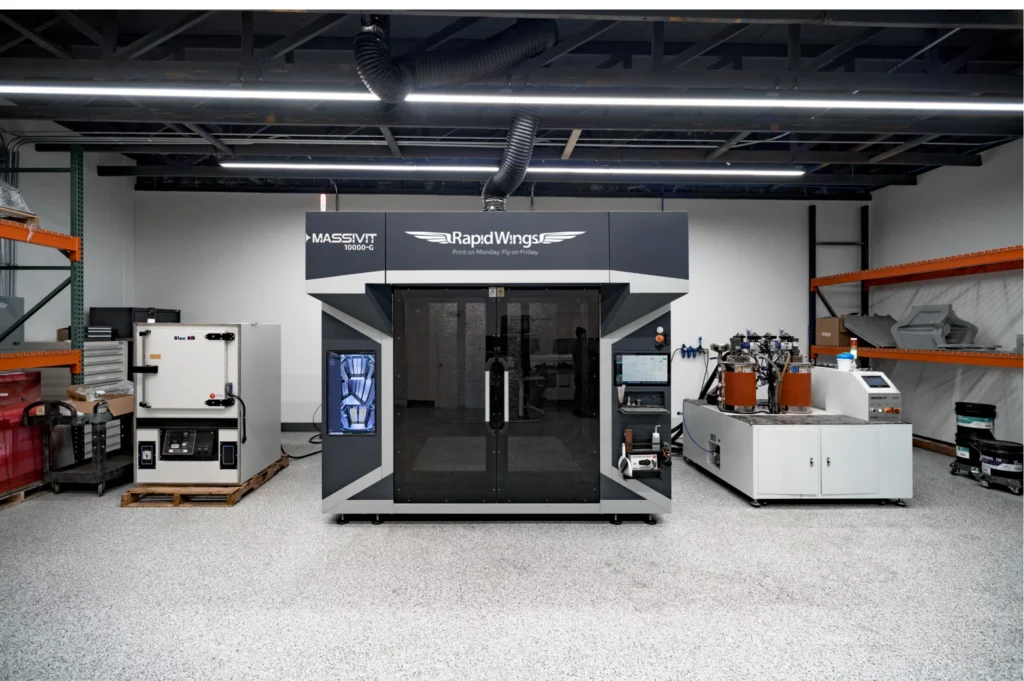
- Massivit’s RapidWings platform now offers on‑demand composite tooling services in North America through a partnership with Oregon‑based Artek.
- The Cast‑In‑Motion (CIM) process creates isotropic molds up to 2.5 m × 1.5 m with a typical lead‑time of 10‑14 days, cutting cycle time by roughly 50 % versus conventional CNC milling.
- Fives AddUp’s new large‑format LPBF system (2026) targets aerospace‑grade titanium parts up to 1 m³ and promises a 30 % reduction in build cost.
- An AI‑driven design platform now automates PCB enclosure generation, linking topology‑optimized CAD directly to CNC‑compatible STL output.
RapidWings Expands to North America
Massivit, the Israeli leader in high‑speed composite printing, has extended its RapidWings turnkey platform from Europe to the United States. The expansion hinges on a strategic alliance with Artek Energy, a Portland‑based design‑and‑manufacturing firm that will host a dedicated RapidWings service hub.
What the Service Hub Offers
| Service | Description | Typical Turn‑Around |
|---|---|---|
| Digital Tooling | 3‑axis and 5‑axis CNC‑compatible CAD files generated from CIM data | 2 days |
| Full‑Scale Prototypes | Large‑area composite molds (up to 2.5 m × 1.5 m) printed in‑place | 7‑10 days |
| Tool Finishing | CNC‑machined surface refinement to ±0.02 mm tolerance | 3‑4 days |
| On‑Site Demonstrations | Live CIM runs for customer validation | By appointment |
The core of the offering is Massivit’s Cast‑In‑Motion (CIM) technology, which fuses dual‑component photopolymers with a high‑speed, continuous‑feed extrusion system. The result is an isotropic composite mold that can withstand 10 kpsi without delamination—far beyond the anisotropic strength of most traditional CNC‑milled aluminum tooling (≈ 6 kpsi).
“CIM gives us a 30 % cost advantage and halves the lead‑time compared with conventional CNC‑machined tooling,” said Lior Ben‑Shalom, VP of Global Operations at Massivit.
Fives AddUp Rolls Out a New Large‑Format LPBF System
In parallel, Fives AddUp announced the U.S. launch of its L‑Series 3D‑LPBF machine, engineered for aerospace‑grade Ti‑6Al‑4V and Inconel 718. Key specifications include:
- Build envelope: 1 m × 1 m × 1 m (≈ 1 m³)
- Laser power: 2 kW fiber laser with 200 µm spot size
- Layer thickness: 20‑100 µm (adjustable)
- Energy efficiency: 30 % lower electricity draw versus 2023 baseline
The system integrates a closed‑loop powder reclamation loop, delivering a 95 % reuse rate and reducing material waste to under 5 kg per build.
AI‑Powered PCB Enclosure Designer Bridges to CNC
A new AI platform, EnclosureAI, now automates the design of custom 3‑D‑printable PCB housings. The workflow is:
- Upload a Gerber file or 3‑D model of the PCB.
- AI engine runs topology optimization, generating a lightweight lattice that meets thermal and EMI constraints.
- Export options include STL (for CNC‑compatible subtractive machining) or AM‑ready G‑code.
Early adopters report a 40 % reduction in enclosure weight (average 12 g vs 20 g) and a 25 % cut in design‑to‑production time.
RapidWings vs. Traditional CNC Milling – A Quick Comparison
| Attribute | RapidWings CIM (Composite) | Conventional CNC‑Milled Aluminum |
|---|---|---|
| Maximum Tool Size | 2.5 m × 1.5 m | 1.8 m × 1.2 m (typical 5‑axis) |
| Lead‑Time | 10‑14 days (full cycle) | 20‑30 days (tooling + machining) |
| Material Cost | ~ $45 / kg composite resin | ~ $30 / kg aluminum (plus machining) |
| Surface Isotropy | 10 kpsi (uniform) | 6 kpsi (direction‑dependent) |
| Post‑Process | Minimal CNC finishing (±0.02 mm) | Full CNC machining required |
| Environmental Impact | 5 kg powder waste (recyclable) | 12 kg metal shavings (non‑recyclable) |
Bottom Line
Massivit’s RapidWings expansion, anchored by Artek’s Portland hub, gives North‑American defense and aerospace manufacturers a faster, cheaper


