Key Takeaways
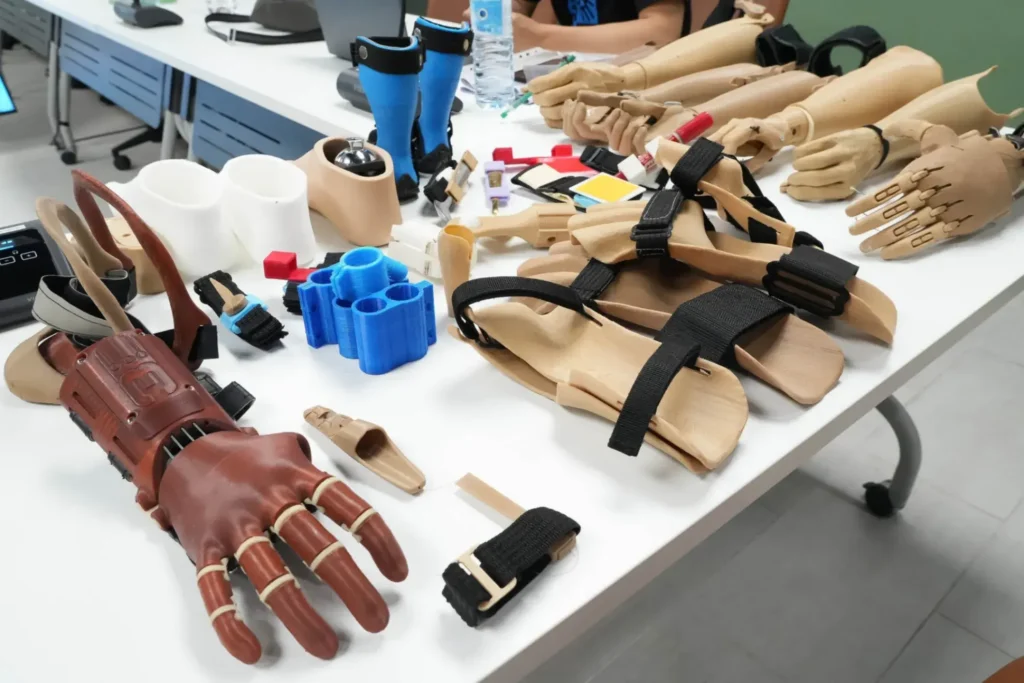
- Students from Queen's University are developing 3D printed prosthetics for migrants in Thailand
- The project aims to provide accessible and affordable prosthetics for those in need
- The Queen's Biomedical Innovation Team (QBiT) is working with the Burma Children Medical Fund (BCMF) to design and develop the prosthetics
- The team is using open-source designs and donated 3D printers to create the prosthetics
- The project has been ongoing for three years, with a team of engineering students leading the design and development
Introduction to 3D Printed Prosthetics
The use of 3D printing technology in the medical field has been gaining momentum in recent years, with applications ranging from patient-specific implants to drug delivery systems. One area that has shown significant promise is the development of 3D printed prosthetics. A team of students from Queen's University, led by Emese Elkind, a biomedical computing student, has been working on a project to create accessible 3D printed prosthetics for migrants in Thailand.
The Project's Background and Objectives
The project began in 2019, when the Burma Children Medical Fund (BCMF) launched a 3D prosthesis project. The team from Queen's University, including Drs. Eva Purkey and Colleen Davison, worked with BCMF to secure funding and establish a recurring partnership. The partnership involves students from the Queen's Biomedical Innovation Team (QBiT) undertaking 90-day placements within BCMF to work on the design and development of the prosthetics. The team's objective is to create affordable and accessible prosthetics for those in need, with a focus on above-elbow prosthetics.
Comparison of 3D Printing Technologies
| Technology | Resolution | Speed | Cost |
|---|---|---|---|
| Fused Deposition Modeling (FDM) | 100-300 microns | 100-300 mm/h | $1,000-$5,000 |
| Stereolithography (SLA) | 10-50 microns | 10-50 mm/h | $5,000-$10,000 |
| Selective Laser Sintering (SLS) | 50-100 microns | 50-100 mm/h | $10,000-$20,000 |
The Design and Development Process
The team from QBiT is using open-source designs and donated 3D printers to create the prosthetics. The design process involves working closely with the patients to ensure that the prosthetics meet their specific needs. The team is also working to improve the durability and functionality of the prosthetics, with the goal of creating a product that is both affordable and effective.
Conclusion and Future Directions
The project to develop 3D printed prosthetics for migrants in Thailand is a significant step forward in the use of 3D printing technology in the medical field. The team from Queen's University, led by Emese Elkind, has made significant progress in the design and development of the prosthetics, and the project has the potential to make a significant impact on the lives of those in need.
Bottom Line
The use of 3D printing technology to create prosthetics has the potential to revolutionize the field of prosthetics, providing affordable and accessible solutions for those in need. The project led by the Queen's Biomedical Innovation Team (QBiT) is a prime example of the impact that 3D printing can have, and it is likely that we will see more projects like this in the future. With the ability to create customized prosthetics using 3D printing technology, the possibilities for improving the lives of those in need are endless.