Key Takeaways
- Researchers at the University of Nottingham are utilizing 3D printing to understand how human cells respond to their surroundings.
- The project focuses on cells involved in healing, such as skin and bone cells, and examines the impact of physical features like surface shape and texture on their behavior.
- The goal is to design better materials that facilitate the body's natural healing process, potentially reducing reliance on drugs.
- Dr. Robert Owen received a research grant from the UK's Academy of Medical Sciences to support this project.
- The Academy of Medical Sciences has invested £6.7 million in early-career researchers across 38 UK institutions to improve understanding of major health challenges.
Introduction to 3D Printing in Cell Research
The University of Nottingham is at the forefront of a groundbreaking research project that leverages 3D printing to investigate how human cells sense and respond to their environment. This innovative approach has the potential to revolutionize our understanding of the healing process and could lead to the development of more effective materials that support the body's natural healing mechanisms.
The Research Project
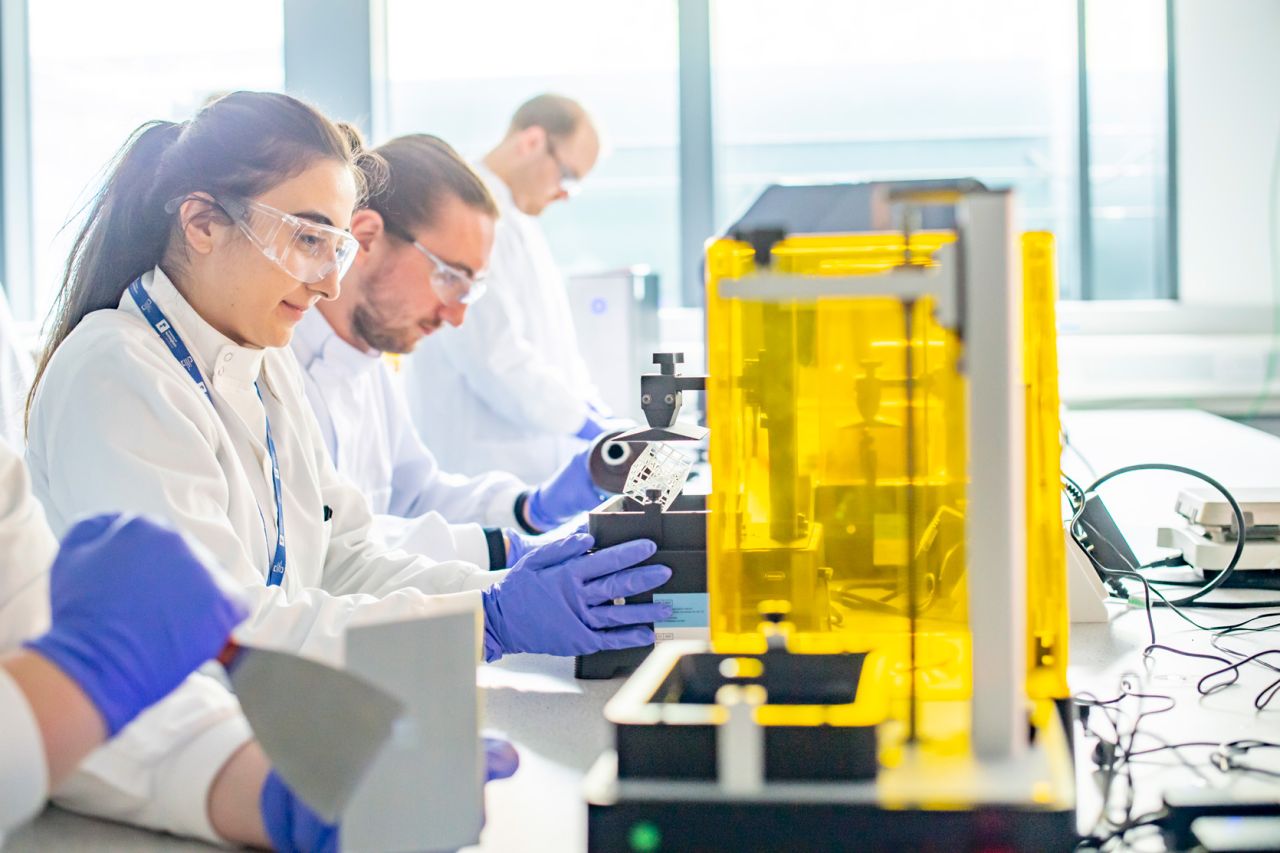
Dr. Robert Owen, a researcher at the University of Nottingham's School of Pharmacy, is leading the project, which focuses on cells involved in healing, such as skin and bone cells. The team is using 3D printing to create complex structures with precise surface shapes and textures, allowing them to study how these physical features influence cell behavior. The ultimate goal is to design materials that can facilitate the body's natural healing process, reducing the need for drugs and other interventions.
Funding and Support
The project has received significant funding from the UK's Academy of Medical Sciences, with Dr. Owen being one of 55 early-career researchers selected for the Springboard program. This program provides monetary awards to support early-stage, discovery-driven projects, with a total investment of £6.7 million across 38 institutions in the UK. The funding will enable Dr. Owen and his team to advance their research and explore the potential of 3D printing in cell research.
Comparison of 3D Printing Technologies
| Technology | Resolution | Materials | Applications |
|---|---|---|---|
| Fused Deposition Modeling (FDM) | 100-500 μm | Thermoplastics | Prototyping, modeling |
| Stereolithography (SLA) | 10-100 μm | Resins | High-precision modeling, dental applications |
| Selective Laser Sintering (SLS) | 50-200 μm | Powders | Aerospace, automotive, medical implants |
Conclusion
The use of 3D printing in cell research has the potential to revolutionize our understanding of the healing process and could lead to the development of more effective materials that support the body's natural healing mechanisms. With the support of the Academy of Medical Sciences and the University of Nottingham, Dr. Owen and his team are well-positioned to advance this research and explore the potential of 3D printing in cell research.
Bottom Line
The University of Nottingham's research project, led by Dr. Robert Owen, is a significant step forward in our understanding of how human cells respond to their environment. With the use of 3D printing, the team is able to create complex structures that mimic the natural environment of cells, allowing them to study cell behavior in unprecedented detail. The potential applications of this research are vast, and the project has the potential to lead to the development of more effective materials that support the body's natural healing mechanisms, reducing the need for drugs and other interventions.


