Key Takeaways
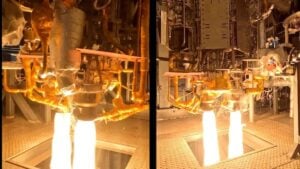
- Agnikul has successfully tested a fully 3D-printed rocket engine, showcasing the capabilities of additive manufacturing in aerospace engineering
- The use of 3D printing in rocket engine design enables increased complexity, reduced material waste, and faster production times
- Agnikul's engine is a significant development in the field of rocket propulsion, with potential applications in space exploration and satellite launches
Introduction to 3D Printing in Rocket Engine Design
The aerospace industry has witnessed a significant shift in recent years, with the advent of 3D printing technology revolutionizing the design and manufacturing of rocket engines. Agnikul, a leading player in the field, has successfully tested a fully 3D-printed rocket engine, demonstrating the potential of additive manufacturing in producing complex engine components.
Benefits of 3D Printing in Rocket Engine Design
The use of 3D printing in rocket engine design offers several advantages, including:
Increased Complexity
3D printing enables the creation of complex geometries and internal structures that cannot be produced using traditional manufacturing methods. This allows for the design of more efficient and powerful engines.
Reduced Material Waste
Additive manufacturing produces minimal material waste, reducing the environmental impact and cost of production.
Faster Production Times
3D printing enables rapid prototyping and production, reducing the time and cost associated with traditional manufacturing methods.
Comparison of 3D Printing Technologies
| Technology | Resolution | Build Speed | Materials |
|---|---|---|---|
| Fused Deposition Modeling (FDM) | 100-300 microns | 100-300 mm/h | PLA, ABS, PETG |
| Stereolithography (SLA) | 10-100 microns | 10-100 mm/h | Resin |
| Selective Laser Sintering (SLS) | 50-100 microns | 100-300 mm/h | Metal, ceramic, glass |
Agnikul's 3D-Printed Rocket Engine
Agnikul's engine is a significant development in the field of rocket propulsion, with potential applications in space exploration and satellite launches. The engine's specifications include:
- Thrust: 10,000 N
- Specific impulse: 300 seconds
- Chamber pressure: 100 bar
Bottom Line
The successful testing of Agnikul's 3D-printed rocket engine marks a significant milestone in the adoption of additive manufacturing in the aerospace industry. With its potential to increase complexity, reduce material waste, and accelerate production times, 3D printing is poised to play a major role in shaping the future of rocket engine design and production. As the technology continues to evolve, we can expect to see further innovations and advancements in the field of rocket propulsion.