Key Takeaways
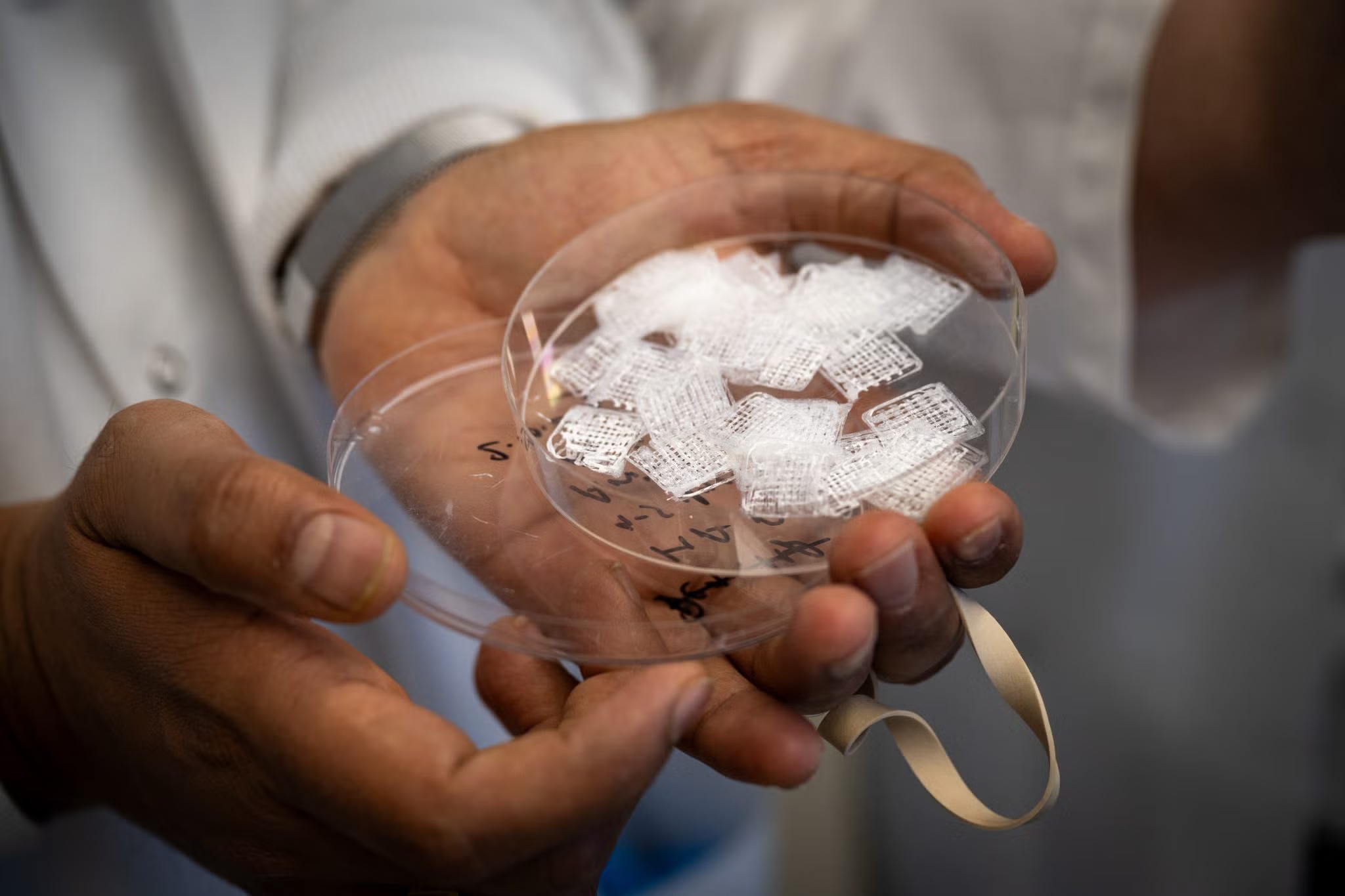
- Researchers at Georgetown University are developing 3D printed bone grafts that mimic the structure and function of natural human bone.
- The grafts are made from natural materials, including pectin and hydroxyapatite, and are designed to support healing and bone regeneration.
- The use of 3D printing technology allows for the creation of complex structures with small pores, similar to those found in natural bone.
- The grafts have the potential to replace traditional implants, which can be limited by their lack of flexibility and ability to support new bone growth.
Introduction to 3D Printed Bone Grafts
Researchers at Georgetown University are pioneering a new approach to bone grafting, using 3D printing technology to create implants that mimic the structure and function of natural human bone. This innovative approach has the potential to revolutionize the field of orthopedic surgery, providing a more effective and sustainable solution for patients in need of bone repair or replacement.
Limitations of Traditional Implants
Traditional implants, made from metal or synthetic materials, can be limited by their lack of flexibility and ability to support new bone growth. They can also be prone to complications, such as rejection or disease transmission, and may require additional surgeries to repair or replace. In contrast, the 3D printed bone grafts being developed by the Georgetown team are designed to work in harmony with the body, promoting healing and regeneration while minimizing the risk of complications.
Composition and Structure of 3D Printed Bone Grafts
The 3D printed bone grafts are composed of a combination of natural materials, including pectin and hydroxyapatite. Pectin, a natural substance found in fruits, provides a framework for the graft, while hydroxyapatite, a bone-like material, adds strength and density. The grafts are designed to mimic the structure of natural bone, with small pores and a complex network of channels that allow for the flow of nutrients and cells.
Comparison of 3D Printed Bone Grafts and Traditional Implants
| Material | Flexibility | Ability to Support New Bone Growth | Risk of Complications |
|---|---|---|---|
| Metal Implants | Low | Low | High |
| Donor Bone | Medium | Medium | Medium |
| 3D Printed Bone Grafts | High | High | Low |
Applications and Future Directions
The 3D printed bone grafts being developed by the Georgetown team have the potential to revolutionize the field of orthopedic surgery, providing a more effective and sustainable solution for patients in need of bone repair or replacement. The grafts are currently being tested for use in facial bones and long bones, such as those in the arms and legs, and may have applications in a range of surgical procedures, including trauma, cancer, and dental implants.
Bottom Line
The development of 3D printed bone grafts by researchers at Georgetown University represents a significant breakthrough in the field of orthopedic surgery. With their natural composition, complex structure, and ability to support healing and regeneration, these grafts have the potential to replace traditional implants and provide a more effective and sustainable solution for patients in need of bone repair or replacement. As research continues to advance, we can expect to see the widespread adoption of 3D printed bone grafts, leading to improved patient outcomes and a new standard of care in orthopedic surgery.