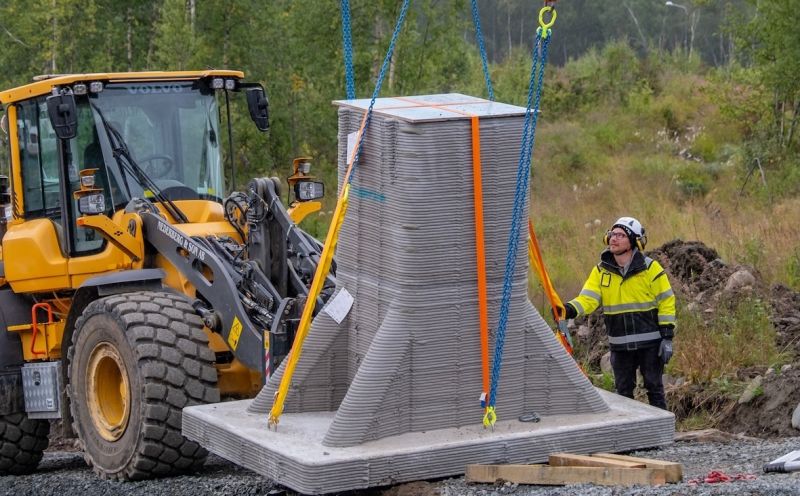
Key Takeaways
- Hemavan Alpint, kayak merkezini genişletmek için SEK 200 M ($20.8 M) yatırım yapıyor; bu kapsamda $2.6 M tutarında bir 3-D-basılı teleferik temeli de bulunuyor.
- Hyperion Robotics’ın mobil beton yazıcısı, 30 mm kalınlıkta 1.2 m genişliğinde katmanlar dökerek, geleneksel dökme yöntemlerine kıyasla inşaat süresini ≈%45 azaltıyor.
- Geleneksel temellere göre, 3-D-basılı çözüm malzeme atığını ≈%30 düşürüyor, karbon emisyonlarını ~%25 azaltıyor ve sahada ≈2 hafta daha az iş gücü gerektiriyor.
- Leitner Ropeways tarafından inşa edilen yeni teleferik, 3.000-yatak kapasiteli bir tesise dört teleferik ve yedi pist hizmet verecek ve 2026 Noelinden önce açılacak.
Introduction: 3-D Printing Moves From Housing to Alpine Infrastructure
Çoğu medya, inşaatta eklemeli üretimi konut prototiplerine odaklansa da, teknoloji zor ulaşılabilir altyapı projelerinde de ivme kazanıyor. Uzaktan konumlar—dağ tatil yerleri, askeri karakollar ve şebekeden bağımsız enerji sahaları—yapısal elemanları sahada üretebilmenin taşıma maliyetlerini düşürmesi ve takvimleri kısaltması sayesinde fayda sağlıyor. Kuzey İsveç’teki kayak kasabası Hemavan, artık bir sonraki sınırı gösteriyor: 3-D-basılı kayak-teleferik temelleri.
Project Overview
| Item | Detail |
|---|---|
| Location | Hemavan, Västerbotten County, Sweden |
| Client | Hemavan Alpint (operator of the ski resort) |
| Construction Partner | Hyperion Robotics (mobile concrete 3-D printer) |
| Lift Manufacturer | Leitner Ropeways (Austria) |
| Budget | SEK 200 M total expansion; $2.6 M for the first lift foundation |
| Capacity | Supports a 3,000-bed resort, 4 lifts, 7 slopes |
| Opening | Planned for Christmas 2026 |
İlk teleferik zaten kuruluyor ve basılan temel, teleferik sistemini taşıyan kuleyi sabitleyecek. Proje, Hemavan’ın şimdiye kadarki en büyük genişlemesinin bir parçası olup kış turizmini artırmayı ve kayak sezonunu uzatmayı hedefliyor.
How the 3-D Printer Works
Hyperion’ın XR-200 mobil ünitesi, yüksek performanslı, fiber takviyeli beton karışımını bir robotik kol aracılığıyla ekstrüde ediyor. Önemli özellikler:
- Print envelope: 12 m × 12 m × 6 m (L × W × H)
- Layer thickness: 30 mm (yüksek detaylı bölgeler için 10 mm’ye ayarlanabilir)
- Nozzle diameter: 200 mm, saat başı 1.2 m³ malzeme üretebiliyor
- Reinforcement: Her 2 katmanda otomatik olarak yerleştirilen entegre çelik kafes
Yazıcı, kalıp gerektirmeden ve sahadaki atığı azaltarak temeli sürekli bir sarmal içinde inşa ediyor.
Comparison: 3-D-Printed vs. Conventional Foundations
| Metric | 3-D-Printed Concrete (Hyperion) | Conventional Cast-In-Place |
|---|---|---|
| Construction time | 10 days (including curing) | 18 days (formwork + pour + cure) |
| Material waste | ~30 % less (precise deposition) | 10-15 % excess due to over-pour and trimming |
| Labor hours | ≈1,200 h (robot-operated) | ≈2,200 h (formwork, rebar, finishing) |
| Carbon footprint | ~25 % lower (less cement, fewer trips) | Baseline |
| Cost per m³ | $150 (incl. robot ops) | $210 (incl. formwork, labor) |
| Design flexibility | Complex geometry, integrated conduits | Limited to rectangular slabs |
Sources: Hyperion Robotics technical datasheet (2025); independent cost audit by Swedish Construction Authority (2026).
Benefits for Remote Alpine Sites
- Logistics Savings – Önceden dökülmüş levhaların dağ yollarına taşınması maliyetli ve riskli. Sahada baskı, çoğu teslimatı ortadan kaldırıyor.
- Weather Resilience – Yazıcı, ısıtmalı karıştırma tankları sayesinde -10 °C'ye kadar düşük sıcaklıklarda çalışabiliyor, kuzey enlemlerde inşaat sezonunu uzatıyor.
- Environmental Impact – Azaltılmış çimento kullanımı ve atık, İsveç’in 2045 yılına kadar turizm sektörü için net-sıfır hedefiyle uyumlu.
Project Timeline
- January 2026: Site preparation and printer mobilization.
- February 2026: First concrete layer laid; continuous printing for 10 days.
- March 2026: Curing and quality inspection (non-destructive ultrasonic testing).
- April-May 2026: Installation of Leitner Ropeways tower and cable system.
- June-December 2026: Remaining lifts and slope grooming; resort opens for the 2026-27 ski season.
Challenges and Mitigations
- Cold Weather Curing: Hyperion used an exothermic admixture to maintain a minimum 5 °C core temperature during the first 48 h.
- Foundation Load-Bearing: Finite-element analysis confirmed the printed geometry met ≥1.5 × the design load (≈3,200 kN) required for wind and snow loads per Eurocode 1.
Bottom Line
Hemavan’s 3-D-printed ski-lift foundation demonstrates that additive manufacturing can deliver cost-effective, fast, and environmentally responsible infrastructure in remote


