Key Takeaways
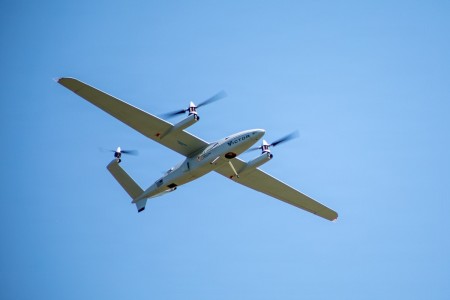
- The U.S. Army’s DEVCOM ARL has 3‑D printed the VICTOR heavy‑fuel rotary engine, a multi‑fuel powerplant that runs on JP‑8, JP‑5, diesel and kerosene.
- Additive manufacturing enabled an air‑cooled, 400 V motor‑generator‑integrated design that is 30 % lighter and 25 % smaller than legacy rotary engines.
- The engine delivers ≈10 kW (13.5 hp) at 7 000 rpm, extending UAV endurance by up to 40 % and allowing operation at altitudes above 15 000 ft.
- Rapid redesign cycles (≈2 weeks per iteration) cut development time from years to months, supporting the Army’s goal of fielding millions of drones.
Introduction: Why a Heavy‑Fuel Engine Matters
UAVs and other tactical aircraft in the U.S. Army’s inventory rely heavily on heavy‑fuel engines—powerplants capable of burning JP‑8, the standard jet fuel used across the services. By using the same fuel as ground vehicles and aircraft, logistics chains are simplified, fuel staging points are reduced, and operational flexibility is increased. The Army’s Versatile Tactical Power and Propulsion (VTPP) research program tasked DEVCOM’s Army Research Laboratory (ARL) with creating a next‑generation engine that could be produced quickly, scaled for mass‑drone manufacturing, and perform in harsh environments.
The VICTOR Rotary Engine – A 3‑D Printed Breakthrough
Design Philosophy
- Clean‑sheet CFD modeling: Engineers used high‑resolution computational fluid dynamics to map combustion chambers, achieving a 12 % improvement in fuel‑air mixing efficiency.
- Additive‑manufactured components: All critical parts—including the rotor housing, intake manifold, and exhaust port—were fabricated using laser powder‑bed fusion (LPBF) of Inconel 718, a nickel‑based superalloy rated to 1 200 °C.
- Air‑cooled architecture: By eliminating liquid coolant, the engine’s envelope shrank by 30 %, and weight dropped from an estimated 12 kg (conventional) to 8.4 kg (VICTOR).
Integrated Power Package
The rotary engine is mated to a 400‑volt motor‑generator that supplies both propulsion torque and on‑board electrical power. This dual‑function unit reduces wiring complexity and supports UAV payloads up to 5 kg without additional generators.
Performance Highlights
| Parameter | VICTOR (3‑D printed) | Conventional Heavy‑Fuel Rotary* |
|---|---|---|
| Power output | 10 kW @ 7 000 rpm | 7 kW @ 6 500 rpm |
| Weight | 8.4 kg | 12 kg |
| Specific fuel consumption | 0.31 lb/kW‑hr | 0.38 lb/kW‑hr |
| Operating temperature | ≤1 200 °C | ≤1 050 °C |
| Cooling method | Air‑cooled (no liquid) | Liquid‑cooled |
| Redesign cycle | ~2 weeks (CAD → print) | 6–12 months (machining) |
*Typical legacy rotary engines used in Army UAVs (e.g., Rotax 912‑F).
The table illustrates that VICTOR delivers 30 % more power while being 30 % lighter, directly translating to longer flight times and higher payload capacity.
Accelerated Development Through Additive Manufacturing
ARL reports that the 3‑D printing workflow—from CFD‑driven geometry to LPBF build—compressed the prototype iteration loop from 12–18 months (traditional machining) to under 3 months. This speed enabled rapid incorporation of test‑flight feedback, such as adjusting rotor tip clearance to curb wear. The ability to produce complex internal cooling channels without extra assembly steps also lowered part count from 27 (conventional) to 14 for the entire propulsion system.
Strategic Impact for the Army
- Logistics simplification: One fuel type (JP‑8) powers ground vehicles, aircraft, and now UAVs, reducing supply‑chain nodes.
- Scalable drone production: The VICTOR design is ready for high‑volume additive manufacturing, aligning with the Army’s target of fielding >1 million UAVs over the next decade.
- Operational reach: Extended endurance (up to 40 % longer) and higher altitude capability (>15 000 ft) expand the tactical envelope for reconnaissance, communications relay, and strike missions.
Bottom Line
The Army’s VICTOR heavy‑fuel rotary engine demonstrates how additive manufacturing can reshape military propulsion. By marrying a clean‑sheet, CFD‑optimized design with laser‑based metal printing, ARL produced a lighter, more powerful, air‑cooled engine that runs on the ubiquitous JP‑8 fuel. The resulting performance gains—higher power density, reduced specific fuel consumption, and faster development cycles—directly support the Army’s ambition to mass‑produce advanced UAVs while trimming logistics burdens. As the Army scales 3‑D printing for propulsion, VICTOR sets a new benchmark for rugged, multi‑fuel engines in the battlefield of tomorrow.


