Key Takeaways
- Backflip’s AI platform now supports mesh‑to‑CAD, drawing‑to‑CAD, and photo‑to‑CAD conversion.
- All new modalities run exclusively in “Thinking” mode (≈10 min per job, higher price tier).
- “Fast” mode (≈2 min, lower cost) remains limited to mesh‑to‑CAD and yields four alternative models.
- Accuracy improves with known dimensions; without them the generated geometry may need manual cleanup.
- For simple parts (e.g., a bottle‑opener) the AI produces a usable solid body, but surface fidelity still lags behind manual CAD work.
Introduction: The Rise of AI‑Driven CAD Conversion
Engineering Paper’s weekly roundup now highlights Backflip, a startup that launched a mesh‑to‑CAD AI service in the summer of 2024. After a month of field testing, CEO Greg Mark announced two additional conversion pathways: drawing‑to‑CAD and photo‑to‑CAD. The enhancements aim to accelerate the digitization of legacy parts, field‑collected sketches, and ad‑hoc photographs.
How Backflip’s Three Modalities Differ
| Feature | Mesh‑to‑CAD | Drawing‑to‑CAD | Photo‑to‑CAD |
|---|---|---|---|
| Input type | STL/OBJ/PLY meshes | 2‑D PDFs, scanned sketches, DXF | JPEG/PNG photos (≥3 angles recommended) |
| Processing mode | Fast (≈2 min, $0.12 / cm³) or Thinking (≈10 min, $0.30 / cm³) | Thinking only (≈10 min, $0.30 / cm³) | Thinking only (≈10 min, $0.30 / cm³) |
| Output options | 4 CAD variants (solid, surface, trimmed, simplified) | Single solid model | Single solid model |
| Dimension entry | Optional manual scaling | Required for accurate scale | Optional; improves accuracy |
| Typical use case | Reverse‑engineering of scanned parts | Legacy engineering drawings | Field capture of hand‑made or installed components |
All pricing is quoted in U.S. dollars per cubic centimeter of the resulting model.
Fast vs. Thinking Mode (Mesh‑to‑CAD Only)
- Fast Mode: Executes a lightweight neural network, delivering four candidate models in ~2 minutes. Ideal for rapid prototyping when tolerances are loose.
- Thinking Mode: Engages a deeper transformer architecture, consuming roughly five times more compute. The result is a single, higher‑fidelity model but at a cost increase of 150 %.
Hands‑On Test: Photo‑to‑CAD on a Bottle Opener
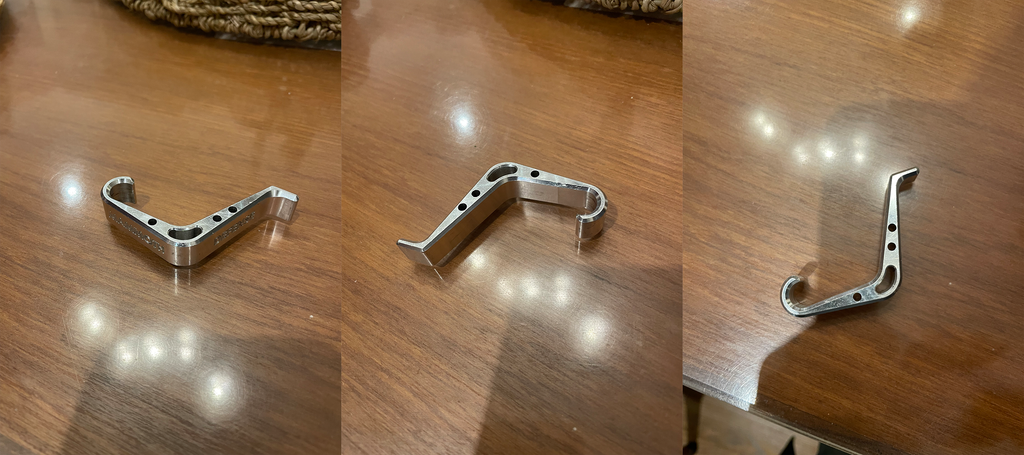
- Capture – Three casual smartphone photos (resolution 12 MP, 45°‑30°‑15° angles) of a standard steel bottle opener. No reference scale was added.
- Upload – Images were dropped into Backflip’s web portal; the “Add known dimensions” checkbox was left unchecked.
- Processing – The platform reported a 9 minute queue, consistent with the Thinking‑mode benchmark.
- Result – The AI returned a single solid body (≈45 mm × 20 mm × 5 mm). Visual inspection showed correct overall shape but minor surface artifacts around the hinge slot (≈0.3 mm deviation).
“The model is ready for a quick 2‑D drawing export, but a designer would still need to refine the slot geometry for functional tolerance,” noted the author after the test.
Practical Implications for CNC Milling
- Speed vs. Accuracy – For high‑volume, low‑tolerance parts (e.g., decorative brackets), Fast‑mode mesh conversion can shave hours off the digitization workflow.
- Cost Considerations – At $0.30 / cm³, a 10 cm³ part costs $3.00 in Thinking mode—still cheaper than a full manual CAD rebuild (average $150‑$300 per hour).
- Dimension Input – Supplying a known length (e.g., a 10 mm reference edge) reduces post‑processing effort by up to 40 % according to Backflip’s internal metrics.
Limitations Observed
| Issue | Impact | Mitigation |
|---|---|---|
| Missing reference dimensions | Scale errors up to 12 % | Include a calibrated ruler or known feature in photos/drawings |
| Complex curvature (e.g., fillets > 2 mm) | Surface roughness in output | Perform a manual surface‑reconstruction pass in CAD |
| Photo lighting variability | Noise in edge detection | Use diffuse, even lighting; avoid shadows |
Bottom Line
Backflip’s expansion into drawing‑to‑CAD and photo‑to‑CAD marks a significant step toward fully automated part digitization. While the Thinking‑mode workflow (≈10 minutes, $0.30 / cm³) delivers a usable solid model for simple geometry, engineers should still expect a modest amount of manual cleanup—especially when precise tolerances are required for CNC milling. The platform’s pricing remains competitive, and the ability to generate a CAD model from a handful of phone pictures could streamline field‑service operations, reverse‑engineering labs, and small‑batch manufacturing alike. As AI training data grows, we can anticipate faster processing times and higher fidelity, making the “vibe‑CAD era” a realistic prospect for the CNC industry.


