- Key Takeaways:
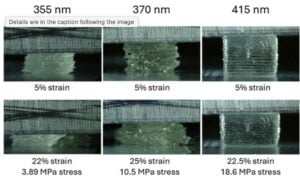
- Researchers have developed a novel method called "3D printed action plots" to study the curing behavior of resin in response to different wavelengths
- This technique enables the creation of detailed maps to optimize vat photopolymerization
- The study focuses on Stereolithography (SLA) 3D printing technology
- The goal is to improve the accuracy and efficiency of 3D printing processes
Introduction to Wavelength-Dependent SLA
Stereolithography (SLA) is a widely used 3D printing technology that relies on the photopolymerization of resin to create complex structures. The curing process is triggered by exposure to specific wavelengths of light, which can significantly impact the final product's quality and properties. Recent research has introduced a groundbreaking approach to understanding and optimizing this process.
Understanding 3D Printed Action Plots
3D printed action plots are a innovative tool designed to visualize and analyze the response of resin to different wavelengths. By creating detailed maps of the curing behavior, researchers can identify the optimal wavelengths and exposure conditions for specific materials and applications. This knowledge can be used to refine the 3D printing process, reducing errors and improving overall efficiency.
Comparison of 3D Printing Technologies
| Technology | Wavelength Dependence | Resolution | Print Speed |
|---|---|---|---|
| SLA | High | 10-100 μm | 10-100 mm/h |
| DLP | Medium | 10-50 μm | 10-50 mm/h |
| FDM | Low | 100-500 μm | 50-200 mm/h |
Optimizing Vat Photopolymerization
The development of 3D printed action plots has significant implications for vat photopolymerization, a key process in SLA 3D printing. By optimizing the wavelength and exposure conditions, researchers can achieve higher resolution, faster print speeds, and improved material properties. This, in turn, can expand the range of applications for SLA 3D printing, from prototyping to production.
Conclusion
The introduction of 3D printed action plots marks a significant advancement in the field of SLA 3D printing. By providing a detailed understanding of the curing behavior of resin in response to different wavelengths, researchers can optimize the 3D printing process and improve the quality of the final products. With its potential to enhance the efficiency and accuracy of vat photopolymerization, this technology is poised to have a lasting impact on the 3D printing industry.
Bottom Line: The development of 3D printed action plots offers a powerful tool for optimizing SLA 3D printing, enabling researchers to create detailed maps of the curing behavior of resin in response to different wavelengths. With its potential to improve the accuracy and efficiency of the 3D printing process, this technology is set to revolutionize the field of additive manufacturing.