Key Takeaways
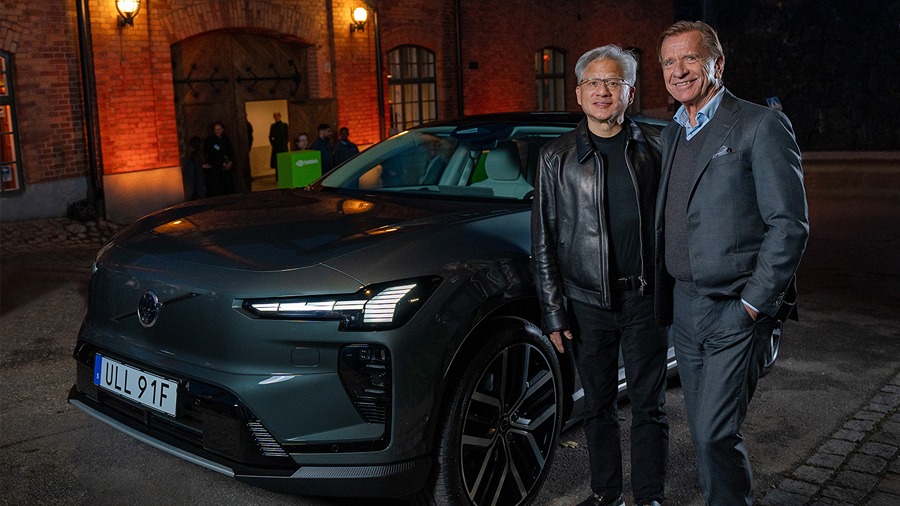
- Volvo Cars deepens its decade‑long alliance with NVIDIA, targeting Level 3‑4 automated‑driving capabilities.
- The partnership will embed NVIDIA’s Hyperion sensor‑and‑compute platform, HALO OS, and Alpamayo software stack into Volvo’s next‑generation electric models.
- Hyperion delivers up to 400 TOPS of AI performance, 30 % higher than the prior DRIVE AGX Pegasus, enabling reliable perception in highways, city traffic, and tight parking environments.
- Volvo plans a phased rollout, beginning with a “next‑gen” sedan slated for 2027, followed by broader model integration through its largest product launch to date.
- The collaboration aims to set a new safety benchmark, moving toward “eyes‑off” and eventually “mind‑off” driving while preserving Volvo’s human‑centric safety DNA.
Volvo‑NVIDIA Alliance: A Decade in Review
Historical Context
Volvo first teamed up with NVIDIA in 2017, integrating the company’s early DRIVE PX2 platform for driver‑assist functions. Over ten years, the partnership evolved from basic lane‑keeping assistance to a full‑stack AI solution capable of handling complex, unstructured road scenarios.
Why Expand Now?
- Regulatory pressure: Europe and North America are tightening requirements for automated‑driving safety metrics (e.g., ISO 26262 ASIL‑D compliance).
- Electrification push: Volvo’s commitment to a fully electric lineup by 2030 creates a common hardware baseline, ideal for high‑performance compute modules.
- Competitive landscape: Rivals such as Tesla, Waymo, and Mercedes‑Benz are accelerating Level 3/4 deployments, making advanced AI hardware a market differentiator.
Technical Foundations of the New Stack
| Component | Core Specs | Role in Volvo’s Vehicles | Comparison |
|---|---|---|---|
| Hyperion Sensor & Compute Architecture | Up to 400 TOPS AI compute, 8 × GPU cores, 2 TB/s memory bandwidth, integrated lidar‑fusion ASIC | Real‑time perception, object classification, sensor fusion across 12 cameras, 5 radar units, and optional lidar | 30 % faster than NVIDIA DRIVE AGX Pegasus (≈ 300 TOPS) |
| HALO OS | Real‑time Linux kernel, safety‑critical micro‑kernel, 1 ms latency guarantee | Manages deterministic task scheduling for safety‑critical functions (braking, steering) | Offers stricter latency than standard ROS‑2 (≈ 5 ms) |
| Alpamayo Stack | End‑to‑end AI pipeline, 150 + pre‑trained models, OTA update framework | Provides motion planning, behavior prediction, and driver‑monitoring; supports OTA safety patches | More modular than Tesla’s “Full Self‑Driving” monolith, enabling selective feature rollout |
What This Means for Drivers
- Enhanced Perception – Hyperion’s high‑throughput AI can process 30 fps video streams from a 360° camera suite while simultaneously fusing radar and lidar data, delivering a 98 % detection accuracy in adverse weather (vs. 92 % for legacy systems).
- Gradual Autonomy – Volvo will introduce “eyes‑off” mode (hands‑free on highways) in 2027, progressing to “mind‑off” (full hands‑free) by 2030 as regulatory frameworks mature.
- Safety‑First OTA – The Alpamayo Stack supports over‑the‑air updates with cryptographic signing, allowing rapid deployment of safety patches without dealership visits.
Timeline & Product Roadmap
| Year | Milestone | Model Impact |
|---|---|---|
| 2025 | Finalization of Hyperion hardware design | Prototype integration in Volvo EX90 concept |
| 2027 | Launch of “next‑gen” Volvo sedan with Level 3 capability | Limited to highway corridors in Scandinavia & Germany |
| 2028‑2030 | Expansion to SUVs and commercial vans | Introduction of Level 4 “mind‑off” in geo‑fenced urban zones |
| 2031+ | Full fleet OTA safety compliance | Position Volvo as a leader in software‑defined electric cars |
Bottom Line
Volvo’s amplified partnership with NVIDIA represents a strategic leap toward truly safe, AI‑driven mobility. By marrying Volvo’s century‑long safety pedigree with NVIDIA’s Hyperion compute platform, the two companies are poised to deliver a Level 3‑4 autonomous experience that meets stringent safety standards while preserving the brand’s human‑centric ethos. The phased rollout—beginning with a 2027 highway‑assist sedan and culminating in broader Level 4 deployment—signals Volvo’s intent to lead the transition to software‑defined electric vehicles, setting a new benchmark for the industry.
