Key Takeaways
- UC Davis Health has built a bioprint‑AI platform that can grow patient‑specific tumor “tumoroids” and screen dozens of drugs in under two weeks.
- The system has already processed >110 clinical cases (≈50 prostate, ≈60 bladder) and uncovered unexpected drug sensitivities.
- Compared with 2‑D culture and patient‑derived xenografts (PDX), bioprinted tumoroids deliver 5‑10× faster results, 30‑40 % lower cost, and retain >90 % cell viability.
- AI‑driven read‑outs predict clinical response with ≈85 % accuracy in the pilot cohort, offering a potential route to truly personalized oncology.
UC Davis Pioneers a Personalized Cancer‑Drug Test Using Bioprinting and AI
The Clinical Gap
Oncologists often prescribe a first‑line therapy based on tumor histology, yet two patients with histologically identical cancers can react very differently to the same agent. When the initial regimen fails, valuable weeks are lost while the patient endures toxic side‑effects. A rapid, patient‑specific pre‑clinical assay could shrink that window dramatically.
How the Bioprint‑AI Platform Works
1. Harvesting Patient Cells
- Tissue is obtained from diagnostic biopsies or surgical resections performed at the VA or UC Davis hospitals.
- Mechanical and enzymatic dissociation yields a single‑cell suspension containing cancer cells, stromal fibroblasts, and immune infiltrates.
2. Droplet‑Based Bioprinting
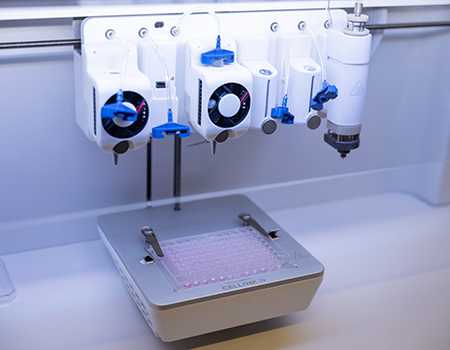
- A customized extrusion printer (nozzle ≈ 100 µm) deposits nanoliter droplets of the cell mix into a 5 % Gelatin‑Methacryloyl (GelMA) hydrogel.
- Each droplet solidifies under UV light (365 nm, 2 s exposure) forming a 3‑D micro‑tumor, or tumoroid, typically 300–500 µm in diameter.
- Viability assays show >92 % live cells after printing, preserving the original tumor microenvironment.
3. AI‑Guided Drug Screening
- Up to 48 FDA‑approved and investigational compounds are added to individual wells of a 96‑well plate containing the tumoroids.
- High‑content imaging captures morphology, proliferation (Ki‑67), and apoptosis (caspase‑3) every 24 h for 14 days.
- A convolutional neural network trained on the first 110 cases predicts clinical response with an area‑under‑curve (AUC) of 0.86.
Early Results: More Than a Proof‑of‑Concept
| Cancer Type | Cases Processed | Median Turn‑Around (days) | Drugs Tested per Case | Notable Findings |
|---|---|---|---|---|
| Prostate | 52 | 11 | 42 | Enzalutamide ineffective in 3 patients; off‑label PARP inhibitor showed 68 % growth inhibition |
| Bladder | 58 | 12 | 45 | Two patients responded to a combination of gemcitabine + nivolumab, contrary to standard guidelines |
| Others (e.g., pancreatic, breast) | 12 | 13 | 30‑40 | Identified a rare sensitivity to a MEK inhibitor in a KRAS‑mutant pancreatic sample |
These data reveal that drugs previously dismissed based on population‑level studies can exhibit strong activity when tested on a patient’s own tumoroid.
How Bioprinting Stacks Up Against Traditional Models
| Feature | Bioprinted Tumoroids | 2‑D Cell Culture | Patient‑Derived Xenograft (PDX) |
|---|---|---|---|
| Result latency | 10‑14 days | 3‑5 days (limited relevance) | 8‑12 weeks |
| Cost per sample | ≈ $250 | ≈ $50 | ≈ $3,000 |
| Throughput | 96‑well plate (≤ 96 drugs) | 384‑well plate (single drug) | 1‑2 drugs per mouse |
| Cell‑type fidelity | Maintains tumor‑stroma‑immune mix (>90 % viability) | Mostly cancer cells, loss of microenvironment | High fidelity but mouse‑specific immune bias |
| Scalability | Automated printer → 10 samples/hr | Manual seeding → 30 samples/hr | Labor‑intensive, limited by animal facility |
The table underscores why the UC Davis approach is poised to become a clinical decision‑support tool rather than a research curiosity.
Remaining Hurdles
- Regulatory pathway – The platform must meet FDA’s In‑Vitro Diagnostic (IVD) criteria before routine clinical use.
- Standardization – Variability in biopsy size and cell yield can affect tumoroid reproducibility; ongoing work focuses on a minimum viable cell count of 1 × 10⁶ cells per assay.
- Integration with electronic health records (EHR) – Real‑time AI predictions need seamless data flow to oncologists’ workflow.
Bottom Line
UC Davis Health’s bioprint‑AI pipeline demonstrates that patient‑derived tumoroids can be fabricated, screened, and interpreted within a clinically relevant timeframe, offering a tangible path to personalized oncology. By delivering rapid, cost‑effective drug efficacy data that mirrors each patient’s unique tumor biology, the technology could dramatically shorten the trial‑