Key Takeaways
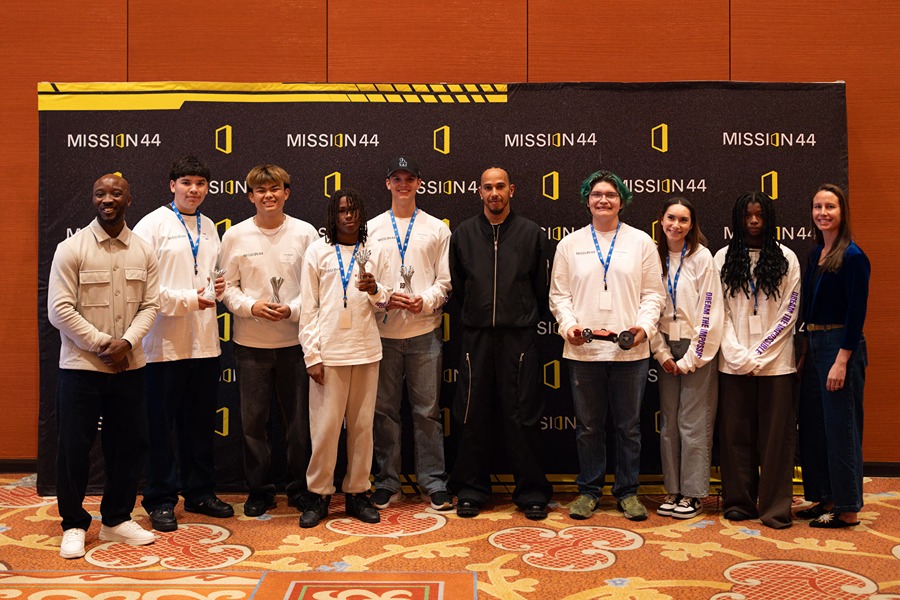
- HP and Sir Lewis Hamilton’s Mission 44 hosted a STEM Careers Experience Day for ≈ 150 Las Vegas students ahead of the 2026 Grand Prix.
- Participants used HP’s Multi Jet Fusion (MJF) 3‑D printers, AI‑driven design tools, and real‑time simulation software to solve a motorsport‑engineering challenge.
- HP’s 2026 Work Relationship Index shows 58 % of workers now value transferable, tech‑focused skills over traditional promotion paths.
- Since its 2025 launch, the HP‑Mission 44 partnership has delivered over 3,000 training hours across the U.S. and U.K., leveraging the free HP LIFE platform and a new “Professional Networking for Career Growth” course.
HP & Mission 44 Bring Real‑World Engineering to the Classroom
A hands‑on STEM day in Las Vegas
In the week leading up to the 2026 Las Vegas Grand Prix, HP Inc. teamed up with Mission 44—a charitable foundation founded by seven‑time Formula One champion Sir Lewis Hamilton—to host a one‑day “STEM Careers Experience.” The event gathered ≈ 150 middle‑ and high‑school students from across Nevada, placing them in the role of race‑car engineers.
Guided by HP’s 3‑D Printing and Additive Manufacturing specialists, students tackled a motorsport‑themed problem: design, test, and iterate a lightweight component for a virtual race‑car suspension system. The workflow mirrored industry practice:
- Concept sketch → CAD model (using Fusion 360 with AI‑assisted generative design).
- Simulation (stress‑analysis powered by HP’s AI‑optimized solver).
- Additive manufacturing on an HP Jet Fusion 580 printer (layer thickness 0.08 mm, build volume 380 × 284 × 380 mm, print speed up to 30 cm³/hr).
- Post‑processing & functional testing of the printed part.
Students saw a digital idea become a physical prototype within a single session—an experience that HP says shortens the traditional design‑to‑part cycle from weeks to hours.
Why AI‑enabled 3‑D printing matters
HP’s 2026 Work Relationship Index, which surveyed 12,000 global employees, found that 58 % now prioritize building transferable, technology‑centric skills over climbing a conventional career ladder【1】. The index also highlighted a 22 % increase in employee interest in AI‑driven tools since 2024. For young learners, early exposure to AI‑augmented design and additive manufacturing directly aligns with these emerging workforce expectations.
The HP‑Mission 44 Partnership: Scope & Impact
| Metric | HP & Mission 44 (2025‑2026) | Traditional STEM outreach (average) |
|---|---|---|
| Students reached | 3,200 (U.S. + U.K.) | 1,100 |
| Training hours delivered | 3,050 hrs (HP LIFE + on‑site labs) | 1,200 hrs |
| Free digital‑skill courses accessed | 4,500 (HP LIFE) | 1,800 |
| New AI‑design modules introduced | 2 (generative design, AI simulation) | 0 |
| Post‑event career‑interest lift* | 37 % report higher STEM interest | 18 % |
*Measured via post‑event surveys (n = 1,400).
The collaboration blends Mission 44’s mission to “move from classroom to career” with HP’s technology stack—HP LIFE (a free business‑and‑digital‑skills platform) and the newly launched “Professional Networking for Career Growth” course, which teaches LinkedIn branding, mentorship‑seeking, and virtual networking.
Comparing HP MJF 3‑D Printing to Conventional CNC Machining
| Feature | HP Multi Jet Fusion (MJF) | CNC Machining (e.g., 5‑axis milling) |
|---|---|---|
| Typical material range | Nylon PA12, PA11, TPU, carbon‑filled blends | Aluminum, steel, titanium, composites |
| Build speed* | 30 cm³/hr (full‑color) | 0.5 cm³/hr (material removal) |
| Layer resolution | 0.08 mm | N/A (continuous cut) |
| Tooling cost | None (digital file only) | $5,000‑$15,000 tooling per part |
| Lead time (prototype) | 4‑6 hrs from CAD to part | 2‑3 days (setup + machining) |
| Waste material | < 2 % (powder reuse) | 30‑50 % (chips, coolant) |
| Design freedom | Complex lattice, internal channels | Limited by tool access angles |
*Speed measured for a 100 cm³ benchmark part.
The table underscores why HP’s additive approach is ideal for rapid, low‑volume, highly complex components—exactly the type of parts students explored during the STEM day.
Looking Ahead
HP and Mission 44 plan to expand the STEM Careers Experience to five additional Grand Prix venues in 2027, targeting a cumulative reach of > 1,000 students per event. Future iterations will incorporate HP’s AI‑driven generative design cloud service, allowing participants to iterate designs automatically based on performance constraints.
Bottom Line
The HP‑Mission 44 STEM Careers Experience Day demonstrates how industry‑grade 3‑D printing, AI‑enhanced design, and targeted mentorship can translate abstract classroom concepts into tangible engineering skills. With 58 % of the modern workforce now favoring transferable, technology‑focused capabilities, early exposure to tools like HP


