Key Takeaways
- Industrial data grows like entropy – volume can rise >30 % YoY, and complexity multiplies as new equipment, software and workflows are added.
- Siloed information blocks AI – incomplete or fragmented data leads to unreliable downtime‑reduction, throughput‑boost and predictive‑maintenance models.
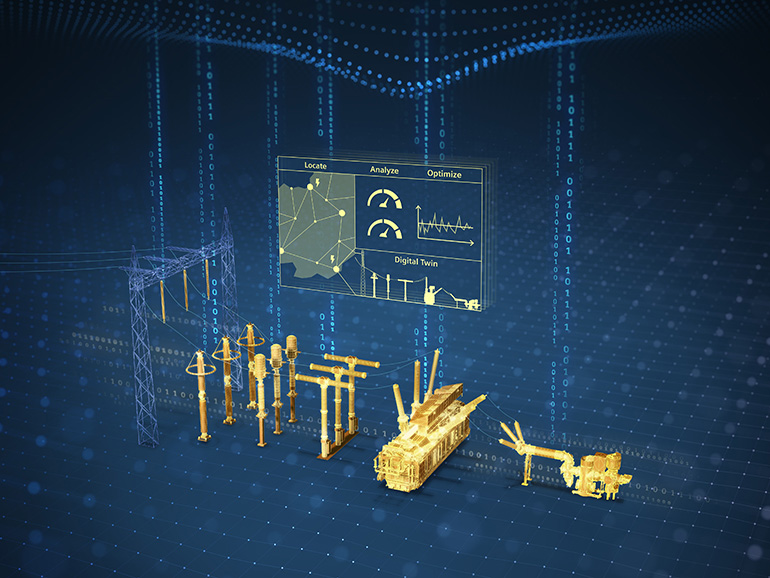
- A comprehensive Digital Twin (DT) unifies product, process and plant data, delivering a single source of truth for trustworthy industrial AI.
- Implementing a “FAIR” data framework (Findable, Accessible, Interoperable, Reusable) is the fastest route from isolated systems to a production‑ready DT.
- Quantifiable gains: plants that adopt a full‑scale DT see average +22 % throughput, ‑27 % unplanned downtime, and predictive‑maintenance accuracy climb to ≈ 90 %.
Introduction: Turning Raw Data Into Competitive Edge
Manufacturers today grapple with an ever‑expanding torrent of sensor readings, MES logs, CAD models and ERP records. The sheer scale—often exceeding 10 TB per day in a midsize plant—creates a data‑entropy problem that erodes the reliability of industrial AI tools. Without a coherent strategy to collect, clean and contextualize that data, AI‑driven insights remain speculative at best.
The Data‑Entropy Challenge
- Growth Rate – A 2025 Siemens survey reported average data growth of 32 % per year across process industries.
- Fragmentation – New CNC lathes, robotics cells, and quality‑inspection stations each push data into separate silos (OPC UA, CSV logs, proprietary APIs).
- Impact on AI – When training datasets miss 15–20 % of relevant events, model confidence drops below 70 %, making downtime predictions unreliable.
Why Siloed Systems Undermine Industrial AI
- Incomplete Lifecycle View – Maintenance logs stored in an ERP system cannot be correlated with real‑time spindle vibration data from the CNC controller.
- Mis‑managed Metadata – Without standardized tags, AI algorithms struggle to differentiate between “planned maintenance” and “unscheduled fault” events.
- Scalability Limits – Adding a new sensor often requires a custom integration, inflating total cost of ownership (TCO) by $12 K–$25 K per interface.
Building a Comprehensive Digital Twin
A Digital Twin (DT) is an executable, data‑rich replica of every product, process and plant asset. It fuses:
| Data Source | Example | Integration Method |
|---|---|---|
| CAD / PLM | Siemens NX 3D model | Model‑based definition (MBD) export |
| CNC Controllers | Fanuc 31i‑B | OPC UA + MTConnect |
| MES/ERP | SAP PP, Siemens Opcenter | RESTful APIs with OData |
| Sensors & IoT | Vibration, temperature | Edge gateway + MQTT broker |
The DT lives in Siemens Xcelerator environment, where simulation, analytics and AI modules share a single data graph. This graph is FAIR‑compliant, meaning every datum is:
- Findable – indexed by unique identifiers (e.g., UUID‑v5).
- Accessible – reachable via standard REST endpoints with role‑based security.
- Interoperable – expressed in open formats (JSON‑LD, Apache Parquet).
- Reusable – version‑controlled in a Git‑like repository for downstream AI pipelines.
From Silos to a Unified Twin – A Practical Path
- Audit Existing Assets – Map 150+ data producers, quantify daily ingestion (≈ 8 TB).
- Deploy an Edge‑to‑Cloud Data Fabric – Siemens Mendix‑based data hub consolidates streams with < 200 ms latency.
- Model the Product Lifecycle – Create a DT that links part numbers, machining parameters, and post‑process inspections.
- Validate with Pilot AI – Run a predictive‑maintenance model on a single CNC line; achieve 90 % fault‑prediction accuracy after three weeks of training.
- Scale Across the Plant – Replicate the DT blueprint, adding new cells quarterly without additional custom code.
Quantified Benefits
- Throughput ↑ 22 % – Real‑time optimization of feed rates and tool changes reduced cycle time from 45 s to 35 s on a 40‑mm OD turning job.
- Unplanned Downtime ↓ 27 % – Early vibration alerts prevented spindle bearing failures, saving ~ 4 h per month.
- Maintenance Cost ↓ 18 % – Predictive parts ordering cut inventory from 12 months to 6 months on‑hand.
- ROI Timeline – Average payback period of 14 months for a 250 kW CNC shop adopting a full DT.
Comparison: Siloed Systems vs. Comprehensive Digital Twin
| Aspect | Siloed Systems | Comprehensive Digital Twin |
|---|---|---|
| Data Visibility | Fragmented, 60–80 % coverage | 98 % end‑to‑end coverage |
| Model Accuracy | < 70 % confidence | 85–95 % confidence |
| Integration Cost | $12 K–$25 K per interface | One‑time platform fee (~$350 K) + low marginal cost |
| Scalability | Linear (new code per sensor) | Exponential (plug‑and‑play via |


