Key Takeaways
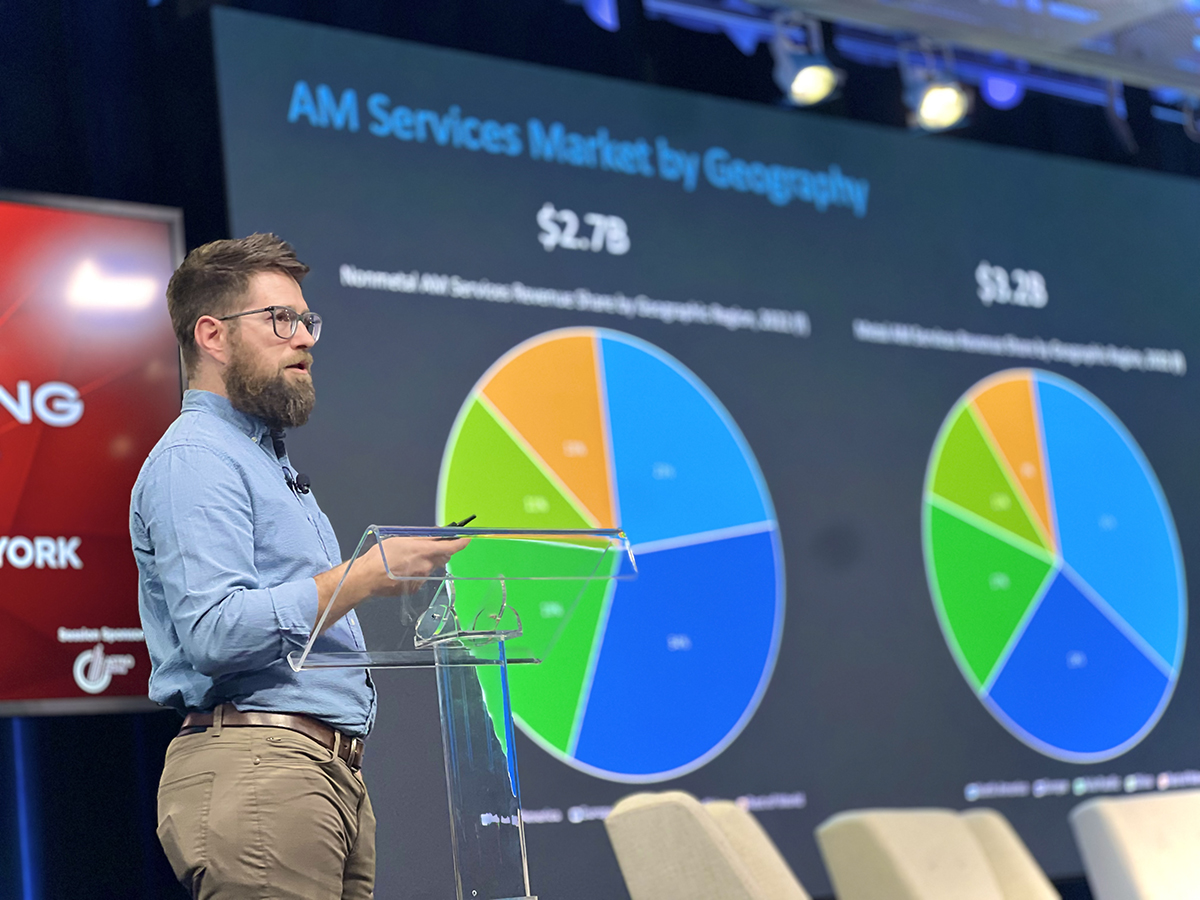
- The global Additive‑Manufacturing (AM) services market is projected to surge from ~US$10 bn in 2024 to >US$30 bn by 2035 (CAGR ≈ 10 %).
- Two complementary growth engines are identified: (1) onboarding of first‑time AM users and (2) deepening of existing‑user demand for high‑value, low‑volume production.
- Service bureaus retain a decisive advantage in capital intensity, material breadth, and regulatory compliance, while in‑house “cheap‑and‑good” extrusion printers drive down prototyping volumes.
- Companies that blend internal rapid‑prototype capability with outsourced post‑processing or metal‑printing services can capture the highest share of the expanding market.
The Dual‑Track Model for AM Services Expansion
1. Broadening the Base of First‑Time AM Users
Manufacturers that have traditionally relied on conventional machining are increasingly turning to external AM service providers to test the technology without committing to multi‑million‑dollar capital outlays. A typical metal‑laser powder‑bed fusion (LPBF) system costs US$500 k–$1.2 M, while a high‑volume polymer extrusion printer can be purchased for US$10 k–$30 k.
- Lower entry barriers: Service bureaus absorb the upfront equipment cost and provide access to a material portfolio that exceeds 150 alloys and polymers, many of which are unavailable on low‑cost desktop units.
- Risk mitigation: Outsourcing eliminates the need for in‑house expertise in process qualification, part qualification, and ISO 9001 or AS9100 certification.
- Speed to market: Turn‑around times of 2–5 days for 10‑mm‑scale polymer parts and 7–14 days for metal components are typical, compared with 3–6 weeks for internal set‑up and validation.
These factors are prompting a wave of new‑user adoption across automotive, aerospace, and consumer‑electronics sectors, especially in regions where AM talent pools are still maturing (e.g., Southeast Asia and Central‑Europe).
2. Deepening Demand from Existing AM Users
While new users boost volume, the value‑add segment drives revenue per part. Companies that already own desktop printers increasingly outsource:
| Process | Typical In‑House Cost (per part) | Outsource Cost (per part) | Key Value Drivers |
|---|---|---|---|
| Polymer FDM prototype | US$5–$15 | US$12–$30 | Material variety, surface finish, post‑processing |
| Metal SLM production part | US$150–$300 (including machine amortization) | US$180–$350 | Certified build sheets, heat‑treatment, QA |
| Multi‑Material or hybrid part | US$250–$500 (requires multiple machines) | US$300–$600 | Integrated design‑for‑manufacturing, supply‑chain consolidation |
- Post‑processing expertise: Service bureaus offer CNC milling, shot‑peening, and hot isostatic pressing (HIP) that most small‑shop owners cannot justify.
- Regulatory compliance: Aerospace and medical customers demand traceability (e.g., build‑log PDFs, material certificates) that external providers already maintain.
- Scalability: When a design moves from prototype to low‑volume production (100–5 000 units), the economics of outsourcing improve dramatically, with unit costs dropping 20‑35 % versus scaling an in‑house fleet.
Macro‑Economic Context
- Global AM equipment shipments reached US$5.2 bn in 2023, a 12 % YoY increase, according to the Wohlers Report.
- The services segment captured ~19 % of total AM spend in 2023, but is expected to exceed 30 % by 2030 as more firms adopt a “print‑and‑post‑process” model.
- Inflationary pressure on raw material prices (e.g., Ti‑6Al‑4V powder up 8 % YoY) further incentivizes firms to pay for pay‑as‑you‑go material usage rather than maintaining large inventory.
Competitive Landscape
- Large‑scale bureaus (e.g., Stratasys Direct, EOS AM Services) dominate metal‑printing capacity, offering >10,000 hrs/month across multiple facilities.
- Regional niche players (e.g., 3D‑Print UK, XYZ Printing India) focus on polymer extrusion and rapid‑prototype turnaround, leveraging lower labor costs to stay price‑competitive.
- Hybrid models (e.g., GE Additive’s “Digital Foundry”) combine in‑house metal printers with an external network for finishing, illustrating the trend toward integrated service ecosystems.
Bottom Line
The AM services market is set to triple its current valuation within the next decade, driven by a twin‑track strategy: onboarding first‑time users who prefer outsourced expertise, and deepening relationships with existing users who seek high‑value post‑processing and compliance services. Companies that can blend internal rapid‑prototype capability with external, specialist services will capture the greatest share of this expanding $30 bn opportunity.


