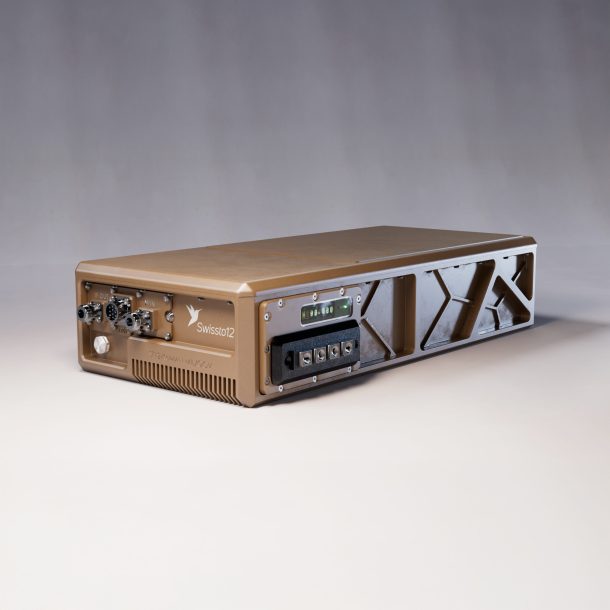
Key Takeaways
- Strategic alliance: SWISSto12 and Mitsubishi Electric have signed an MoU to co‑develop satellite payloads, RF hardware, and phased‑array antennas for Japan’s GEO‑secure networks.
- Additive‑manufacturing advantage: SWISSto12’s 3‑D‑printing platform delivers payloads that are up to 40 % lighter, 30 % smaller, and ready for launch 50 % faster than conventional machined parts.
- Financial health: The Swiss startup has closed a $70 million Series C round, bringing total funding to >$200 million, with a $500 million order backlog and FY‑2025 revenue of $140 million.
- Operational footprint: More than 2,000 SWISSto12‑fabricated components are already in orbit, supporting customers such as SES, Viasat, and several national space agencies.
- Geopolitical impact: The partnership reduces Japan’s reliance on U.S. satellite technology and secures a domestic supply chain for critical GEO communications.
1. Overview of the Partnership
1.1 Memorandum of Understanding (MoU) Highlights
SWISSto12 and Mitsubishi Electric Corporation (MELCO) have formalized a collaboration that blends MELCO’s “deep‑rooted satellite‑system know‑how” with SWISSto12’s proprietary additive‑manufacturing (AM) processes. The MoU covers three primary domains:
| Scope | Mitsubishi Electric contribution | SWISSto12 contribution |
|---|---|---|
| Payload production | System architecture, integration, testing | 3‑D‑printed structural and electronic modules |
| RF & antenna hardware | High‑power amplifiers, frequency‑selective components | Lightweight phased‑array antenna frames (partial 3‑D‑print) |
| Asia‑Pacific market expansion | Regional sales network, regulatory support | Rapid‑turn‑around manufacturing for Japanese GEO programs |
1.2 Why the Deal Matters for Japan’s GEO Infrastructure
Japan’s “Secure GEO” initiative aims to field a constellation of encrypted communication satellites that can operate independently of U.S.‑controlled bandwidth. By outsourcing the production of critical antenna and payload hardware to SWISSto12, the Japanese government gains:
- Supply‑chain resilience – fewer single‑point‑of‑failure risks.
- Accelerated deployment – AM reduces the typical 12‑month lead time to roughly 6 months.
- Cost efficiency – material savings of up to 25 % versus traditional CNC‑machined parts.
2. Additive Manufacturing vs. Conventional CNC Production
| Metric | Conventional CNC (e.g., aluminum alloy) | SWISSto12 Additive Manufacturing |
|---|---|---|
| Part weight | Baseline (100 %) | 60‑70 % of CNC weight |
| Volume reduction | Standard envelope | 30‑40 % smaller envelope |
| Lead time | 10‑12 months (design → tooling → production) | 5‑6 months (design → print → post‑process) |
| Material waste | 15‑20 % (machining chips) | <5 % (powder recycling) |
| Cost per kilogram | $150‑$200 | $80‑$120 |
The table illustrates that SWISSto12’s AM approach delivers tangible performance gains that align with the tight mass‑budget and rapid‑deployment requirements of GEO payloads.
3. Financial and Operational Snapshot
- Founded: 2011, Zurich, Switzerland
- Series C raise: $70 million (2024) → total capital >$200 million
- Revenue FY‑2025: $140 million (≈ 30 % YoY growth)
- Order backlog: >$500 million, dominated by GEO‑secure contracts in Asia and Europe
- In‑orbit inventory: >2,000 printed parts across 12 satellite platforms (SES, Viasat, JAXA, etc.)
These figures underscore SWISSto12’s transition from a niche startup to a mid‑size supplier capable of supporting multi‑billion‑dollar satellite programs.
4. Market Context: Shifting Geopolitics and Domestic Capability
The United States is tightening export controls on high‑performance RF and encryption technologies. As a result, several governments—Japan, India, and several EU members—are accelerating “indigenous” satellite initiatives. SWISSto12’s partnership with MELCO positions both firms as key enablers of this trend, offering a home‑grown alternative to U.S.‑origin hardware.
Bottom Line
The SWISSto12‑Mitsubishi Electric MoU represents a pivotal step toward a self‑sufficient Japanese GEO communications architecture. By marrying MELCO’s system integration pedigree with SWISSto12’s rapid, lightweight additive‑manufacturing platform, the alliance delivers faster, cheaper, and more resilient satellite payloads. With a robust order book, solid revenue growth, and a proven in‑orbit record, SWISSto12 is poised to become a cornerstone of the emerging non‑U.S. satellite supply chain—a development that could reshape the global GEO market over the next decade.


