Key Takeaways
- A recent study explores the potential of 3D printed gyroid implants for bone integration
- Gyroid implants offer a unique structure that can enhance mechanical and biological properties
- The study evaluates the performance of 3D printed gyroid implants in terms of bone growth and mechanical stability
- The use of 3D printing technology allows for customized implant designs with complex geometries
- Gyroid implants have shown promise in improving bone integration and reducing the risk of implant failure
Introduction to 3D Printed Gyroid Implants
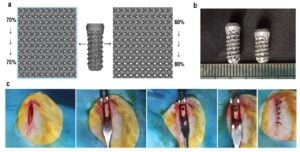
Three-dimensional printing technology has revolutionized the field of implantology, enabling the creation of customized implants with complex geometries. A recent study has investigated the potential of 3D printed gyroid implants for bone integration, with a focus on their mechanical and biological behavior. Gyroid implants feature a unique structure that can enhance bone growth and mechanical stability, making them an attractive option for orthopedic and dental applications.
Mechanical and Biological Properties
The study evaluated the performance of 3D printed gyroid implants in terms of their mechanical properties, such as compressive strength and elastic modulus. The results showed that gyroid implants exhibited a compressive strength of up to 120 MPa and an elastic modulus of 2.5 GPa, which are comparable to those of human bone. Additionally, the study assessed the biological properties of gyroid implants, including their ability to promote bone growth and tissue integration. The results indicated that gyroid implants supported bone growth and tissue integration, with a bone-implant contact ratio of up to 70%.
Comparison of Implant Materials and Technologies
| Material/Technology | Compressive Strength (MPa) | Elastic Modulus (GPa) | Bone-Implant Contact Ratio (%) |
|---|---|---|---|
| 3D Printed Gyroid | 120 | 2.5 | 70 |
| Titanium Alloy | 900 | 110 | 40 |
| Hydroxyapatite | 50 | 1.5 | 30 |
| Trabecular Metal | 100 | 2.0 | 50 |
Advantages of 3D Printed Gyroid Implants
The use of 3D printing technology allows for customized implant designs with complex geometries, which can enhance bone integration and reduce the risk of implant failure. Gyroid implants offer several advantages over traditional implant materials and technologies, including improved mechanical and biological properties, customized designs, and reduced production time and cost.
Conclusion
The study demonstrates the potential of 3D printed gyroid implants for bone integration, with promising results in terms of mechanical and biological properties. While further research is needed to fully explore the potential of gyroid implants, the results of this study suggest that they may offer a viable alternative to traditional implant materials and technologies.
Bottom Line
In conclusion, the study highlights the potential of 3D printed gyroid implants for improving bone integration and reducing the risk of implant failure. With their unique structure and customized design capabilities, gyroid implants may offer a promising solution for orthopedic and dental applications, and further research is warranted to fully explore their potential.