Key Takeaways
- Siemens and Swinburne University are launching the Siemens Swinburne International Energy Transition Alliance to create a pan‑Asian network of training and innovation hubs.
- The first overseas node will open in Kuala Lumpur, Malaysia by Q4 2026, extending the AU$5.2 million Melbourne hub.
- Each node will deliver hands‑on training, access to Siemens Digital Energy platforms, and joint research on modern power systems, renewable integration, and grid‑software solutions.
- Funding, curriculum, and partner‑institution models differ between the flagship hub and its satellite nodes – see the comparison table below.
- Over 300 students, educators, and industry engineers have already completed programs at the Melbourne hub since its 2023 launch.
Siemens & Swinburne Expand Energy Collaboration Across Asia
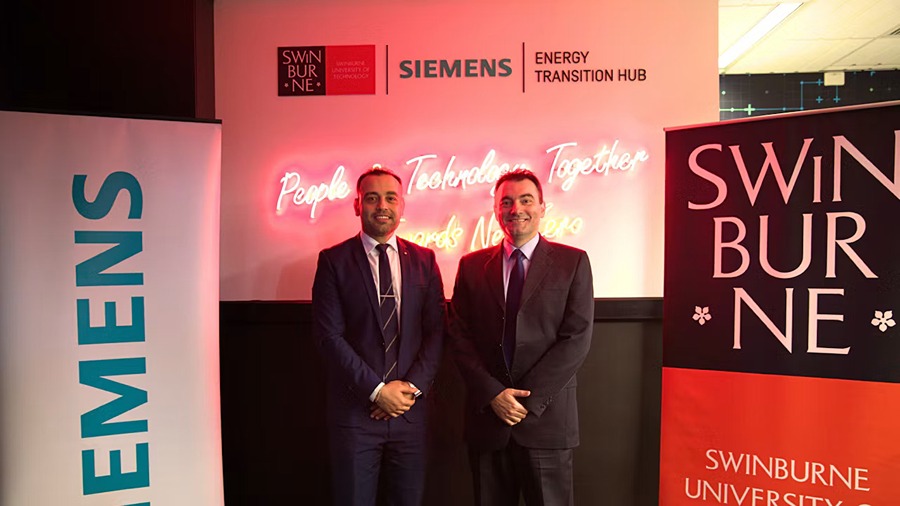
Background: The Melbourne Energy Transition Hub
In 2023 Siemens and Swinburne University of Technology inaugurated the Siemens Swinburne Energy Transition Hub in Melbourne. Backed by AU$5.2 million in joint investment, the hub blends Siemens’ Digital Energy suite (SIPRO, Spectrum Power, and SIESTORAGE) with Swinburne’s research labs and teaching expertise. The facility serves three core audiences:
| Audience | Offering | Typical Capacity |
|---|---|---|
| Students | Certified courses on grid stability, battery‑storage control, and renewable forecasting | 120 participants/yr |
| Industry Professionals | Short‑course workshops, on‑site simulations, and digital twin labs | 80 participants/yr |
| Researchers | Access to Siemens test‑beds, data‑analytics platforms, and co‑funded projects | 30 projects/yr |
Since its inception, the hub has delivered over 300 training events, attracting participants from Australia, New Zealand, Singapore, and the United Kingdom.
The International Energy Transition Alliance
Building on that success, Siemens and Swinburne announced the International Energy Transition Alliance for Industry Training and Innovation (IETAI). The alliance will seed regional nodes across Asia, beginning with a Malaysia node slated for late 2026. Unlike a full replica of the Melbourne facility, each node functions as an extension that leverages the central hub’s curriculum, digital tools, and research outcomes while tailoring delivery to local market needs.
Strategic Objectives
| Goal | Metric | Target (2027) |
|---|---|---|
| Workforce Upskilling | Certified engineers trained | 1,200 across Asia |
| Renewable Integration Research | Joint R&D projects launched | 45 |
| Industry Adoption | Siemens Digital Energy licences sold via node partners | 150 units |
Funding & Partnership Model
| Element | Melbourne Hub | Malaysia Node (2026) |
|---|---|---|
| Capital Investment | AU$5.2 M (government + corporate) | US$3.1 M (Siemens + Malaysian Ministry of Energy + local university) |
| Local Partner | Swinburne University (Australia) | Universiti Teknologi Malaysia (UTM) + Tenaga Nasional Berhad (TNB) |
| Curriculum Adaptation | Global standards, Australian regulation focus | ASEAN grid codes, regional renewable policy integration |
| Physical Footprint | 2,800 m² lab & classroom space | 1,200 m² modular training suite + remote‑access labs |
Leadership Perspective
Peter Halliday, Managing Director, Siemens Australia & New Zealand, emphasized that “the alliance showcases how industry‑academia synergy can export Australian expertise and accelerate the energy transition throughout Asia.”
Jose Moreira, Head of Grid Software, Siemens Asia‑Pacific, added that the network “will provide a scalable template for rapid skill development, directly feeding the demand for grid‑software engineers projected to grow 12 % annually in the region.”
Expected Impact on the Asian Energy Landscape
- Skill Gap Reduction – The International Alliance targets the estimated 45,000‑person shortfall of qualified grid‑software and renewable‑integration engineers across Southeast Asia (IEA, 2023).
- Technology Diffusion – By embedding Siemens’ Digital Twin, AI‑driven forecasting, and micro‑grid control tools in local curricula, adoption rates for advanced grid solutions are projected to increase from 18 % (2024) to 42 % (2028).
- Research Output – Collaborative projects are expected to generate ≈ US$20 M in commercializable patents and prototypes within five years.
Bottom Line
The Siemens Swinburne International Energy Transition Alliance transforms a successful Australian training hub into a replicable, region‑wide platform for upskilling, research, and technology transfer. With a US$3.1 M investment and strategic partnerships in Malaysia, the alliance will deliver 1,200+ certified engineers and catalyze 45 joint R&D projects by 2027, directly addressing the acute talent gap and accelerating renewable‑energy integration across Asia.


