- Key Takeaways:
- Rotational 3D printing enables the creation of programmable shape morphing lattices
- This technology has the potential to accelerate the development of 4D printing
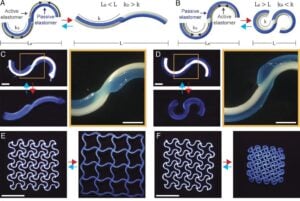
- Researchers have successfully developed a method to build lattices with programmable shape morphing using rotational 3D printing
- The technology can create complex structures with unique properties
Introduction to Rotational 3D Printing
Rotational 3D printing is a innovative technique that allows for the creation of complex structures with programmable shape morphing properties. This technology has the potential to revolutionize the field of 3D printing and accelerate the development of 4D printing. Researchers have made significant advancements in this area, and their findings are expected to have a major impact on the industry.
How Rotational 3D Printing Works
The rotational 3D printing method involves building lattices with programmable shape morphing properties. This is achieved by using a rotational motion to create complex structures with unique properties. The technology allows for the creation of structures that can change shape in response to various stimuli, such as temperature or light.
Comparison of 3D Printing Technologies
| Technology | Description | Benefits |
|---|---|---|
| Traditional 3D Printing | Layer-by-layer printing | High precision, low cost |
| Rotational 3D Printing | Rotational motion printing | Programmable shape morphing, complex structures |
| 4D Printing | Shape-shifting structures | Adaptive properties, self-healing materials |
Advantages of Rotational 3D Printing
The rotational 3D printing method offers several advantages over traditional 3D printing technologies. It enables the creation of complex structures with unique properties, such as programmable shape morphing. This technology also has the potential to accelerate the development of 4D printing, which could lead to the creation of adaptive materials and self-healing structures.
Conclusion
The development of rotational 3D printing technology is a significant breakthrough in the field of 3D printing. With the ability to create programmable shape morphing lattices, this technology has the potential to accelerate the development of 4D printing. The unique properties of structures created using rotational 3D printing make them ideal for a wide range of applications, from aerospace to biomedical engineering.
Bottom Line: Rotational 3D printing is a game-changing technology that enables the creation of complex structures with programmable shape morphing properties. With its potential to accelerate the development of 4D printing, this technology is expected to have a major impact on various industries and revolutionize the field of 3D printing. As researchers continue to advance this technology, we can expect to see significant advancements in the creation of adaptive materials and self-healing structures.