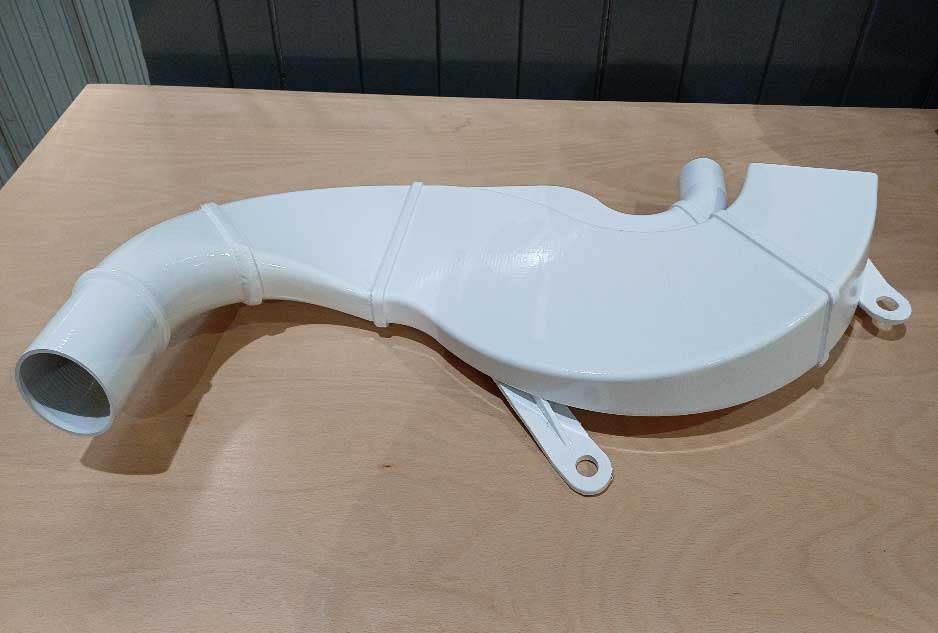
Key Takeaways
- Rheinmetall UK is utilizing Minifactory Material Extusion to produce tank ducting for the Challenger 3 Main Battle Tank program
- The Challenger 3 tank upgrade program involves converting 148 Challenger 2 tanks into Challenger 3s with improved features such as a new smoothbore gun and Active Protection System
- The use of additive manufacturing for ducting is an ideal application, as seen in the Boeing case where all current Boeing passenger aircraft have 3D printed ducts
- Rheinmetall UK is using ULTEM 9085 and the miniFactory Ignite to produce the ducting
Introduction to the Challenger 3 Tank Program
The Challenger 3 Main Battle Tank program is a significant upgrade to the UK's existing Challenger 2 tanks. The program involves converting 148 Challenger 2 tanks into Challenger 3s, with improvements to the turret, hull, armor, and other features. The new Challenger 3 tank will have a range of advanced features, including a new smoothbore gun, a complementary sabot round, and an Active Protection System.
The Role of Additive Manufacturing in Ducting Production
Additive manufacturing is being used to produce the ducting for the Challenger 3 tank. Rheinmetall UK has chosen to use Minifactory Material Extusion as the primary production method for the tank's ducting. This method allows for the creation of complex geometries and customized shapes, making it an ideal application for ducting. The use of additive manufacturing for ducting is not new, as seen in the Boeing case where all current Boeing passenger aircraft have 3D printed ducts.
Comparison of Additive Manufacturing Methods
| Method | Material | Equipment |
|---|---|---|
| Minifactory Material Extusion | ULTEM 9085 | miniFactory Ignite |
| Boeing's Method | Various | Various |
| Traditional Manufacturing | Various | Various |
Benefits of Additive Manufacturing for Ducting
The use of additive manufacturing for ducting offers several benefits, including:
- Reduced weight: Additive manufacturing allows for the creation of complex geometries and customized shapes, which can lead to reduced weight and improved performance.
- Increased efficiency: Additive manufacturing can produce ducting with complex shapes and geometries, which can improve airflow and reduce pressure drop.
- Reduced production time: Additive manufacturing can produce ducting quickly and efficiently, reducing production time and costs.
Conclusion
The use of additive manufacturing for ducting is a significant application of this technology. Rheinmetall UK's use of Minifactory Material Extusion to produce tank ducting for the Challenger 3 Main Battle Tank program is a prime example of this. With its ability to create complex geometries and customized shapes, additive manufacturing is an ideal method for producing ducting.
Bottom Line
The Challenger 3 tank program is a significant upgrade to the UK's existing Challenger 2 tanks, and the use of additive manufacturing for ducting is a key part of this program. With its ability to create complex geometries and customized shapes, additive manufacturing is an ideal method for producing ducting. As seen in the Boeing case, the use of additive manufacturing for ducting is a proven application of this technology, and it is likely to become more widespread in the future.