Key Takeaways
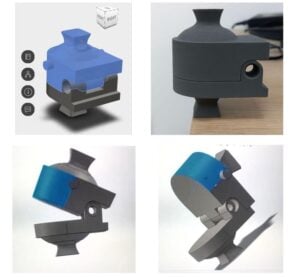
- Researchers have successfully prototyped a 3D printed pediatric knee joint, known as the "Pedi-knee".
- The Pedi-knee is a significant development in the field of 3D printing and orthopedic medicine.
- 3D printing technology allows for the creation of customized and complex anatomical models.
Introduction to 3D Printed Pediatric Knee Joint
A recent research paper has introduced the "Pedi-knee", a 3D printed prototype of a pediatric knee joint. This innovative development has the potential to revolutionize the field of orthopedic medicine, particularly in the treatment of pediatric patients.
Benefits of 3D Printed Knee Joint
The use of 3D printing technology in creating the Pedi-knee offers several benefits, including:
- High accuracy and precision in replicating the complex anatomy of the knee joint
- Ability to create customized models tailored to individual patients' needs
- Potential for reduced surgery time and improved outcomes
Comparison of 3D Printing Technologies
| Technology | Resolution | Material | Printing Time |
|---|---|---|---|
| Fused Deposition Modeling (FDM) | 100-200 μm | Thermoplastics | 2-5 hours |
| Stereolithography (SLA) | 10-50 μm | Resins | 1-3 hours |
| Selective Laser Sintering (SLS) | 50-100 μm | Powders | 3-6 hours |
Applications of 3D Printed Pediatric Knee Joint
The Pedi-knee has various potential applications, including:
- Pre-surgical planning and simulation
- Customized implant design and fabrication
- Educational tool for medical students and professionals
Conclusion
The development of the 3D printed pediatric knee joint, or Pedi-knee, is a significant milestone in the field of 3D printing and orthopedic medicine. With its high accuracy, customization capabilities, and potential for improved surgical outcomes, the Pedi-knee has the potential to revolutionize the treatment of pediatric patients with knee joint disorders.
Bottom Line
The Pedi-knee is a groundbreaking development that showcases the potential of 3D printing technology in creating complex and customized anatomical models. With further research and development, the Pedi-knee could lead to improved treatment outcomes and enhanced patient care in the field of orthopedic medicine, with potential applications in pre-surgical planning, customized implant design, and medical education, with a projected printing time of 1-6 hours depending on the technology used.