Key Takeaways
- NVIDIA OpenShell Reference Architecture delivers a turnkey, secure‑runtime stack for enterprise AI agents on data‑center and edge environments.
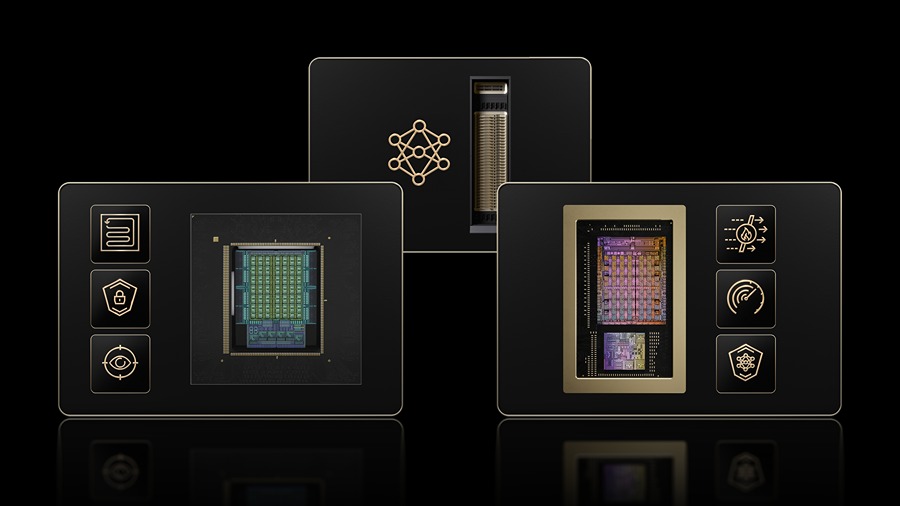
- Core building blocks include Vera Rubin (GPU‑accelerated compute), Vera CPUs (ARM‑based server processors), BlueField DPUs with Sentry security firmware, and the open‑source OpenShell runtime.
- The architecture supports closed‑ and open‑source foundation models such as Nemotron‑80B and can be deployed on edge platforms like RTX Spark, DGX Spark, and DGX Station.
- Continuous, out‑of‑band monitoring and in‑silicon policy enforcement reduce the attack surface for autonomous agents across retail, healthcare, manufacturing, robotics, software, and telecom sectors.
Introduction: Why a Dedicated AI‑Agent Architecture Matters
Enterprises are increasingly embedding autonomous AI agents into critical workflows—from inventory‑optimizing bots in retail to diagnostic assistants in hospitals. Traditional AI stacks lack built‑in containment, observability, and policy enforcement, exposing organizations to data leakage, model drift, and malicious behavior. NVIDIA’s OpenShell Reference Architecture (OSA) addresses these gaps by marrying secure runtime software with purpose‑built hardware, delivering an end‑to‑end, production‑grade environment for AI agents.
Core Components of the OpenShell Reference Architecture
1. NVIDIA OpenShell Secure Runtime
- Open‑source framework (GPL‑v3) that isolates each agent in a sandboxed container.
- Provides hardware‑rooted attestation and cryptographic key management via the TPM‑2.0 interface.
2. Vera Rubin Compute Platform
| Specification | Detail |
|---|---|
| GPU family | H100 NVL (8 × HBM3, 2 TB/s memory bandwidth) |
| FP8 Tensor Performance | 1.2 PFLOPs per GPU |
| Supported models | Nemotron‑80B (80 B parameters), Nemotron‑22B, custom fine‑tuned LLMs |
| Power envelope | 350 W per node |
| Scaling | Up to 64 GPUs per chassis via NVLink 4.0 |
Vera Rubin supplies the raw AI horsepower for both closed‑source proprietary models and open‑source foundation models.
3. Vera CPUs – ARM‑Based Server Processors
- Built on Neoverse‑V1 microarchitecture.
- 96 cores (8 × 12‑core clusters) @ 3.0 GHz.
- 2 TB/s memory bandwidth (DDR5‑5600).
- Integrated PCIe 5.0 x16 lanes for direct GPU/DPU attachment.
Vera CPUs host the agent harnesses, orchestrate workload distribution, and execute non‑GPU‑intensive tasks such as data preprocessing and policy evaluation.
4. BlueField DPUs with NVIDIA Sentry
| Feature | Value |
|---|---|
| DPU model | BlueField‑3 DPU |
| CPU cores | 8 × ARM Cortex‑A78 |
| Network throughput | 200 Gbps Ethernet (4 × 50 GbE) |
| Off‑load capabilities | Encryption, firewall, IDS/IPS, telemetry |
| Sentry framework | Continuous out‑of‑band monitoring, in‑silicon policy enforcement |
DPUs act as the “security gatekeeper,” offloading networking and storage I/O while Sentry continuously audits agent behavior against predefined policies.
5. Edge‑Optimized Platforms
- RTX Spark: Compact workstation with a single RTX A6000 GPU (48 GB GDDR6) and integrated BlueField‑2 DPU for on‑premise inference.
- DGX Spark: 4‑GPU (RTX A6000) edge server, 1 TB NVMe storage, and dual BlueField‑3 DPUs.
- DGX Station: Mobile workstation (2 × RTX A6000, 2 × Vera CPU) for field‑service AI agents.
These platforms extend the secure OSA stack to remote sites where latency and data‑sovereignty are paramount.
Extensibility Across Industries
| Industry | Typical Edge Use‑Case | OSA Benefits |
|---|---|---|
| Retail | Real‑time shelf‑stocking bots | Secure data capture, low‑latency inference |
| Healthcare | AI‑assisted imaging triage | Patient‑data isolation, audit trails |
| Manufacturing | Predictive maintenance agents | Hardened firmware, deterministic response |
| Robotics | Autonomous navigation controllers | In‑silicon safety policies, rapid model updates |
| Software Development | Code‑generation copilots | Containerized sandbox, policy‑driven API access |
| Telecommunications | Network‑optimizing agents | DPUs handle packet inspection, Sentry enforces QoS |
Comparison: Traditional AI Stack vs. NVIDIA OpenShell Architecture
| Aspect | Traditional Stack | NVIDIA OpenShell Architecture |
|---|---|---|
| Runtime Isolation | OS‑level containers, no hardware attestation | OpenShell sandbox + TPM attestation |
| Security Monitoring | Agent‑level logs (post‑mortem) | Sentry continuous out‑of‑band telemetry |
| Policy Enforcement | Software firewalls, manual updates | In‑silicon DPU policies |


