Key Takeaways
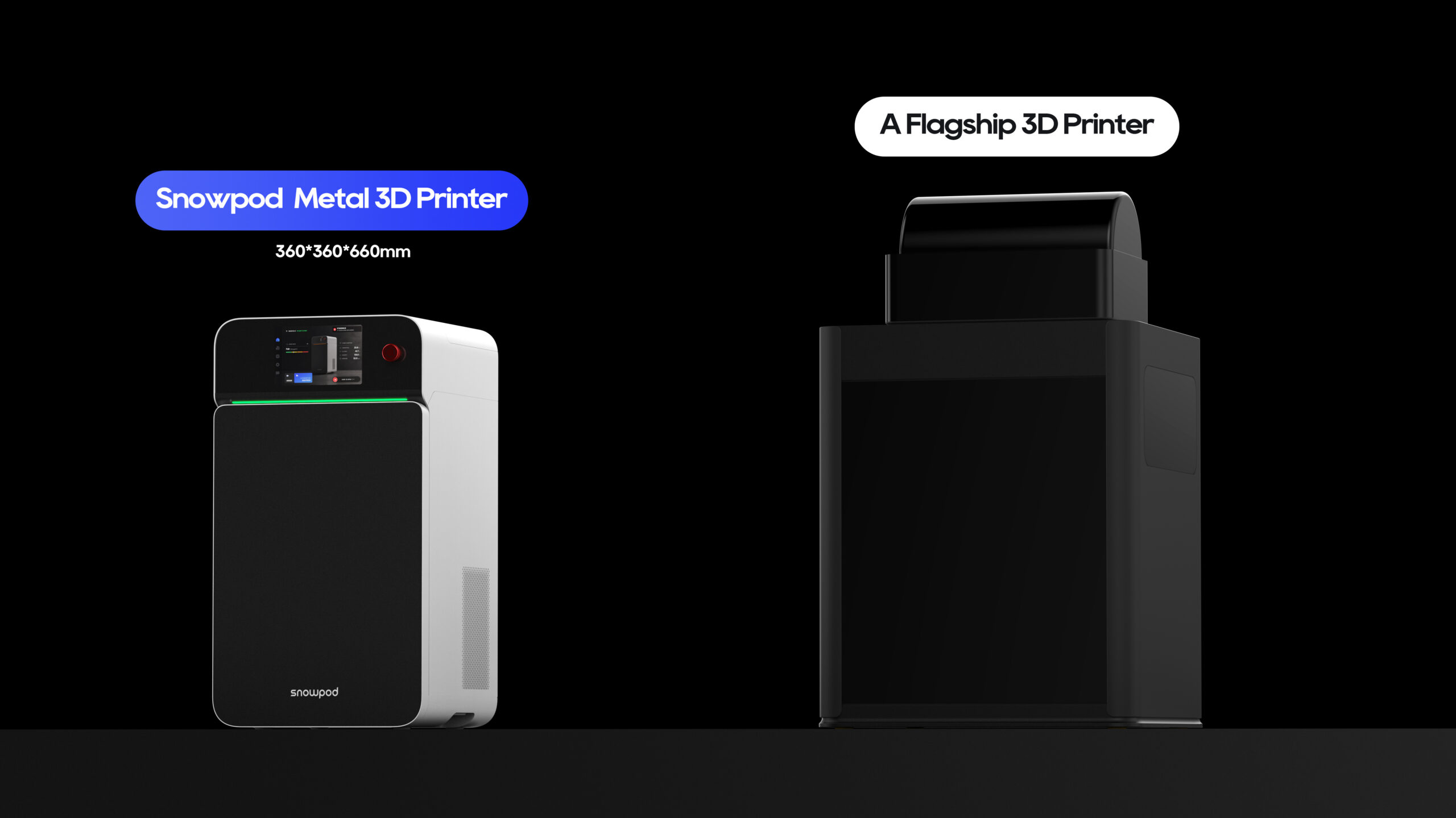
- SnowPod (SnowX) is the first truly desktop‑sized metal SLM printer, measuring 360 × 360 × 660 mm.
- It uses a 40 µm laser spot, 30–60 µm layer heights and 3 µm Z‑axis precision to deliver fine‑detail stainless‑steel parts.
- Integrated powder‑recycling, sealed build chamber, and real‑time air‑quality monitoring bring industrial safety to the bench.
- Compared with other desktop metal printers, SnowPod offers the smallest footprint, the highest laser resolution, and a closed‑loop material recovery system.
Why Desktop Metal Printing Has Been Elusive
Fused‑Deposition Modeling (FDM) printers have become commonplace on workbenches, but metal additive manufacturing still demands specialized infrastructure. The real obstacle is not the size of the laser or the gantry, but handling fine metal powders safely, maintaining an inert atmosphere, and providing user‑friendly post‑processing—all while preserving the reliability users expect from a “desktop” tool.
SnowPod: A New Design Philosophy
SnowX introduced the SnowPod in September 2026, positioning it as a complete, end‑to‑end metal‑printing platform. The company re‑engineered every stage of the workflow:
| Feature | SnowPod (SnowX) | Desktop Metal Studio System | Markforged Metal X |
|---|---|---|---|
| Printing Technology | Selective Laser Melting (SLM) | Bound Metal Deposition (BMD) | Atomic Diffusion Additive Manufacturing (ADAM) |
| Build Volume | 120 × 120 × 150 mm | 140 × 140 × 140 mm | 140 × 140 × 140 mm |
| Machine Footprint (W × D × H) | 360 × 360 × 660 mm | 560 × 560 × 860 mm | 530 × 530 × 770 mm |
| Laser Spot Size | 40 µm | N/A (thermal head) | N/A (filament nozzle) |
| Layer Thickness | 30–60 µm (adjustable) | 50–150 µm | 50–150 µm |
| Z‑Axis Resolution | 3 µm | 10 µm | 10 µm |
| Supported Materials | 316L SS, Ti‑6Al‑4V (planned) | 316L SS, Inconel, Cu | 316L SS, Ti, Al |
| Powder Recovery | Closed‑loop, >95 % reuse | Manual sieving, ~80 % reuse | No powder (filament) |
| Safety Systems | Enclosed chamber, O₂/CO₂ sensors, HEPA filtration | Enclosed, basic O₂ monitoring | Enclosed, filament dust extraction |
| Price (USD) | ≈ $45,000 | $85,000–$120,000 | $70,000–$95,000 |
Data compiled from manufacturer specifications released between 2024‑2026.
Compact Yet Capable
The SnowPod’s chassis is smaller than many high‑end FDM printers, enabling placement on a standard laboratory bench or a dedicated office desk. Despite its size, the machine houses a full‑grade SLM laser system capable of melting 316L stainless steel powder (particle size 15‑45 µm), delivering part tolerances of ±0.05 mm.
Laser Precision for Fine Geometry
A 40 µm laser spot—roughly half the width of a human hair—allows the printer to resolve features as small as 120 µm (three times the spot size). Combined with 30–60 µm layer heights and 3 µm Z‑axis stepping, the system can produce intricate lattice structures, sharp internal corners, and narrow channels that were previously only achievable on large industrial SLM machines.
Integrated Powder & Air Management
SnowPod’s sealed build chamber operates under an argon atmosphere with oxygen kept below 0.1 %. Real‑time O₂/CO₂ sensors trigger automatic shutdown if thresholds are breached. The printer includes an in‑chamber powder recycler that sieves, cools, and returns unused powder to the feed hopper, achieving >95 % material reuse and reducing consumable cost to under $0.30 g⁻¹ of stainless steel.
Software & Post‑Processing
SnowX bundles a cloud‑connected slicer that auto‑optimizes support structures for metal builds and provides a one‑click “Print‑Ready” workflow. After printing, the machine’s integrated depowdering module uses a low‑velocity air jet and ultrasonic vibration to detach unfused powder, minimizing operator exposure.
Market Impact
The arrival of a true desktop‑sized SLM printer lowers the entry barrier for small‑volume metal part production. Design teams, research labs, and even advanced makers can now iterate on functional metal prototypes without outsourcing to costly service bureaus. The closed‑loop powder system also addresses a major environmental and safety concern that has limited wider adoption.
Bottom Line
SnowPod demonstrates that the biggest hurdle for desktop metal 3D printing—safe, reliable powder handling and precise laser control—can be solved within a compact footprint. By delivering industrial‑grade resolution (40 µm laser, 3 µm Z precision), full powder recycling, and user‑centric software at a price point under $50 k, SnowX is poised to shift metal additive manufacturing from the factory floor to the everyday workstation.


