Key Takeaways
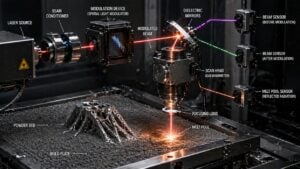
- A new patent application from GE/Concept Laser aims to enhance real-time control over laser energy in powder bed fusion (PBF) systems
- The proposed technology targets smarter metal PBF by improving laser beam modulation
- The innovation has the potential to increase the accuracy and efficiency of metal 3D printing
- Powder bed fusion systems can benefit from advanced laser beam control, leading to higher-quality printed parts
Introduction to Laser Beam Modulation
Laser beam modulation is a crucial aspect of powder bed fusion (PBF) systems, which are widely used in metal 3D printing. The technology involves the precise control of laser energy to fuse metal powders together, layer by layer, to create complex geometries. A recent patent application from GE/Concept Laser proposes a novel approach to laser beam modulation, enabling tighter real-time control over laser energy in PBF systems.
Advantages of Enhanced Laser Beam Modulation
The proposed technology has the potential to significantly improve the accuracy and efficiency of metal 3D printing. By enhancing laser beam modulation, the system can optimize the energy input, reducing the risk of defects and increasing the quality of the printed parts. This innovation can also lead to increased productivity, as the system can adapt to changing printing conditions in real-time.
Comparison of Laser Beam Modulation Technologies
| Technology | Description | Benefits |
|---|---|---|
| Traditional Laser Beam Modulation | Limited real-time control over laser energy | Lower accuracy, reduced efficiency |
| Enhanced Laser Beam Modulation (GE/Concept Laser) | Tighter real-time control over laser energy | Improved accuracy, increased efficiency, higher-quality printed parts |
| Other Advanced Laser Beam Modulation Technologies | Variable laser energy control, advanced sensor systems | Increased complexity, higher cost, potential for improved performance |
Impact on the Metal 3D Printing Industry
The proposed laser beam modulation technology has the potential to revolutionize the metal 3D printing industry. By enabling smarter metal PBF, the innovation can lead to the production of complex geometries with increased accuracy and efficiency. This can have significant implications for various industries, including aerospace, automotive, and healthcare, where high-quality metal printed parts are in high demand.
Bottom Line
The new patent application from GE/Concept Laser represents a significant step forward in the development of smarter metal PBF systems. By enhancing laser beam modulation, the technology has the potential to increase the accuracy and efficiency of metal 3D printing, leading to higher-quality printed parts and increased productivity. As the metal 3D printing industry continues to evolve, innovations like this will play a crucial role in shaping its future. With the potential to transform various industries, the proposed technology is an exciting development that warrants close attention from industry professionals and researchers alike.
