Key Takeaways
- Velo3D's metal 3D printing technology enabled Intergalactic to produce aircraft heat exchanger components in just a few weeks
- The components were printed using Velo3D's Sapphire XC system, which allowed for complex geometries to be printed with fewer supports
- The use of Inconel 718, a strong nickel alloy, enabled the production of high-quality parts with precise specifications
- The Rapid Production Solutions (RPS) program facilitated the rapid production of parts without redesign or lengthy development cycles
- The technology has the potential to significantly accelerate the development of aircraft components, meeting strict testing deadlines and reducing production time
Introduction to Metal 3D Printing in Aircraft Development
Metal 3D printing is revolutionizing the aircraft industry by enabling the rapid production of complex components. A recent project undertaken by Intergalactic, an aerospace supplier, in collaboration with Velo3D, demonstrates the potential of this technology. The project involved the production of critical parts for an aircraft heat exchanger system, which were printed using Velo3D's Sapphire XC system.
Complex Parts Made With No Redesign
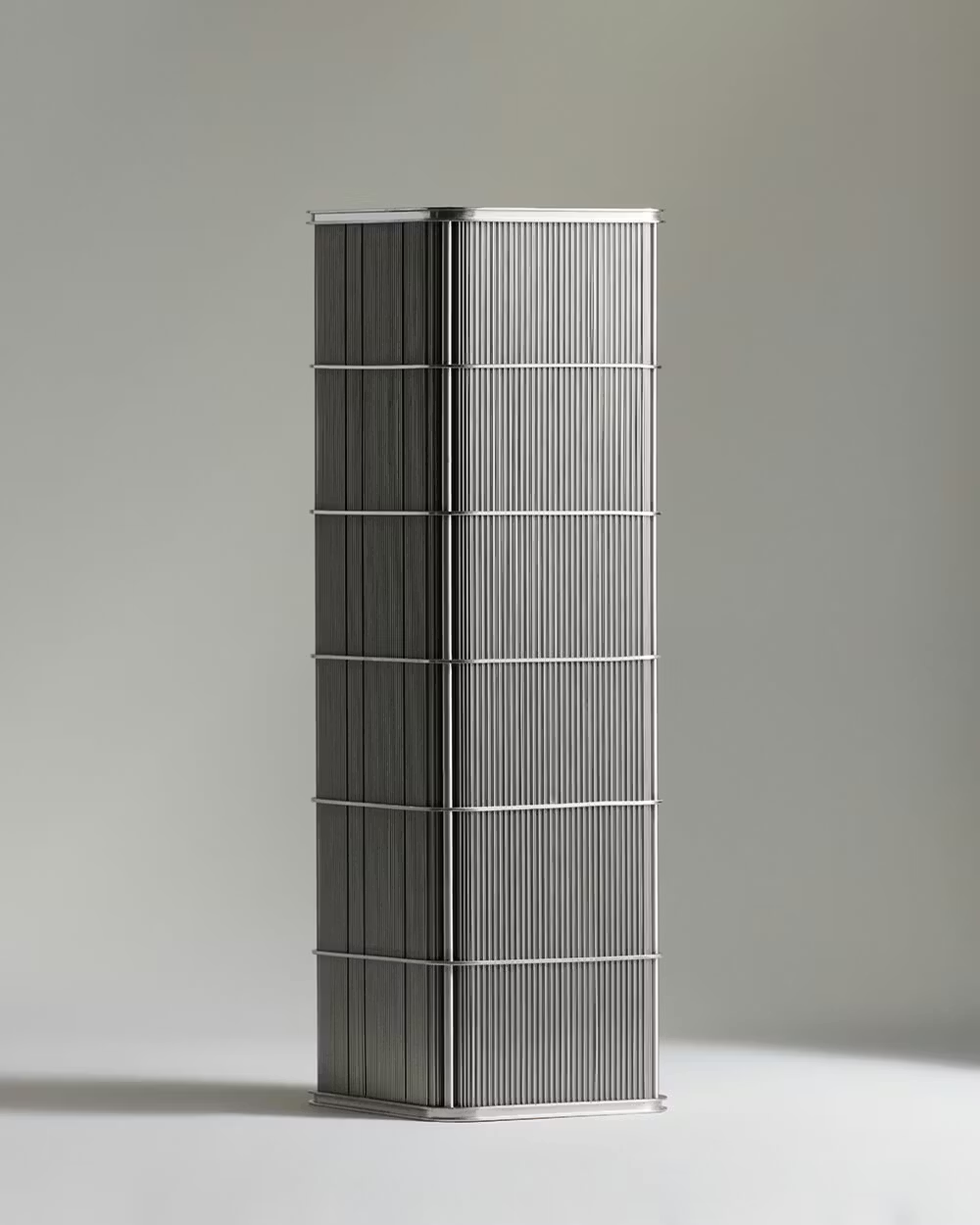
The components produced were microtube heat exchanger headers made from Inconel 718, a strong nickel alloy commonly used in aerospace. These parts feature complex geometries, including wide curves and shallow angles, which can be challenging to produce using traditional methods. However, Velo3D's system overcomes these limitations by using a non-contact recoater, allowing for the printing of complex shapes with fewer supports.
Comparison of Metal 3D Printing Technologies
| Technology | Material | Complexity | Production Time |
|---|---|---|---|
| Velo3D Sapphire XC | Inconel 718 | High | Weeks |
| Traditional Metal Powder Bed Fusion | Various | Medium | Months |
| Conventional Machining | Various | Low | Months |
Benefits of Rapid Production Solutions
The Rapid Production Solutions (RPS) program enabled Intergalactic to move from design to printed hardware in a matter of weeks, meeting strict testing deadlines for the aviation program. This rapid production capability is particularly significant in the aerospace industry, where development cycles are long and testing schedules are tight.
Expert Insights
According to Michelle Sidwell, Chief Revenue Officer at Velo3D, "Customers with aggressive program timelines rely on Rapid Production Solutions to get hardware fast without redesign and without lengthy development cycles." This statement highlights the importance of rapid production capabilities in the aerospace industry, where time-to-market is critical.
Bottom Line
The successful production of aircraft heat exchanger components using Velo3D's metal 3D printing technology demonstrates the potential of this technology to accelerate the development of aircraft components. With its ability to produce complex geometries with precise specifications, metal 3D printing is poised to play a significant role in the aerospace industry, enabling the rapid production of high-quality parts and reducing production time. As the industry continues to evolve, it is likely that metal 3D printing will become an increasingly important tool for aircraft manufacturers, enabling them to meet the demands of a rapidly changing market.


