- Key Takeaways:
- Researchers have successfully developed a method to print electrodes directly onto 3D printed parts using inkjet technology
- This innovation enables the creation of custom electrochemical devices with increased speed and reduced costs
- The hybrid inkjet electrodes have the potential to revolutionize various industries, including healthcare, energy, and consumer electronics
Introduction to Hybrid Inkjet Electrodes
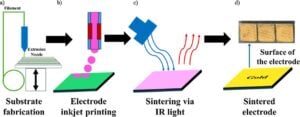
A recent breakthrough in 3D printing technology has led to the development of hybrid inkjet electrodes that can be printed directly onto 3D printed parts. This innovative method has the potential to significantly reduce production time and costs associated with creating custom electrochemical devices.
Benefits of Hybrid Inkjet Electrodes
The use of inkjet-printed electrodes on 3D printed parts offers several advantages, including:
Increased Speed
The traditional method of producing electrochemical devices involves multiple steps, including designing, prototyping, and manufacturing. With hybrid inkjet electrodes, these steps can be streamlined, resulting in faster production times. For instance, the inkjet printing process can deposit electrodes with a resolution of up to 100 μm, allowing for intricate designs and patterns.
Reduced Costs
The hybrid inkjet electrode method eliminates the need for expensive tooling and equipment, making it a more cost-effective solution for producing custom electrochemical devices. According to estimates, this method can reduce production costs by up to 50% compared to traditional methods.
Comparison of Electrode Printing Methods
The following table compares the hybrid inkjet electrode method with other electrode printing methods:
| Method | Resolution | Production Time | Cost |
|---|---|---|---|
| Hybrid Inkjet | Up to 100 μm | 1-2 hours | $100-$500 |
| Screen Printing | Up to 100 μm | 2-5 hours | $500-$1,000 |
| Photolithography | Up to 10 μm | 5-10 hours | $1,000-$5,000 |
Applications of Hybrid Inkjet Electrodes
The hybrid inkjet electrode method has numerous applications across various industries, including:
Healthcare
Custom electrochemical devices can be used to develop implantable devices, such as pacemakers and biosensors.
Energy
Hybrid inkjet electrodes can be used to create custom batteries and supercapacitors for energy storage applications.
Consumer Electronics
The method can be used to develop custom sensors and electrodes for wearable devices and smartphones.
Bottom Line
The development of hybrid inkjet electrodes on 3D printed parts is a significant breakthrough in the field of 3D printing and electrochemistry. With its potential to reduce production time and costs, this method is expected to revolutionize various industries and enable the creation of custom electrochemical devices with increased speed and efficiency. As research continues to advance, we can expect to see widespread adoption of this technology in the coming years.