Key Takeaways
- Industrial filament 3D printing is not a replacement for other additive manufacturing technologies, but rather a complementary solution for specific applications.
- HP's new high-temperature filament platform is designed for production use, offering consistent part quality, process repeatability, and access to certified materials.
- The platform features an open materials approach, allowing for flexibility in material selection.
- Industrial filament 3D printing is suitable for regulated and high-temperature applications, such as aerospace and automotive.
Introduction to Industrial Filament 3D Printing
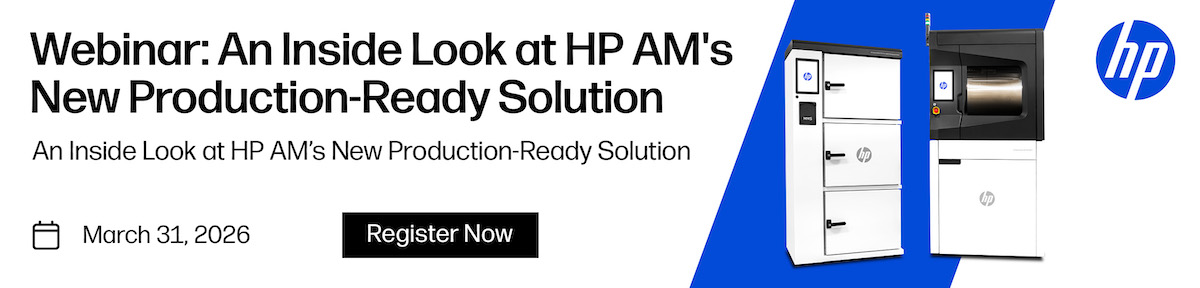
As additive manufacturing continues to evolve, it's essential to understand where industrial filament 3D printing fits into the production landscape. HP's upcoming webinar, "High-Temperature Industrial Filament 3D Printing: An Inside Look at HP AM's New Production-Ready Solution," will explore the practical applications of this technology.
HP's High-Temperature Filament Platform
The webinar will provide an in-depth look at HP's new high-temperature filament platform, designed for production use. This platform features:
- Consistent part quality
- Process repeatability
- Traceability
- Access to certified materials
- An open materials approach, allowing for flexibility in material selection
The platform consists of key components, including:
- Industrial printer
- Material Management System (MMS)
- Modular extrusion architecture
Comparison of 3D Printing Technologies
| Technology | Material | Temperature | Application |
|---|---|---|---|
| Industrial Filament 3D Printing | Various | Up to 300°C | Aerospace, Automotive, Industrial |
| Metal Additive Manufacturing | Metals | Up to 1000°C | Aerospace, Automotive, Medical |
| Stereolithography (SLA) | Resins | Up to 100°C | Prototyping, Model Making, Dental |
Applications of Industrial Filament 3D Printing
Industrial filament 3D printing is suitable for regulated and high-temperature applications, such as:
- Aerospace: production of aircraft components, satellite parts
- Automotive: production of car parts, tooling
- Industrial: production of machinery components, equipment parts
Conclusion
The HP webinar will be led by Guillermo Fabregat, HP Industrial Filament Product Manager, and will provide valuable insights into the practical applications of industrial filament 3D printing.
Bottom Line
Industrial filament 3D printing is a complementary solution to other additive manufacturing technologies, offering consistent part quality, process repeatability, and access to certified materials. With its open materials approach and suitability for regulated and high-temperature applications, this technology is poised to play a significant role in the production landscape, particularly in industries such as aerospace and automotive, where high-temperature resistance and precise material properties are crucial.