Key Takeaways
- HP OmniBook 5 targets students and young professionals with a feather‑light 1.16 kg chassis, 11.8 mm thickness, and up to 42 hours of video‑playback battery life.
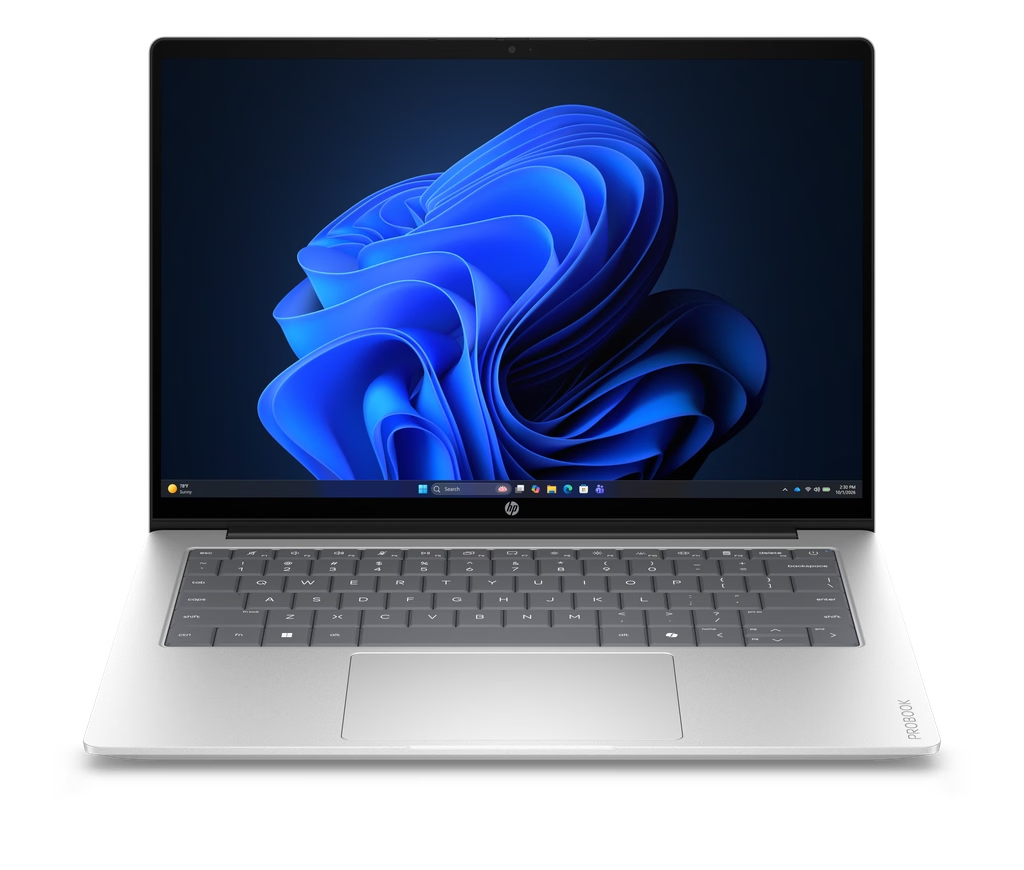
- HP ProBook 4 is aimed at SMBs and mobile workers, featuring a sturdier 12 mm aluminum body, a 14‑inch 2.8K OLED screen, and a starting weight of 2.6 lb (1.18 kg).
- Both models use Intel Core 7 CPUs with built‑in neural‑processing units (NPUs) for AI‑ready performance, but the ProBook 4 adds optional discrete graphics.
- OLED options deliver 100 % DCI‑P3 color gamut; the OmniBook 5 peaks at 620 nits, while the ProBook 4 reaches 700 nits.
- Connectivity on the OmniBook 5 centers on dual USB‑C (Thunderbolt 4) and a 65 W GaN charger, whereas the ProBook 4 adds a full‑size HDMI 2.1 and USB‑A ports.
HP OmniBook 5 – A Portable Powerhouse for the Mobile Generation
Who It Serves
Designed for students, entry‑level professionals, and anyone who blends coursework, remote work, and media consumption on a single device.
Core Specifications
| Spec | Detail |
|---|---|
| Processor | Intel Core 7‑12700H (12‑core, 24 threads) with integrated NPU |
| Memory | Up to 32 GB LPDDR5‑5600 |
| Storage | Up to 2 TB PCIe 4.0 NVMe SSD |
| Display | 13.3‑in OLED, up to 2.5K (2560 × 1440), 620 nits, 100 % DCI‑P3, 90 % screen‑to‑body, optional touch |
| Battery | 66 Wh cell; video playback rated 42 h (≈ 5 h video + 37 h idle) |
| Weight / Thickness | 1.16 kg (2.56 lb), 11.77 mm |
| Ports | 2 × USB‑C (Thunderbolt 4, 40 Gbps), 1 × 3.5 mm combo jack |
| Charging | 65 W GaN USB‑Mini charger (reversible) |
| Camera & Audio | 1080p IR camera with Windows Hello, dual mics, Poly‑tuned speakers, DTS:X Ultra |
| Color Options | Smoke Silver, Starlit Blue, Peony Pink, Soft Honeydew (aluminum chassis) |
Productivity & Entertainment Features
- AI‑ready: The on‑chip NPU accelerates generative‑AI tools, video upscaling, and real‑time language translation.
- HP Eye Ease: Reduces blue‑light emission while preserving color fidelity, ideal for long study sessions.
- 180° hinge enables tablet‑mode usage for sketching or note‑taking.
HP ProBook 4 – Enterprise‑Grade Reliability for SMBs
Target Audience
Small‑ to midsize businesses and field‑service professionals needing a durable, security‑focused laptop that can handle heavier workloads.
Core Specifications
| Spec | Detail |
|---|---|
| Processor | Intel Core 7‑12700H (12‑core) with NPU; optional NVIDIA RTX 3050 (4 GB) |
| Memory | Up to 64 GB DDR5‑4800 |
| Storage | Up to 4 TB PCIe 4.0 NVMe (dual‑slot) |
| Display | 14‑in OLED, 2.8K (2880 × 1800), 700 nits, 100 % DCI‑P3, 92 % screen‑to‑body |
| Battery | 80 Wh; mixed‑use rating 15 h (web browse) |
| Weight / Thickness | 2.6 lb (1.18 kg), 12 mm |
| Ports | 2 × USB‑C (Thunderbolt 4), 1 × USB‑A 3.2, HDMI 2.1 (4K 60 Hz), micro‑SD, headphone/mic combo |
| Charging | 90 W USB‑C PD |
| Security | TPM 2.0, optional IR camera with Windows Hello, HP Sure Sense, and HP Wolf Security |
| Color Options | Eclipse Gray, Atmospheric Blue, Mist Silver (full‑aluminum) |
Business‑Centric Features
- Robust chassis meets MIL‑STD‑810H vibration and shock tests.
- HP Sure Start self‑healing BIOS protects against firmware attacks.
- Collaboration suite includes a full‑HD IR camera, dual microphones, and integrated noise‑cancelling software.
OmniBook 5 vs. ProBook 4 – Quick Comparison
| Feature | HP OmniBook 5 | HP ProBook 4 |
|---|---|---|
| Target User | Students / Young pros | SMBs / Mobile workers |
| Screen Size | 13.3 in | 14 in |
| OLED Resolution | 2.5K (2560×1440) | 2.8K (2880×1800) |
| Brightness | 620 nits | 700 nits |
| Weight | 1.16 kg | 1.18 kg |
| Thickness | 11.8 mm | 12 mm |
| Battery Life (video) | Up to 42 h | Up to 15 h (mixed) |
| Ports | 2 × USB‑C only | USB‑C + USB‑A + HDMI 2.1 |
| Graphics | Integrated Intel Iris Xe | Optional RTX 3050 |
| Security | Windows Hello IR | TPM 2 |