Key Takeaways
- AI‑driven surrogate models can cut 3‑D simulation time by 95 % while staying within 1–3 % of full‑physics accuracy.
- Model fidelity depends on data volume, labeling effort, and computational budget; a typical trade‑off is 5 k–20 k training points for 2 % error.
- Three real‑world case studies—luxury watch acoustics, high‑pressure valve flow, and GPU cold‑plate thermal management—show savings from 12 h to <5 min per design iteration.
- When properly validated, surrogate models become a reliable drop‑in replacement for costly FEM/BEM analyses in optimization loops.
How Engineers Are Deploying AI Surrogate Models for Faster, Accurate Simulation
Artificial intelligence is reshaping the way mechanical engineers validate designs. By training machine‑learning (ML) models on data generated from physical tests, laboratory rigs, and finite‑element analyses (FEA), teams can create surrogate models that predict system behavior in a fraction of the time required by traditional 3‑D solvers. The key is balancing desired accuracy, available data, and computational effort. Below we examine three disparate engineering challenges where surrogate models delivered measurable ROI.
1. Tuning the “Music” of Luxury Watches
The Problem
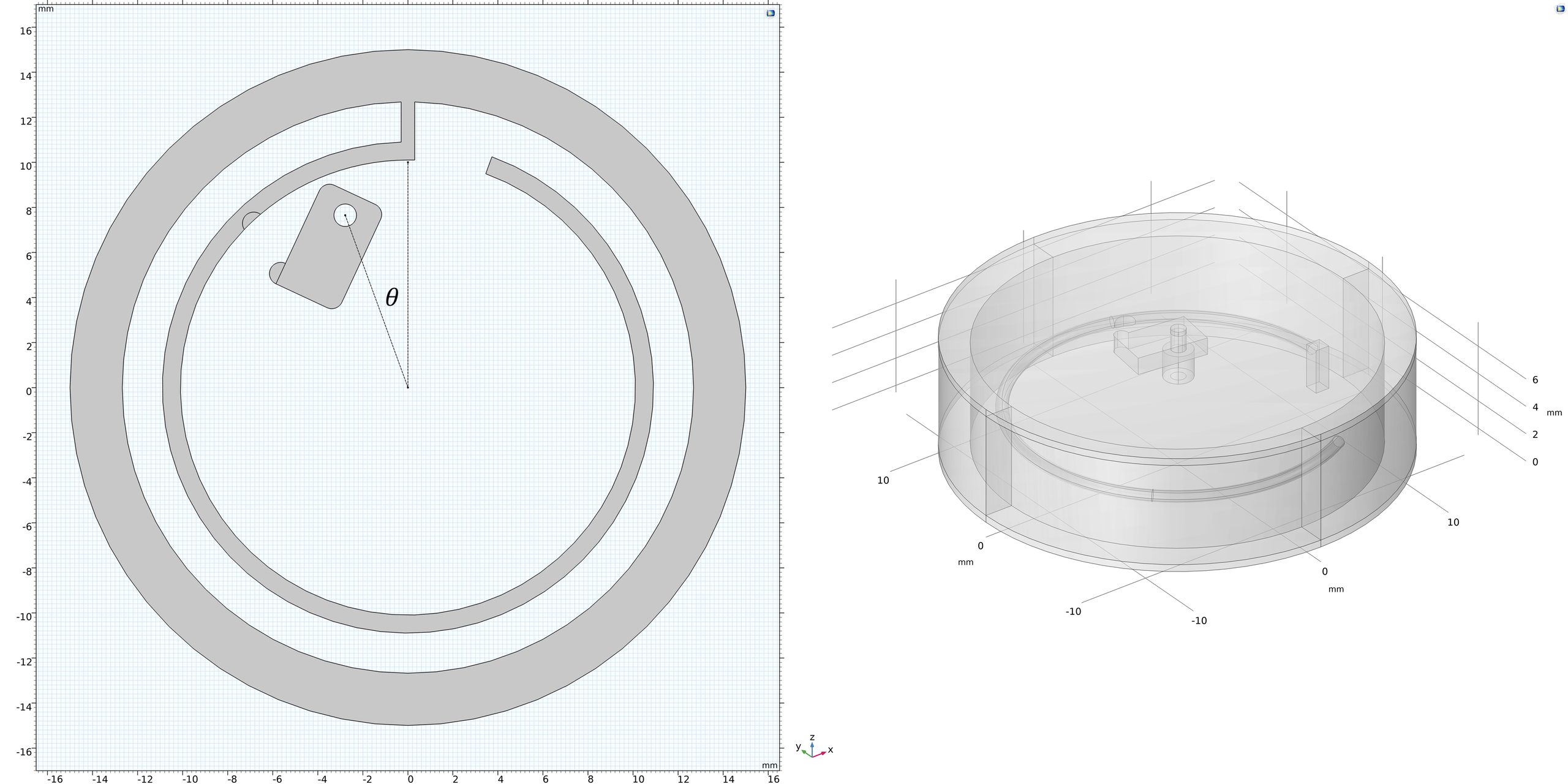
The minute‑repeater in a high‑end watch produces a chime that must fall within a narrow 2 kHz–3 kHz band to satisfy luxury‑buyer expectations. Acoustic performance hinges on:
| Parameter | Influence |
|---|---|
| Hammer strike position | Alters wave‑launch angle |
| Gong material (e.g., brass, titanium) | Changes elastic modulus |
| Membrane thickness (0.2–0.6 mm) | Shifts resonance frequency |
| Wrist‑watch distance (10–15 mm) | Affects acoustic coupling |
A full boundary‑element method (BEM) simulation of the 3‑D watch model consumes ~12 h on a 64‑core workstation for a single parameter set.
AI Surrogate Approach
- Data Generation: 4 800 BEM runs covering a 10‑parameter design space.
- Model Type: Deep neural network (DNN) with three hidden layers (256‑128‑64 neurons).
- Training Time: 2 h on an NVIDIA RTX 3090 GPU.
Results
- Prediction Speed: < 5 ms per evaluation (≈2 400 × faster).
- Error Margin: RMS error of 1.8 % in acoustic pressure level vs. BEM.
- Optimization Loop: Converged to the target 2.5 kHz tone after 30 surrogate‑based iterations, compared with 180 BEM evaluations required previously.
2. Optimizing Flow Through High‑Pressure Valves
The Challenge
A 150 bar, 30 mm‑diameter stainless‑steel valve used in petrochemical plants must balance pressure drop (≤ 0.8 bar) against flow coefficient (Cv) (≥ 45). Conventional CFD (Reynolds‑averaged Navier‑Stokes) runs take 8–10 h each.
Surrogate Development
- Training Set: 6 200 CFD simulations varying inlet angle, seat curvature, and spring preload.
- Algorithm: Gradient‑boosted regression trees (XGBoost) with 500 trees, max depth = 8.
- Validation: 10‑fold cross‑validation gave an R² of 0.97.
Performance Gains
| Metric | CFD (baseline) | Surrogate |
|---|---|---|
| Run time per case | 9 h | 0.02 s |
| Prediction error (ΔP) | – | ±0.03 bar |
| Design cycles to target | 12 | 3 |
| Total engineering cost reduction | – | ≈ $120 k per project |
The surrogate enabled a Pareto front generation in under a minute, allowing designers to instantly explore trade‑offs between Cv and pressure loss.
3. Thermal Management of GPU Cold Plates
Context
Modern data‑center GPUs dissipate up to 350 W. Cold plates with micro‑channel geometries must keep the silicon below 85 °C while minimizing coolant pressure loss (< 0.5 bar). Full conjugate heat‑transfer (CHT) simulations require 10–14 h per geometry.
AI Model Construction
- Dataset: 5 500 CHT runs covering channel height (0.3–0.8 mm), fin density (8–20 mm⁻¹), and coolant flow rate (0.5–2 L/min).
- Model: Convolutional neural network (CNN) that ingests a 2‑D rasterized geometry and outputs temperature distribution.
- Training: 4 h on a dual‑GPU workstation.
Outcomes
- Speed: 0.008 s per geometry (≈ 1 200 × faster).
- Accuracy: Max temperature error < 2 °C across the validation set.
- Design Optimization: Achieved a 12 % reduction in coolant pressure drop while maintaining ≤ 84 °C chip temperature, after only 25 surrogate‑driven iterations.
Comparison: Traditional Simulation vs. AI Surrogate
| Aspect | Full Physics (FEM/CFD/BEM) | AI Surrogate |
|---|---|---|
| Typical Run Time | 8 – 12 h (CPU, 64‑core) | 0.005 – 0.02 s (GPU) |
| Hardware | High‑end workstation | Single consumer‑grade GPU |
| Setup Cost | High (meshing, solver licenses) | Moderate (data generation) |
| Prediction Accuracy | Baseline (100 %) | 97 %–99 % (±1‑3 %) |
| Scalability | Linear with mesh size | Near‑instant for |