Key Takeaways
- Artist Kimberly Callas utilizes 3D printing to create pieces that tell stories about the ocean and its ecosystems
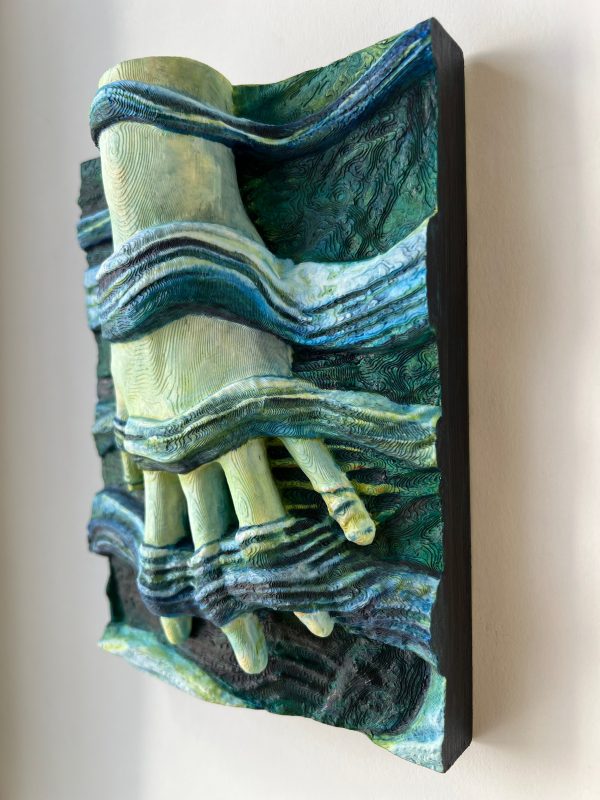
- Her work, "Ocean Reach," combines 3D printed biofilament with hand-painted details to explore the beauty and fragility of marine life
- Callas' use of PLA biofilament in her art showcases the creative potential of additive manufacturing beyond engineering and manufacturing
- Her piece has been featured in the New York Academy of Art's 2026 Summer Exhibition and WEAD Magazine
Introduction to 3D Printing in Art
The world of 3D printing is expanding beyond its traditional roots in engineering and manufacturing, with artists like Kimberly Callas pushing the boundaries of what is possible with this technology. Callas, a professor at Monmouth University in New Jersey, has been using 3D printing to create pieces that tell stories about the ocean and its ecosystems.
The Story Behind "Ocean Reach"
Callas' piece, "Ocean Reach," is a prime example of how 3D printing can be used in creative fields. The piece combines 3D printed biofilament with hand-painted details to explore the beauty and fragility of marine life. The use of PLA biofilament, a widely used material in desktop 3D printing, adds an extra layer of depth to the piece.
Comparison of 3D Printing Materials
| Material | Description | Usage |
|---|---|---|
| PLA Biofilament | A biodegradable thermoplastic | Widely used in desktop 3D printing, ideal for creative applications |
| ABS | A strong and impact-resistant thermoplastic | Commonly used in engineering and manufacturing applications |
| PETG | A strong and flexible thermoplastic | Often used in applications where high strength and low warping are required |
The Impact of 3D Printing on Art
The use of 3D printing in art is opening up new possibilities for creators like Callas. By combining traditional art techniques with modern technologies, artists can create complex and detailed pieces that tell stories and evoke emotions. The fact that Callas' piece has been featured in the New York Academy of Art's 2026 Summer Exhibition and WEAD Magazine is a testament to the growing recognition of 3D printing as a valid medium for artistic expression.
Conclusion
Callas' use of 3D printing in her art is a powerful example of the technology's potential to tell stories and evoke emotions. With the ability to create complex and detailed pieces, 3D printing is opening up new possibilities for artists and creators.
Bottom Line
The intersection of 3D printing and art is a rapidly evolving field, with artists like Kimberly Callas pushing the boundaries of what is possible. As the technology continues to advance, we can expect to see even more innovative and creative applications of 3D printing in the world of art. With its ability to create complex and detailed pieces, 3D printing is poised to become a major player in the art world, and artists like Callas are leading the way.